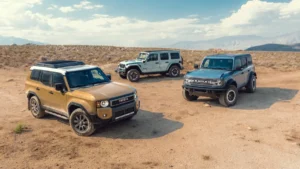
Top rated 4×4 SUVs send power to all four wheels, which helps them keep moving on mud, sand, snow, gravel, and rocky trails. Many drivers also choose them for towing, camping trips, and long journeys far from paved roads. Still, these vehicles differ widely in capability, comfort, and running costs.
This guide covers six well-regarded models: the Toyota Land Cruiser, Jeep Wrangler, Ford Bronco, Toyota 4Runner, Lexus GX, and Land Rover Defender. Some are built mainly for hard trail use, while others pair real capability with family space and luxury. The specifications below are for 2026 US models, so confirm details for the exact year and trim you are considering.
Key Takeaways
- The Land Cruiser pairs a hybrid powertrain with full-time 4WD and standard locking differentials.
- The Wrangler Rubicon is the most trail-focused choice here.
- The Bronco offers many trims, with its best hardware in the Sasquatch package and Raptor.
- The 4Runner covers everything from a daily driver to a hybrid overlanding rig.
- The Lexus GX adds luxury to full-time 4WD.
- Every Land Rover Defender has a low-range transfer case.
- The best choice depends on your terrain, budget, passengers, and tolerance for running costs.
What Are 4×4 SUVs?
A 4×4 SUV can drive all four wheels, so it keeps pulling when one or two wheels slip. That matters on loose, steep, or uneven ground.
Most traditional 4×4 systems include a two-speed transfer case. High range suits normal driving and higher speeds. Low range multiplies torque and slows the vehicle, which gives better control when climbing, descending, or crawling over obstacles.
Not every SUV with power going to four wheels is a true 4×4. Many use all-wheel drive (AWD), which is designed mainly for on-road traction and is covered below.
Best 4×4 SUVs: Top-Rated Models to Consider
This is an editorial shortlist based on drivetrain hardware and intended use, not a universal ranking. Equipment varies by trim.
1. Toyota Land Cruiser
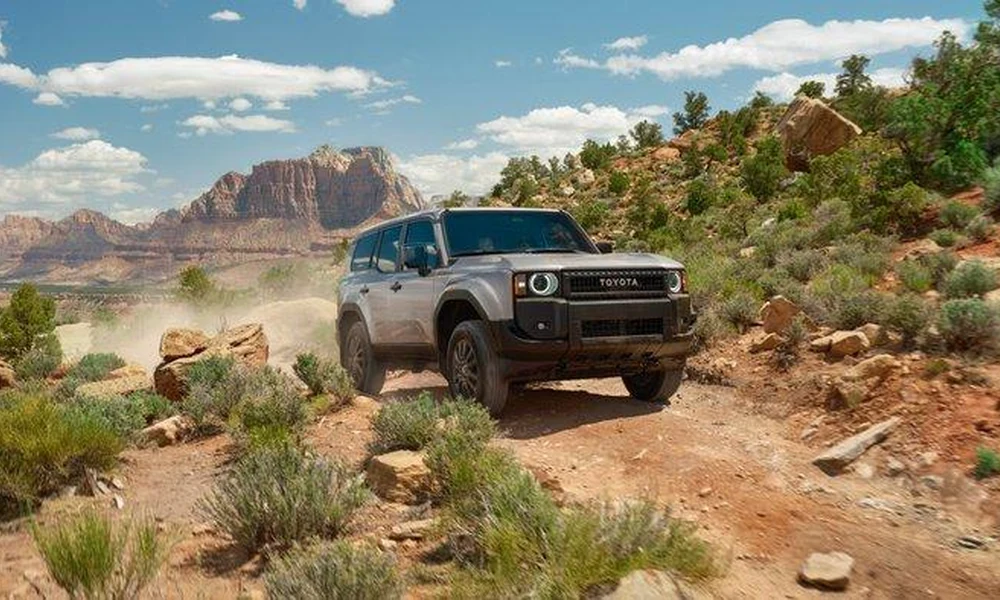
The current Land Cruiser mixes off-road toughness with a refined cabin. Its i-FORCE MAX hybrid system pairs a turbocharged 2.4-liter four-cylinder with an electric motor, for 326 horsepower and 465 lb-ft of torque.
Power goes through full-time four-wheel drive with a two-speed transfer case. Locking center and rear differentials are standard, and Multi-Terrain Select, Crawl Control, and Downhill Assist Control help manage tricky ground. Maximum towing is 6,000 pounds.
Highlights: hybrid power, full-time 4WD, standard locking differentials, low range, towing up to 6,000 pounds.
Best for: drivers who want one vehicle for daily use, towing, and serious adventures.
2. Jeep Wrangler
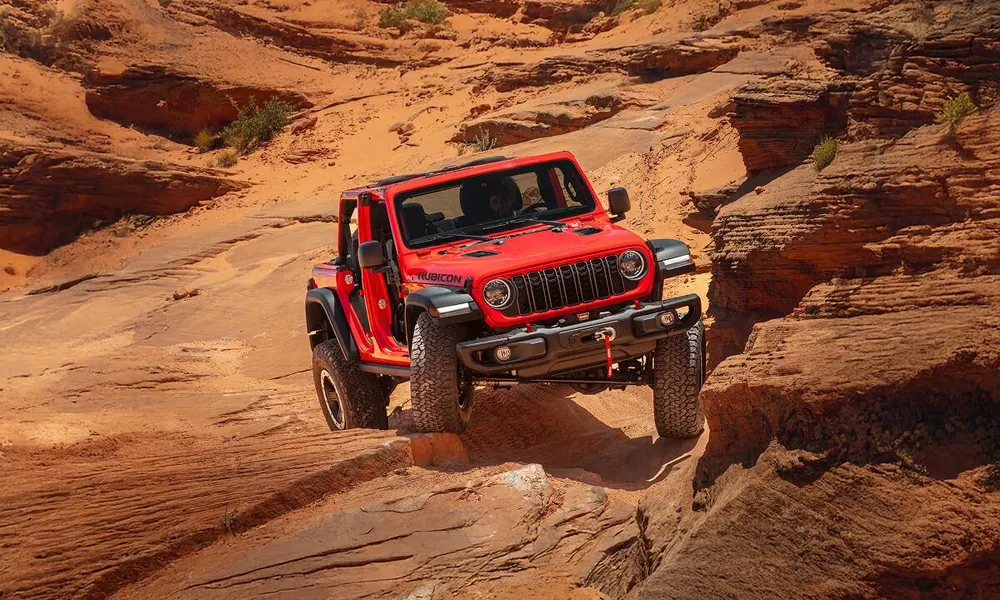
The Wrangler remains the benchmark for trail-first design, and its hardware changes a lot by trim. Sport and Sahara models use the part-time Command-Trac system with a 2.72:1 low range. Rubicon models switch to Rock-Trac, which has a 4:1 low range.
Rubicons also come with front and rear electronic locking differentials and an electronic sway-bar disconnect that lets the front suspension flex further over rocks. Removable doors and a removable roof give it an open-air character, and a manual transmission is available.
Highlights: Rock-Trac 4:1 low range, front and rear lockers, sway-bar disconnect, removable top.
Best for: rock crawling and technical trails.
3. Ford Bronco
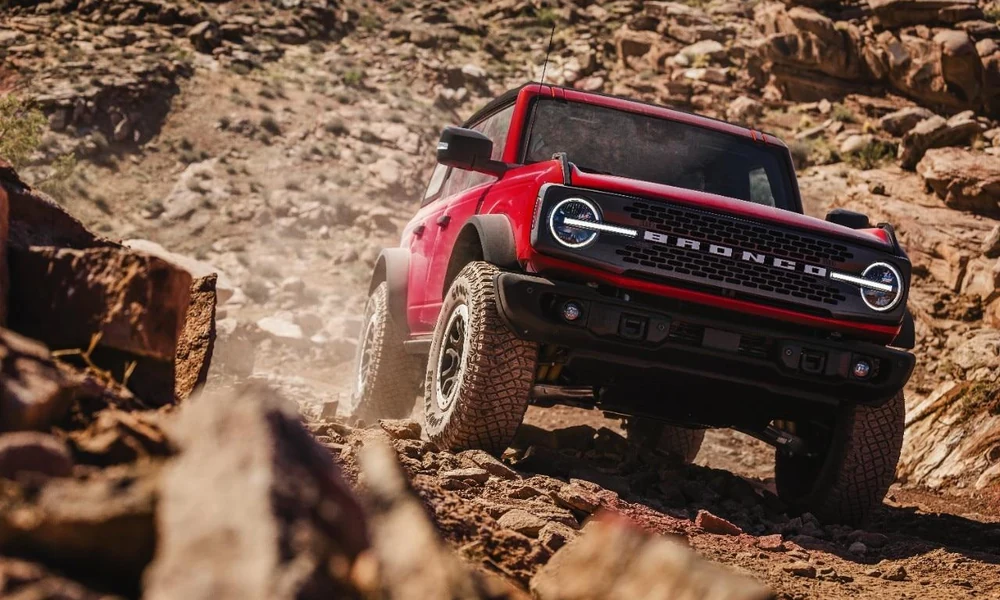
Every 2026 Bronco has four-wheel drive, and Ford offers it in two- and four-door bodies with a wide range of trims. G.O.A.T. Modes adjust throttle, traction, and four-wheel-drive behavior for different surfaces. Higher trims add more modes, such as Rock Crawl and Baja.
The Sasquatch package is the key upgrade. It adds 35-inch tires, a higher-clearance suspension, a more advanced 4×4 system, and front and rear electronic locking differentials. At the top, the Bronco Raptor uses a 3.0-liter twin-turbo V6 making 418 horsepower and 37-inch tires. The roof and doors are removable.
Highlights: standard 4×4, G.O.A.T. Modes, Sasquatch package, 418-hp Raptor.
Best for: drivers who want choice and strong trail hardware.
4. Toyota 4Runner
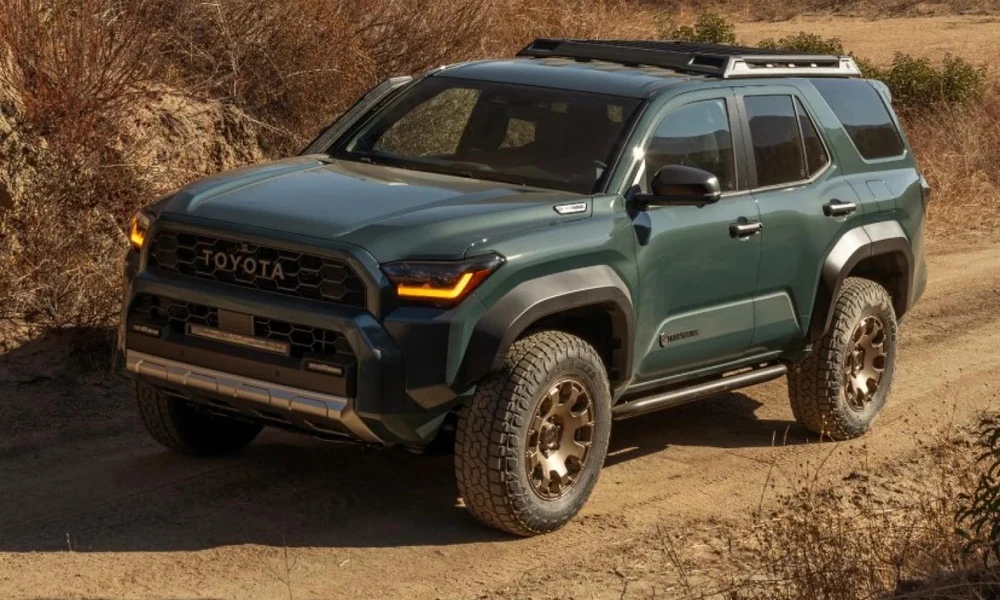
The 4Runner is a body-on-frame SUV redesigned for 2025, and it suits both everyday use and weekend trips. The standard 2.4-liter turbo four makes 278 horsepower and 317 lb-ft. The i-FORCE MAX hybrid makes 326 horsepower and 465 lb-ft. The hybrid is standard on TRD Pro, Trailhunter, and Platinum, and optional on TRD Off-Road and Limited.
Drivetrains depend on the trim: rear-wheel drive, part-time 4WD, or full-time 4WD on Limited and Platinum. TRD Off-Road, TRD Pro, and Trailhunter have a locking rear differential. TRD Off-Road, TRD Pro, and Trailhunter all wear 33-inch all-terrain tires. Toyota Safety Sense 3.0 is included.
Highlights: gas and hybrid power, three drivetrain choices, locking rear differential, 33-inch tires on top trims.
Best for: buyers who want everyday practicality with trail capability.
5. Lexus GX
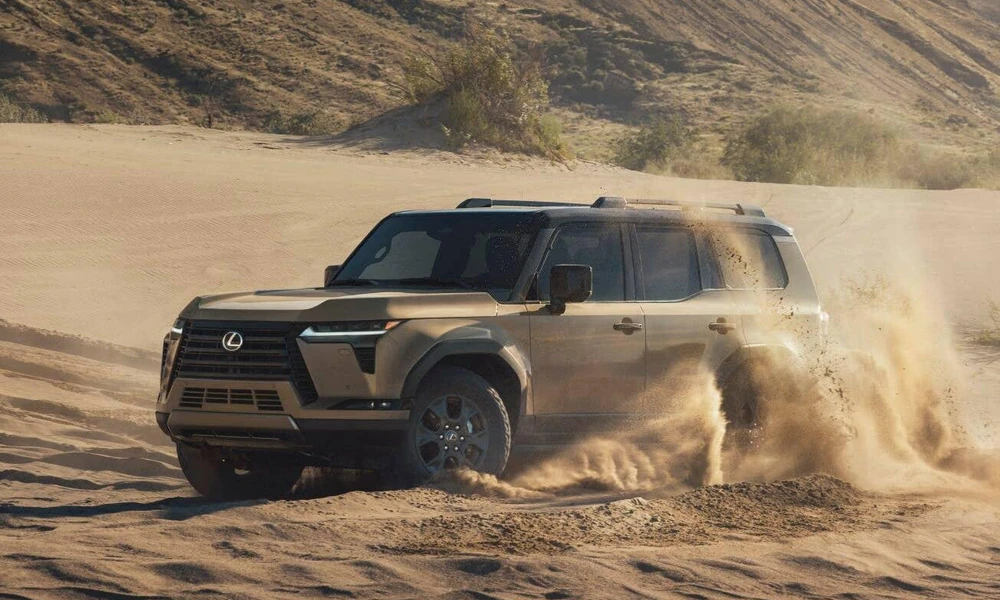
The GX gives the body-on-frame formula a luxury interior. Every 2026 GX uses a 3.4-liter twin-turbo V6 making 349 horsepower and 479 lb-ft, with a 10-speed automatic and full-time 4WD. A Torsen limited-slip locking center differential is standard.
The Overtrail and Overtrail+ trims are the off-road versions. They add an electronically controlled locking rear differential, a one-inch lift, and an electronic suspension that disconnects the stabilizer bars. Overtrail trims seat five, while the other trims offer a tight third row.
Highlights: twin-turbo V6, standard full-time 4WD, locking center differential, rear locker on Overtrail.
Best for: buyers who want luxury and real off-road ability.
6. Land Rover Defender
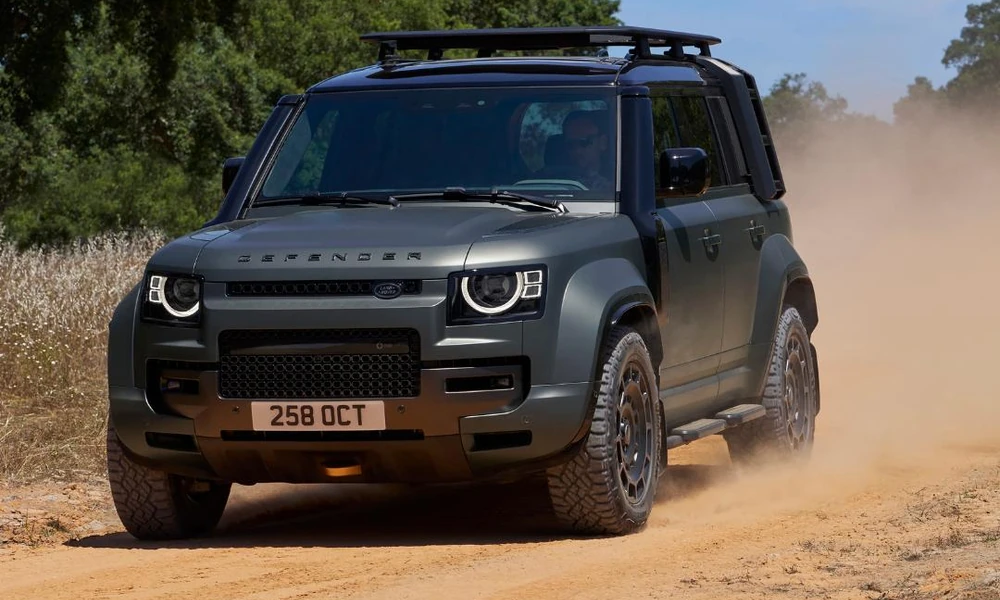
The Defender comes as a two-door 90, four-door 110, and three-row 130, with six-cylinder engines and a V8 in some versions. Every Defender has permanent 4WD with a two-speed transfer case and Terrain Response modes.
Equipment grows with trim. Locking center and rear differentials and an electronic active differential are available on some versions. Air suspension that adjusts ride height is optional on the 90 and 110 and standard on the 130.
Highlights: low range on every model, Terrain Response, adjustable air suspension, three body styles.
Best for: drivers who want comfort, style, and expedition ability.
Comparison of the Best 4×4 SUVs
Check the exact trim before buying, as equipment varies.
| SUV | Drivetrain | Off-road strengths | Best for |
|---|---|---|---|
| Toyota Land Cruiser | Full-time 4WD | Locking differentials, low range | All-round use |
| Jeep Wrangler | Part-time or full-time 4×4 | Rock-Trac, lockers on Rubicon | Serious trails |
| Ford Bronco | 4×4, trim-dependent hardware | G.O.A.T. Modes, Sasquatch package | Varied trail use |
| Toyota 4Runner | RWD, part-time or full-time 4WD | Low range, rear locker, 33-inch tires | Daily use and travel |
| Lexus GX | Full-time 4WD | Locking center diff, Overtrail rear locker | Luxury off-roading |
| Land Rover Defender | Permanent 4WD | Terrain Response, air suspension | Comfort and expeditions |
What Makes a 4×4 SUV Highly Rated?
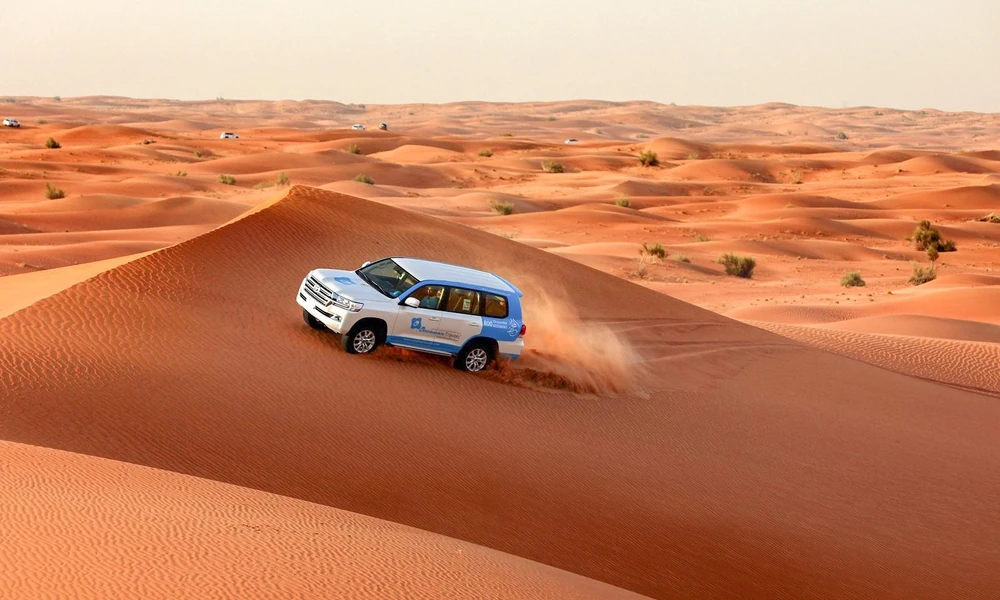
Off-road performance. Look for a low-range transfer case, locking differentials, and terrain modes. These matter more over rocks, mud, and steep ground than raw horsepower does.
Ground clearance and suspension. Ground clearance is the gap between the lowest part of the vehicle and the ground. Approach, breakover, and departure angles show how steep an obstacle the body can clear. Suspension travel helps the tires stay planted over uneven terrain.
Reliability. Off-roading stresses tires, brakes, suspension, and drivetrain parts. Compare owner reports, independent reliability studies, warranty terms, and maintenance schedules. Reputation does not guarantee that every model year performs equally well.
Safety. Useful systems include automatic emergency braking, blind-spot monitoring, lane departure warning, stability control, rear cross-traffic alert, and parking assistance. Check crash-test results for the exact model year and body style.
Comfort and practicality. A trail-focused SUV may ride firmly and run noisier on highways. Check seating, cargo space, visibility, and how easy it is to park.
Running costs. Four-wheel-drive SUVs are often heavy, with larger tires and extra drivetrain parts. Compare official fuel economy, tire prices, insurance, maintenance, and likely repair costs.
Types of 4×4 Systems Explained
| System | How it works | Typical use |
|---|---|---|
| Part-time 4WD | Driver chooses when to engage it | Loose surfaces, off-road |
| Full-time 4WD | Both axles driven continuously | Mixed road and trail |
| Automatic 4WD | Adds drive to other wheels as needed | Changing conditions |
| Low-range 4WD | Lower gearing for slow control | Steep climbs, obstacles |
Part-time systems without a center differential should not be used on dry, high-grip pavement. They can bind in turns and strain the drivetrain. Always follow the owner’s manual.
4×4 vs AWD: What Is the Difference?
Both send power to all four wheels, but they have different goals.
| Feature | 4×4 / 4WD | AWD |
|---|---|---|
| Main purpose | Off-road traction | Road traction and stability |
| Driver control | Often selectable modes | Usually automatic |
| Low-range gearing | Common | Generally absent |
| Locking differentials | Available on some models | Depends on system |
| Best use | Rough terrain | Wet roads, snow, daily driving |
A traditional 4×4 is usually better for serious off-roading because of low range and lockers. Real capability still depends on tires, ground clearance, and equipment.
Best 4×4 SUVs for Different Needs
| Your priority | Consider | Why |
|---|---|---|
| Overall capability | Land Cruiser | Full-time 4WD, standard lockers |
| Hardcore trails | Wrangler Rubicon | 4:1 low range, front and rear lockers |
| Variety of trims | Bronco | Many configurations and terrain modes |
| Daily use plus trips | 4Runner | Range of trims and powertrains |
| Luxury and trails | Lexus GX | Premium cabin, full-time 4WD |
| Luxury expeditions | Defender | Low range and air suspension |
These picks reflect equipment and intended use, not an expert-test ranking.
How to Choose the Right 4×4 SUV
- Define your use. Decide between mostly paved roads, occasional trails, or demanding terrain.
- Compare drivetrains. Check part-time versus full-time 4WD and whether low range is included.
- Check clearance. Match ground clearance and angles to the terrain.
- Review hardware. Look for lockers, terrain modes, skid plates, and suitable tires.
- Count passengers and cargo. Choose seating and storage to match your needs.
- Check fuel economy. Use official figures for the exact engine and drivetrain.
- Review safety. Check crash-test results and driver-assistance systems.
- Total the costs. Include tires, insurance, maintenance, and repairs.
Always test drive before deciding, and pay attention to visibility, seating, steering, and braking.
Advantages and Disadvantages of 4×4 SUVs
| Advantages | Disadvantages |
|---|---|
| Better traction on difficult surfaces | Usually cost more than 2WD versions |
| Capable on many terrains | Some models use more fuel |
| Specialized off-road equipment available | Maintenance can cost more |
| Useful for towing and outdoor trips | Large models are harder to park |
| Practical cargo space | Off-road-focused models can ride firmly |
Are 4×4 SUVs Worth Buying?
A 4×4 is worth considering if you often drive rough roads, reach remote areas, tow, or enjoy off-roading. With suitable tires, it can also help in harsh weather.
If you mostly drive in cities and on paved highways, a two-wheel-drive SUV or an AWD model may be cheaper and more practical. Before paying extra, think honestly about how often you will use the added capability.
Frequently Asked Questions
What is the difference between a 4×4 SUV and a regular SUV?
A 4×4 SUV can drive all four wheels. Many regular SUVs are front- or rear-wheel drive, which gives less traction on loose or slippery ground.
Which 4×4 SUVs offer factory locking differentials?
Examples include the Land Cruiser, Wrangler Rubicon, Bronco with the Sasquatch package, 4Runner TRD Off-Road, TRD Pro and Trailhunter, GX Overtrail, and some Defender versions. Type and number of lockers vary by trim.
Can a 4×4 SUV still get stuck?
Yes. Deep mud, soft sand, wrong tires, and poor technique can stop any 4×4.
Do bigger tires always help off-road?
No. They can add clearance, but they can also hurt acceleration, braking, handling, and fuel economy.
Do I need low range for daily driving?
No. Low range is for slow, controlled driving on steep or difficult terrain.
Can I use 4WD on dry roads?
Only if the system allows it. Full-time systems generally do, but part-time systems without a center differential should not be used on dry pavement.
Conclusion
The top-rated 4×4 SUVs combine capability, comfort, and technology in different ways. The Land Cruiser is a strong all-rounder, the Wrangler Rubicon is built for demanding trails, and the Bronco offers broad configuration choice. The 4Runner suits everyday use and adventure, while the Lexus GX and Land Rover Defender add luxury.
No single model suits everyone. Compare drivetrain, clearance, safety, reliability, fuel economy, and ownership costs, then choose the vehicle that fits how you really drive.