The best 4WD SUV for you depends on where you drive and what you ask of the vehicle. Some SUVs are built mainly for rough trails. Others blend comfort, family space and four-wheel-drive ability. Your budget, passengers and typical roads should all shape the decision.
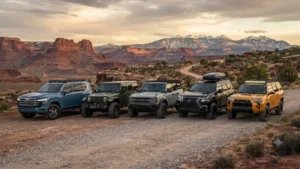
This guide compares five well-known models: the Toyota Land Cruiser, Jeep Wrangler, Ford Bronco, Lexus GX and Toyota 4Runner. For each, you’ll find the main features, strengths, drawbacks and the buyer it suits best. You’ll also find plain-language advice on 4WD systems, tyres, ground clearance and ownership costs.
Equipment and specifications vary by country and trim. Figures below refer to 2026 US-market models unless stated otherwise.
Best 4WD SUVs at a Glance
| SUV | Best for | Main strength |
|---|---|---|
| Toyota Land Cruiser | Daily driving plus off-road trips | Comfort with serious capability |
| Jeep Wrangler | Difficult trails | Purpose-built off-road design |
| Ford Bronco | Trail driving and adventures | Terrain modes and removable panels |
| Lexus GX | Luxury with rugged ability | Premium cabin on a tough platform |
| Toyota 4Runner | Families and outdoor activities | Practical layout and off-road trims |
1. Toyota Land Cruiser

Best for: drivers who want off-road ability without giving up everyday comfort.
The Land Cruiser suits people who need one SUV for school runs, long highway journeys and tough terrain. It combines a strong body-on-frame structure, a comfortable cabin and a drivetrain designed for varied surfaces.
The 2026 US model uses a 2.4-litre turbocharged hybrid engine (Toyota’s i-FORCE MAX), which delivers 326 horsepower and 465 lb-ft of torque. It comes with full-time 4WD, a two-speed transfer case and locking centre and rear differentials. Together, these help the vehicle keep moving on loose or uneven ground.
Off-road features
- Full-time 4WD: sends power to both axles at all times.
- Locking differentials: reduce wheel spin when a tyre loses grip.
- Crawl Control: manages speed for you during slow, technical driving.
- Multi-Terrain Select: offers settings for surfaces such as mud, dirt and sand, depending on trim.
- Downhill Assist Control: holds a steady speed on steep descents.
Higher grades may add a Multi-Terrain Monitor and a stabiliser disconnect system for better wheel movement over rough ground. Check which features your chosen trim includes.
Interior and everyday use
The cabin is built for daily life as much as for trails. Depending on the grade, you can get heated and ventilated front seats, a touchscreen, wireless Apple CarPlay and Android Auto, and a digital instrument display. It seats five, so it works well for families who don’t need a third row. Toyota lists a maximum towing capacity of 6,000 pounds, but always confirm the rating for your exact vehicle.
Consider this: despite the hybrid system, the Land Cruiser is a big, heavy SUV. It is not the best pick if you mainly navigate crowded streets or want the lowest running costs.
Why choose it: you want a capable 4WD that stays comfortable every day.
2. Jeep Wrangler

Best for: drivers who regularly tackle difficult trails.
The Wrangler is one of the most recognisable off-road vehicles in the world. Its classic design, trail-focused hardware and choice of 4×4 systems make it a favourite for people who spend a lot of time off paved roads.
It comes as a two-door or four-door. The two-door is shorter and easier to place on tight trails. The four-door offers more passenger and cargo room.
4×4 systems and equipment
Depending on the model, the Wrangler may use Command-Trac or Rock-Trac 4×4. Command-Trac is a part-time system with a 2.72:1 low-range ratio. Rock-Trac has a much deeper 4:1 low range, which gives extra control and torque at crawling speeds. The Rubicon trim is the one best prepared for hard trails. Some other trims offer a full-time system, so check the specification of the version you want.
Features that may be available, depending on trim, include:
- Front and rear locking differentials
- Heavy-duty axles
- Off-road tyres
- Rock rails
- Electronic sway-bar disconnect
- Skid plates to protect underbody components
Not every Wrangler has all of these, so compare trims carefully.
Interior and practicality
The cabin is practical and upright, giving a commanding view of the road and trail. Newer versions offer a touchscreen, smartphone connectivity and driver-assistance features. The four-door is the better choice for families and gear-heavy trips, while the two-door suits buyers who prioritise trail agility.
Removable doors and a removable roof are a big part of the appeal. Follow the owner’s manual when taking panels off and storing them.
Consider this: the off-road focus brings trade-offs, including a less refined ride, more cabin noise and weaker fuel economy than road-oriented SUVs.
Why choose it: trail capability is your top priority and you like the open-air experience.
3. Ford Bronco
Best for: drivers who want modern off-road technology and outdoor flexibility.
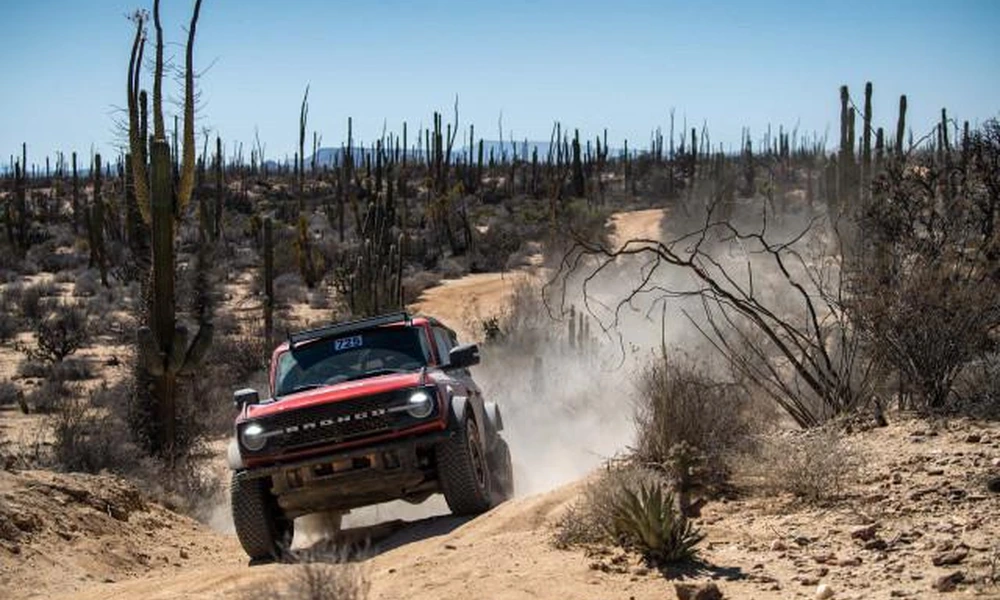
The Bronco is the Wrangler’s most direct rival. It offers a rugged look, two-door and four-door body styles and a wide range of equipment for different terrain. Every 2026 Bronco has four-wheel drive.
Terrain modes and off-road features
Ford’s Terrain Management System includes G.O.A.T. Modes, short for “Goes Over Any Type of Terrain.” These modes adjust vehicle settings for different surfaces. Most trims have five modes, while the Badlands, Stroppe Edition and Raptor have seven. Available modes include Normal, Eco, Sport, Slippery and Sand, with Rock Crawl and Baja on the more capable trims.
Selected trims and packages can add electronic locking differentials, upgraded suspension and larger off-road tyres. These are worth considering if you plan to drive on rocks, sand or uneven trails. Like the Wrangler, the Bronco has a removable roof and doors, with several roof configurations available.
Engines and interior
Ford offers a 2.3-litre EcoBoost four-cylinder with 300 horsepower, an optional 2.7-litre EcoBoost V6 with 330 horsepower and a 3.0-litre EcoBoost V6 with 418 horsepower in the Raptor. Availability depends on the trim.
Inside, the layout is practical and technology-focused, with materials designed for outdoor use. The four-door is better for passengers and equipment, while the two-door is more compact. Towing capacity is 3,500 pounds on most models and 4,500 pounds on the Raptor.
Consider this: capability varies a lot between trims. A road-focused Bronco won’t have the trail hardware of a Badlands or Raptor.
Why choose it: you want selectable terrain modes, removable panels and a wide choice of off-road setups.
4. Lexus GX

Best for: buyers who want a luxury SUV with real off-road ability.
The GX pairs a rugged platform with a premium cabin. It suits drivers who want comfortable road trips but also need to cross rough surfaces confidently.
The 2026 US GX uses a 3.4-litre twin-turbo V6 making 349 horsepower. It has full-time four-wheel drive and body-on-frame construction. The Overtrail grade adds extra off-road equipment for people who plan to leave the tarmac regularly.
Off-road capability
Full-time 4WD provides traction across different surfaces, and Multi-Terrain Select offers settings for mud, sand, deep snow and dirt. If you expect frequent trail use, the Overtrail is the more suitable choice. The GX also has a strong towing rating, though the exact figure depends on configuration, so confirm it with Lexus or your dealer.
Interior and comfort
Compared with the Wrangler or Bronco, the GX focuses more on comfort and refinement. Depending on trim, you can expect a touchscreen, smartphone connectivity and the Lexus Safety System+ 3.0 driver-assistance suite. Some configurations seat up to seven, but the Overtrail is a five-seater, so check the layout before choosing a grade.
Consider this: it is a large luxury SUV, so the purchase price, fuel use, tyres and servicing can cost more than for smaller or cheaper models. Its size can also make tight trails and parking harder.
Why choose it: you want a premium cabin, full-time 4WD, strong towing ability and the option of a trail-focused trim.
5. Toyota 4Runner
Best for: families and outdoor drivers who need a practical SUV.
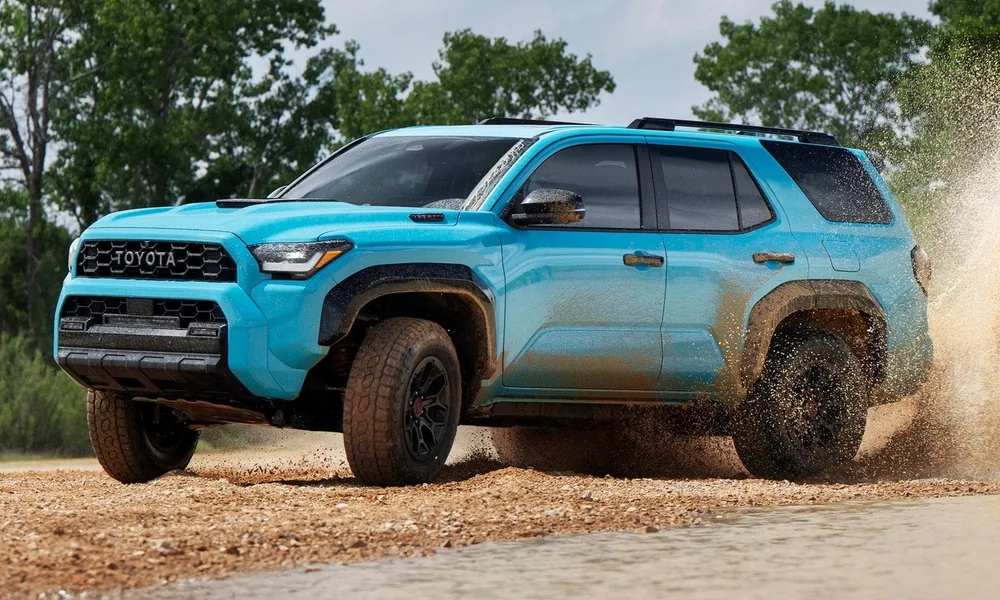
The 4Runner offers passenger space, flexible cargo room and trims aimed at outdoor use. For 2026, Toyota offers a 2.4-litre turbo four-cylinder with 278 horsepower, plus the i-FORCE MAX hybrid with up to 326 horsepower and 465 lb-ft of torque. Depending on the trim, you can get two-wheel drive, part-time 4WD or full-time 4WD.
Off-road trims and equipment
For off-road use, compare the TRD Off-Road, TRD Pro and Trailhunter trims, where available. Depending on the trim, equipment may include:
- Part-time or full-time 4WD
- Selectable terrain settings
- Crawl Control
- A locking rear differential
- Off-road suspension
- All-terrain tyres
Equipment varies, so check the specification sheet instead of assuming every 4Runner is equally capable.
Space and everyday use
Some configurations seat seven, while others have five seats. Toyota lists maximum towing of 6,000 pounds for certain 2026 configurations, with the TRD Pro rated at 5,800 pounds. The cabin offers modern technology and safety features that vary by grade, and its practical layout suits family trips, camping and carrying outdoor gear.
Consider this: not every 4Runner is 4WD. Some versions are rear-wheel drive, so confirm the drivetrain before buying. Third-row availability also differs across the range.
Why choose it: you want a practical SUV with available 4WD, good cargo space and outdoor-ready trims.
4WD vs AWD: What’s the Difference?
Both systems send power to more than two wheels, but they are designed for different jobs.
Traditional 4WD is common in SUVs built for rough roads, steep trails, sand and rocks. Many systems offer high and low ranges. Low range provides extra torque at low speeds, which helps on difficult terrain.
AWD is generally designed to improve traction in ordinary road driving. It usually works automatically, shifting power between axles as needed. Some advanced AWD systems cope with light off-road use.
| Feature | 4WD | AWD |
|---|---|---|
| Main purpose | Rough roads and off-road driving | Road traction and daily driving |
| Driver control | Often has selectable modes | Usually fully automatic |
| Low-range gearing | Common on traditional 4WD | Usually unavailable |
| Best use | Rocks, mud, sand, steep trails | Wet roads, snow, light gravel |
| Typical vehicles | Wrangler, Land Cruiser | Many crossovers and road SUVs |
Neither system makes a vehicle safe in every situation. Tyres, ground clearance, vehicle weight and driving technique all matter.
How to Choose the Best 4WD SUV
The right SUV isn’t always the most powerful or the one with the priciest off-road package. Match it to your real conditions.
1. Define your main driving purpose
- City driving: look for comfortable seats, good visibility, safety features and a manageable size.
- Highways: prioritise stability, seat comfort and a suitable engine.
- Off-road: focus on low-range gearing, locking differentials, ground clearance and underbody protection.
- Family travel: check passenger space, cargo room, child-seat access and safety equipment.
- Towing: confirm the rated capacity and any equipment needed.
The Wrangler and Bronco are strong for dedicated trail driving, while the Lexus GX suits buyers who want luxury alongside capability.
2. Check the 4WD system
Part-time systems let the driver choose 2WD, 4H or 4L. Full-time systems power both axles continuously. Look for:
- 4H (high range): for slippery or loose surfaces at higher speeds.
- 4L (low range): for slow driving over difficult ground.
- Locking differentials: help maintain traction when wheels lose grip.
- Terrain modes: adjust vehicle settings for sand, mud or rocks.
Follow the manufacturer’s instructions, because some systems shouldn’t be used on dry, high-grip roads.
3. Understand ground clearance and angles
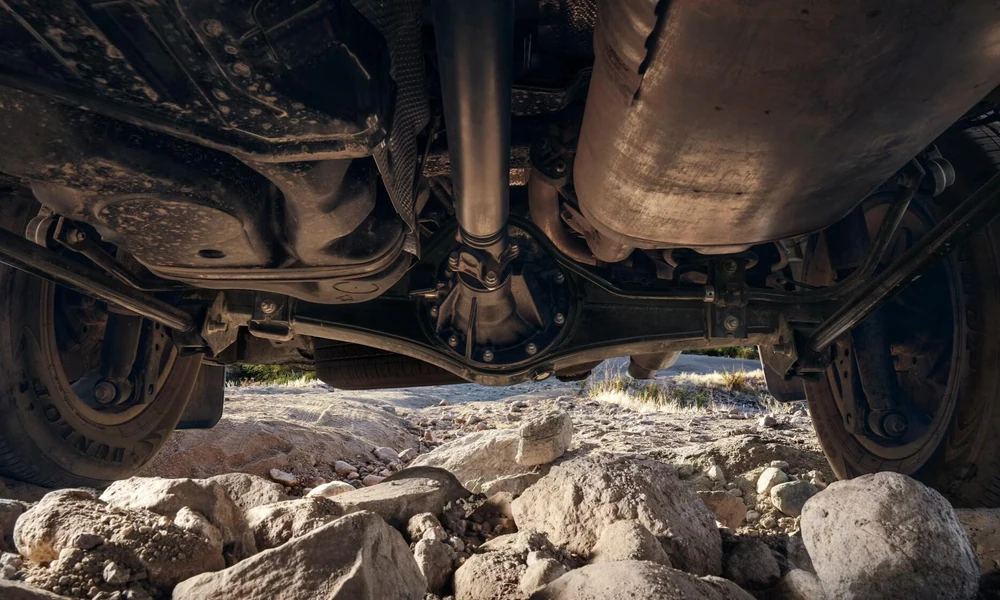
Ground clearance is the gap between the lowest part of the vehicle and the ground. More clearance helps you pass over rocks and ruts without scraping the underbody. But it’s only part of the picture.
| Measurement | Meaning | Why it matters |
|---|---|---|
| Ground clearance | Gap under the lowest point | Reduces underbody contact |
| Approach angle | Steepest slope the front can climb without touching | Helps on steep ascents |
| Departure angle | Steepest slope the rear can leave without touching | Helps when exiting obstacles |
A big clearance figure doesn’t guarantee success. Wheelbase, tyre size, suspension travel and driver skill all play a role.
4. Pick suitable tyres
Tyres strongly affect 4WD performance. Even a very capable SUV struggles on the wrong rubber.
- Highway-terrain (HT): quiet and comfortable on paved roads.
- All-terrain (AT): a balance of road manners and off-road grip, and a popular choice for mixed use.
- Mud-terrain (MT): strong grip in mud and rough terrain, but noisier on tarmac.
If you mostly drive in the city and occasionally use rough roads, all-terrain tyres are a sensible middle ground. Frequent deep mud or rocky trails call for more specialised options.
5. Compare engine performance and fuel economy
Power helps with hills, heavy loads and towing, but it shouldn’t be your only measure. Torque, the engine’s twisting force, matters especially for slow off-road driving. Fuel economy matters too, particularly on long journeys, since large SUVs with heavy off-road gear use more fuel. Compare official figures for the exact engine, drivetrain and trim.
6. Review space and safety features
Before buying, check:
- Number of seats and legroom
- Cargo space behind the rear seats
- Child-seat anchor points
- Climate control
- Infotainment and smartphone connectivity
- Rear-view camera and parking sensors
- Automatic emergency braking and other driver aids
Safety equipment often differs between trims, so verify the exact version.
7. Budget for ownership costs
The purchase price is only the beginning. Also consider:
- Fuel
- Insurance
- Regular servicing
- Replacement tyres
- Brake and suspension maintenance
- Spare-parts availability and cost
- Local taxes and registration fees
When buying used, ask for the service history and get an independent inspection. Look for underbody damage, leaks, worn suspension parts and signs of heavy off-road use. A mechanic should also check the 4WD system and transfer case.
Best 4WD SUV by Driving Need
| Your need | Consider | Reason |
|---|---|---|
| Serious off-road driving | Jeep Wrangler | Dedicated systems and trail equipment |
| Technology and flexibility | Ford Bronco | Terrain modes and varied body styles |
| Daily use with capability | Toyota Land Cruiser | Full-time 4WD and a comfortable cabin |
| Luxury with capability | Lexus GX | Premium interior and full-time 4WD |
| Family and outdoor use | Toyota 4Runner | Practical space and available 4WD |
This is a guide based on each vehicle’s design and equipment, not a universal ranking. Trim, tyres, road conditions and budget all affect the best choice.
Conclusion
The best 4WD SUVs balance off-road ability, comfort, space and technology in different ways. The Wrangler and Bronco are strong for drivers who regularly tackle challenging trails. The Land Cruiser blends everyday comfort with serious equipment, and the Lexus GX adds a more luxurious experience. The 4Runner is worth a look if you want a practical SUV with available four-wheel drive.
Before you decide, compare exact trims, 4WD systems, safety features, fuel economy and ownership costs. Above all, choose the SUV that fits the roads you actually drive.
Note: this article uses US-market 2026 model information. Availability, trim names, equipment and specifications may differ in Pakistan and other countries.
Frequently Asked Questions About 4WD SUVs
Which 4WD SUV is best for off-road driving?
The Jeep Wrangler and Ford Bronco are strong choices, with specialised equipment and selectable modes on many trims. The Toyota Land Cruiser is also capable, with full-time 4WD, locking differentials and a two-speed transfer case.
What is the difference between 4WD and AWD?
4WD is typically built for rough terrain and may offer high and low ranges. AWD usually works automatically to improve traction on normal roads. Exact features vary by vehicle.
Is a 4WD SUV good for daily driving?
Yes. Many are comfortable for commuting, family trips and highway travel. Larger off-road models may cost more to fuel and have a firmer ride and more road noise than smaller SUVs.
Do all 4WD SUVs have low-range gearing?
No. Some do, while others use systems without it. If you plan to drive difficult trails, confirm that your trim has a two-speed transfer case and a 4L setting.
Are 4WD SUVs better in snow?
4WD can help a vehicle move on snow by sending power to more wheels. It doesn’t improve braking or guarantee safe handling. Winter tyres, careful driving and suitable conditions still matter.
Jeep Wrangler or Ford Bronco: which is better off-road?
Both are built for it. The Wrangler offers multiple 4×4 systems, including Rock-Trac on selected versions, and the Bronco offers G.O.A.T. Modes and electronic locking differentials on some trims. Compare exact trims, tyres and features instead of choosing by brand alone.
Are all Toyota 4Runners four-wheel drive?
No. The 2026 US 4Runner comes with two-wheel drive, part-time 4WD or full-time 4WD, depending on the trim. Check the exact specification before buying.
What should I check before buying a used 4WD SUV?
Review the service history and inspect the engine, transmission, transfer case, differentials, suspension, tyres and underbody. Look for off-road damage and have a qualified mechanic examine the 4WD system. On the test drive, listen for unusual noises, feel for vibrations, watch for warning lights and test every drive mode.