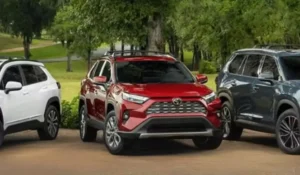
A Family SUV, an Off-Roader, or Something In Between?
Shopping for a Toyota SUV can feel surprisingly difficult. You may start by looking at the RAV4, then notice the Highlander, Grand Highlander, 4Runner, Land Cruiser, and several hybrid and electric options. Before long, it’s hard to know which one actually fits your needs.
The good news is that Toyota offers one of the broadest SUV lineups on the market. Whether you want an affordable daily commuter, a spacious family vehicle, or a capable off-road SUV, there’s a model built for that purpose.
The challenge isn’t finding a good Toyota SUV. It’s choosing the right one without paying for features or capability you’ll never use.
This guide compares every major Toyota SUV, explains how the lineup has changed for 2026, highlights real differences between models, and helps you decide which SUV best matches your lifestyle, budget, and driving habits.
AI Overview
Toyota SUVs range from compact crossovers like the Corolla Cross and RAV4 to full-size SUVs such as the Sequoia and Land Cruiser. They are widely recognized for strong reliability, high resale value, and a growing selection of hybrid and electric powertrains.
Choosing the right model depends on how you drive, how much space you need, and whether fuel efficiency, off-road capability, or family comfort is your top priority.
Key Takeaways
- Toyota offers SUVs in compact, midsize, full-size, hybrid, plug-in hybrid, and fully electric categories.
- The RAV4 remains one of the best all-around choices for daily driving and fuel efficiency.
- The Grand Highlander provides three-row seating with cargo space that rivals many minivans.
- Traditional SUVs like the 4Runner and Land Cruiser are better suited for towing and off-road driving.
- Toyota continues expanding its electrified lineup with hybrid, plug-in hybrid, and bZ electric SUVs.
- Reliability remains one of Toyota’s biggest advantages, although maintenance costs vary by model.
What is the best Toyota SUV?
The best Toyota SUV depends on your needs. The RAV4 suits most drivers thanks to its balance of efficiency, practicality, and reliability. Families often prefer the Highlander or Grand Highlander, while the 4Runner and Land Cruiser are better choices for serious off-road driving and towing.
What Is a Toyota SUV?
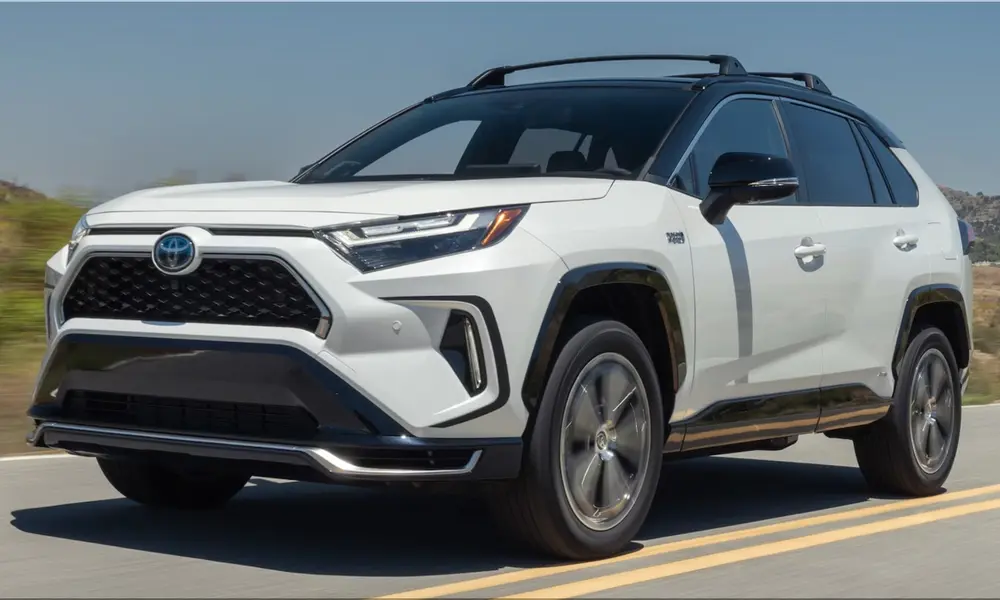
A Toyota SUV is any sport utility vehicle or crossover built by Toyota. The lineup covers everything from small city-friendly models to large body-on-frame SUVs designed for towing and challenging terrain.
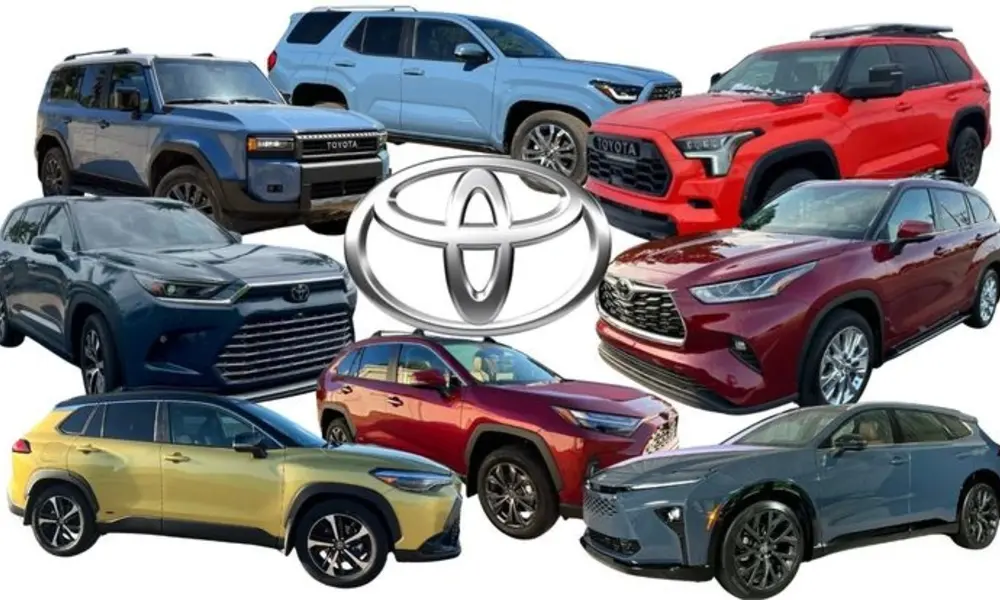
Today, Toyota’s SUV family includes:
- Corolla Cross
- RAV4
- Highlander
- Grand Highlander
- 4Runner
- Land Cruiser
- Sequoia
- bZ electric SUVs
- Regional Toyota SUV models
Although they’re all called SUVs, they don’t serve the same purpose.
Crossovers vs Traditional Toyota SUVs
The biggest difference is how they’re built.
Crossovers are designed mainly for daily driving, comfort, and fuel economy. Examples include the Corolla Cross, RAV4, Highlander, and Grand Highlander.
Traditional SUVs like the 4Runner, Land Cruiser, and Sequoia use body-on-frame construction. They are built for towing heavier loads, rough roads, and demanding off-road use.
Knowing this difference helps narrow your choices much faster than comparing every model individually.
Toyota SUV Lineup at a Glance
| Model | Best For | Powertrain |
| Corolla Cross | City driving, first-time buyers | Gas, Hybrid |
| RAV4 | Daily driving, small families | Hybrid, Plug-in Hybrid (2026 North America) |
| Highlander | Families needing three rows | Gas, Hybrid |
| Grand Highlander | Large families, road trips | Gas, Hybrid |
| 4Runner | Off-road adventures | Gas |
| Land Cruiser | Premium off-road capability | Hybrid |
| Sequoia | Large families, towing | Hybrid |
| bZ Woodland / bZ | Fully electric driving | Electric |
Why Toyota SUVs Are So Popular
Toyota has spent decades building a reputation for dependable vehicles. Brand-level reliability studies consistently place Toyota among the industry’s most reliable automakers, according to CarWise.
That reputation also helps resale value. Many buyers choose Toyota because they expect fewer unexpected repairs and stronger long-term ownership compared with many competing brands.
Another reason is variety.
Whether your budget is modest or premium, Toyota offers an SUV that fits. Instead of focusing only on gasoline engines, the company now offers hybrid, plug-in hybrid, and fully electric options, giving buyers more flexibility than ever.
Which Toyota SUV Is Best for You?
There isn’t one best Toyota SUV for everyone. The right choice depends on how you drive, how many passengers you carry, and whether you value fuel savings, space, or off-road capability.
Choose the RAV4 if You Want an All-Rounder
The RAV4 is the easiest Toyota SUV to recommend for most buyers.
It combines comfortable everyday driving, practical cargo space, and Toyota’s strong reliability record. According to Classic Toyota of Tyler, the RAV4 is one of the brand’s most reliable SUVs.
For 2026, Toyota is also making a major change. The RAV4 will be offered only as a hybrid or plug-in hybrid in North America, reflecting the company’s shift toward electrification.
Choose the Highlander or Grand Highlander for Family Use
If you regularly carry seven or eight passengers, these models deserve a closer look.
The Highlander balances comfort and efficiency, while the Grand Highlander provides even more passenger and cargo space.
Car and Driver describes the 2026 Grand Highlander as nearly as practical as a minivan, making it an excellent option for growing families who don’t want to drive a minivan.
Choose the 4Runner or Land Cruiser for Off-Road Driving
If your adventures take you beyond paved roads, these SUVs stand out.
Their body-on-frame construction, available four-wheel drive, and rugged design make them far more capable on rough terrain than crossover SUVs.
The 4Runner also has a strong reputation for durability. SlashGear reports an estimated 10-year maintenance and repair cost of about $6,492, with average annual repair costs around $514, although actual costs vary by location and maintenance habits.
Choose the Sequoia if You Need Maximum Space
The Sequoia is Toyota’s largest SUV.
It’s designed for buyers who need three rows, generous cargo capacity, and stronger towing capability than midsize SUVs can provide.
While it’s highly capable, larger SUVs generally cost more to maintain than compact models because of their size and complexity.
Hybrid, Plug-In Hybrid, or Electric?
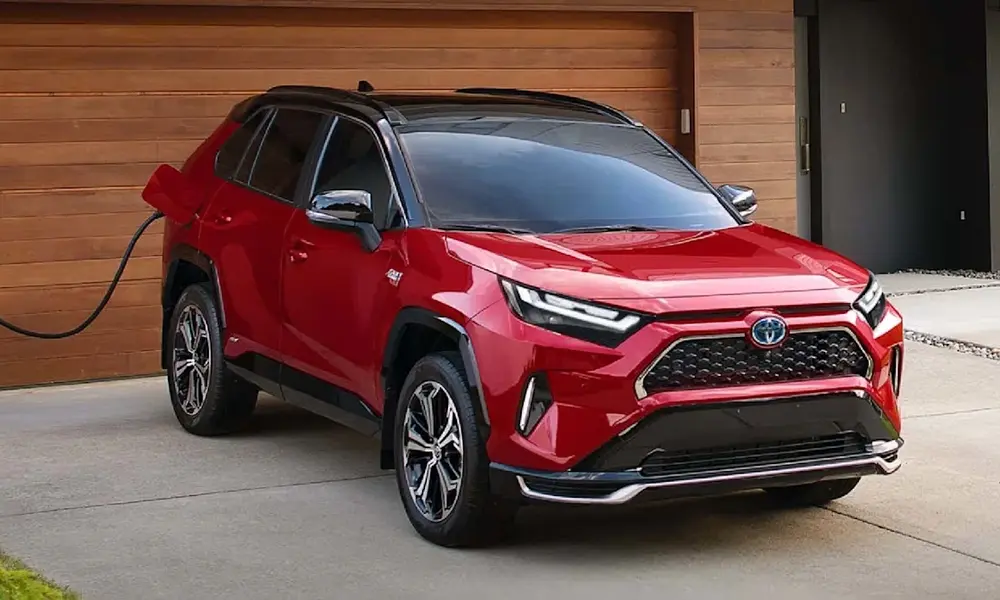
Toyota now offers more electrified SUVs than ever before.
Hybrid
A hybrid combines a gasoline engine with electric motors to improve fuel efficiency without requiring charging.
This is the best option for most drivers who want lower fuel costs with no change to their daily routine.
Plug-In Hybrid (PHEV)
A plug-in hybrid adds a larger battery that you can recharge.
The upcoming RAV4 Plug-in Hybrid can drive around 50 miles on electric power alone before the gasoline engine takes over, making it attractive for short daily commutes.
Fully Electric (EV)
Toyota’s Beyond Zero (bZ) lineup is aimed at drivers ready to leave gasoline behind.
The new bZ Woodland features a 74.7 kWh battery, dual-motor all-wheel drive, 375 horsepower, and an estimated 260-mile driving range, according to Diehl Toyota. It can also fast-charge to 80% in about 30 minutes under suitable conditions.
Toyota SUV Comparison
| Feature | Crossover SUVs | Traditional SUVs |
| Best examples | RAV4, Corolla Cross, Highlander | 4Runner, Land Cruiser, Sequoia |
| Daily driving | Excellent | Good |
| Fuel efficiency | Better | Lower |
| Off-road ability | Light trails | Excellent |
| Towing | Moderate | High |
| Ride comfort | Smooth | Firmer |
| Family commuting | Excellent | Good |
| Serious adventures | Limited | Excellent |
This comparison makes one thing clear: buying the biggest Toyota SUV isn’t always the smartest choice. Matching the SUV to your actual driving needs usually delivers better value over the long term.
Are Toyota SUVs Reliable?
Reliability is one of the biggest reasons buyers choose a Toyota SUV.
CarWise’s reliability analysis shows Toyota consistently ranks among the most dependable automotive brands in major reliability studies. While every model is different, the brand has built its reputation on durable engineering and predictable ownership costs.
Some Models Are More Reliable Than Others
Not every Toyota SUV performs exactly the same over time.
Classic Toyota of Tyler highlights the RAV4, Highlander, and 4Runner as some of Toyota’s most reliable SUVs. At the same time, HotCars notes that reliability still varies between models and production years.
That’s why it’s better to research the specific SUV you’re considering rather than relying only on Toyota’s overall reputation.
Are Toyota SUVs Expensive to Maintain?
Most Toyota SUVs are reasonably affordable to maintain, but ownership costs increase as the vehicles become larger and more complex.
Compact crossovers usually cost less to own than full-size, body-on-frame SUVs.
Estimated Long-Term Maintenance Costs
| Model | Estimated 10-Year Maintenance & Repair Cost* |
| 4Runner | About $6,492 |
| Sequoia | About $6,202 |
| Land Cruiser | About $6,782 |
*Figures are estimates summarized from CarEdge data by SlashGear and MotorBiscuit. Actual costs vary by location, labor rates, driving habits, and maintenance history.
What Increases Maintenance Costs?
Several factors affect what you’ll spend over the years.
- Larger engines usually require more expensive servicing.
- Bigger tires and brake components cost more to replace.
- Off-road use creates additional wear.
- Skipping routine maintenance often leads to larger repair bills later.
Even the most reliable SUV benefits from regular servicing.
Who Should Buy a Toyota SUV?
A Toyota SUV is an excellent fit if you:
- Want long-term reliability.
- Plan to keep your vehicle for many years.
- Value strong resale value.
- Need a family-friendly SUV.
- Prefer hybrid options with proven technology.
- Want an SUV that balances comfort and practicality.
Who Might Want Something Else?
Toyota may not be the perfect choice if you:
- Want the sportiest driving experience.
- Prefer bold styling over long-term dependability.
- Need the widest selection of fully electric SUVs today.
- Prioritize luxury features above reliability.
Many competing brands focus more on performance or cutting-edge technology, while Toyota continues to prioritize durability and everyday usability.
Practical Guide: How to Choose the Right Toyota SUV
Instead of buying the most popular model, match the SUV to how you’ll actually use it.
Step 1: Count Your Passengers
- 1–5 people: Corolla Cross or RAV4
- 6–8 people: Highlander or Grand Highlander
- Large families with towing needs: Sequoia
Step 2: Think About Your Driving
- Mostly city driving: Corolla Cross or RAV4 Hybrid
- Long highway trips: Highlander
- Regular off-road driving: 4Runner or Land Cruiser
- Mostly electric driving: bZ models
Step 3: Consider Long-Term Ownership
Before buying, compare:
- Purchase price
- Fuel costs
- Maintenance estimates
- Insurance
- Resale value
Looking beyond the sticker price often saves more money over several years.
Common Mistakes to Avoid
Many buyers choose the wrong SUV simply because it’s popular.
Avoid these common mistakes:
- Buying a large SUV when a compact model meets your needs.
- Assuming every Toyota SUV has the same maintenance cost.
- Ignoring cargo space and third-row practicality.
- Choosing an off-road model for city-only driving.
- Focusing only on purchase price instead of total ownership cost.
Final Thoughts
Many people start shopping for a Toyota SUV thinking every model is similar.
After comparing the lineup, the differences become much clearer. A RAV4 fits many drivers, a Grand Highlander suits growing families, while a 4Runner or Land Cruiser makes more sense for serious off-road use.
Toyota’s reputation for reliability remains one of its biggest strengths, but choosing the model that matches your lifestyle matters just as much as choosing the brand itself.
Frequently Asked Questions
Are Toyota SUVs really more reliable than other brands?
Toyota consistently ranks among the most reliable vehicle brands in major dependability studies. Many owners also report long service life with routine maintenance. Even so, reliability varies by model and maintenance history.
Which Toyota SUV is the most reliable?
The RAV4, Highlander, and 4Runner are widely recognized as Toyota’s most dependable SUVs. There isn’t a single “best” model for everyone, so choose one that fits your needs as well as its reliability record.
Are Toyota SUVs expensive to maintain?
Most Toyota SUVs have competitive maintenance costs compared with many rivals. Compact models like the RAV4 generally cost less to maintain than larger SUVs such as the Land Cruiser or Sequoia.
Which Toyota SUV is best for families?
The Highlander and Grand Highlander are excellent family choices because they offer three rows of seating and plenty of cargo space. The RAV4 is also a great option for smaller families.
Are Toyota hybrid SUVs worth buying?
For many drivers, yes. Hybrid models offer better fuel efficiency without changing your daily driving habits. Toyota is also expanding its hybrid lineup, including the 2026 RAV4.
How long can a Toyota SUV last?
With proper maintenance, many Toyota SUVs have been reported to exceed 200,000 miles. Actual lifespan depends on driving habits, climate, and regular servicing.