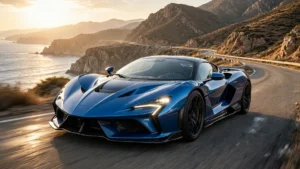
Some cars are designed to make everyday travel easier. Others are engineered to make every acceleration, corner, and stretch of open road feel extraordinary. Fast cars belong to the second category, combining powerful engines or electric motors with carefully developed handling, braking, and aerodynamics.
The term covers a wide range of vehicles. A lightweight sports car can deliver an exciting driving experience without reaching extreme speeds, while a supercar or hypercar may combine breathtaking acceleration with advanced materials and sophisticated aerodynamic systems.
Electric vehicles have also changed what performance means. Instant electric-motor torque allows some EVs to accelerate exceptionally quickly, challenging the traditional assumption that the fastest cars must have large petrol engines.
The best fast car is not necessarily the one with the highest advertised top speed. Acceleration, cornering ability, braking performance, driver confidence, comfort, and intended use all help determine what makes a performance car special.
Key takeaways
-
Look beyond horsepower: Weight, torque delivery, aerodynamics, tires, suspension, and braking all contribute to a car’s overall performance.
-
Understand the different categories: Sports cars prioritize driving enjoyment, supercars emphasize exceptional performance, hypercars push engineering further, and performance sedans combine speed with practicality.
-
Compare acceleration and top speed: A car with rapid acceleration is not necessarily the car with the highest maximum speed.
-
Consider electric performance: Electric vehicles can deliver exceptional acceleration, but battery temperature, charge level, vehicle weight, and power delivery affect performance.
-
Calculate total ownership costs: Insurance, fuel or electricity, tires, maintenance, repairs, and depreciation can significantly increase the cost of owning a fast car.
-
Prioritize safety and suitability: Choose a vehicle that matches your driving needs, road conditions, budget, and access to qualified servicing. Always follow speed limits and drive responsibly.
What Makes a Car Fast?
A car’s speed comes from several interacting engineering factors rather than horsepower alone.
Engine Power and Torque
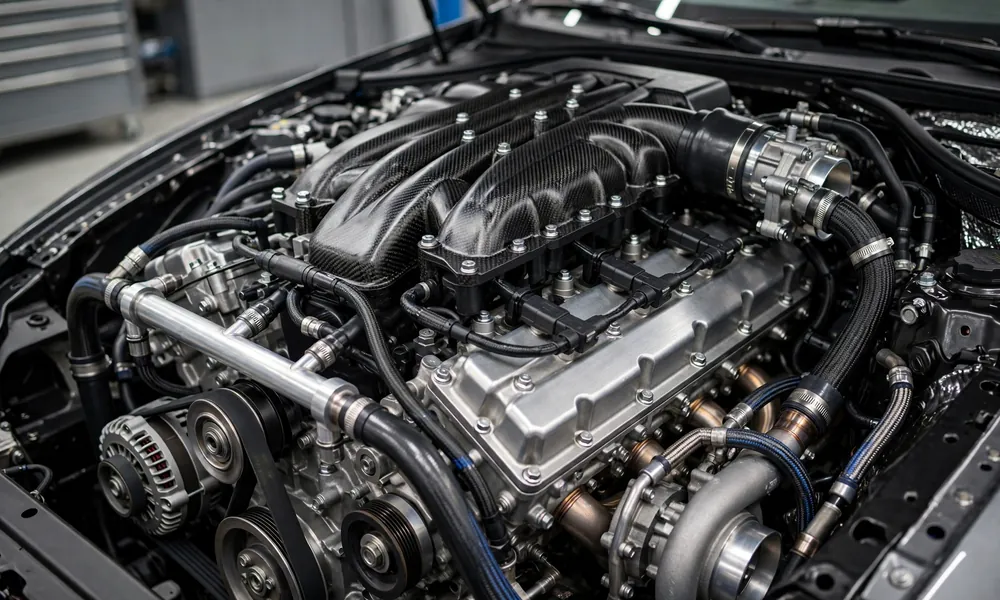
In petrol-powered vehicles, the engine converts fuel into mechanical energy. Greater power can help a car maintain high speeds and accelerate strongly, although gearing, vehicle weight, traction, and aerodynamics also influence the result.
Torque contributes to the force available to accelerate the vehicle. Its delivery across the engine’s operating range can affect how responsive a car feels when pulling away or overtaking.
Electric vehicles use motors that can deliver substantial torque from very low speeds, giving many performance EVs their immediate acceleration.
Weight and Power-to-Weight Ratio
A powerful engine must move the vehicle’s mass. A lighter car with a favorable power-to-weight ratio may accelerate and change direction more effectively than a heavier vehicle with similar power. Weight also influences braking distance, tire loads, and handling. Engineers therefore consider the complete vehicle rather than simply installing a larger engine.
Aerodynamics

Air resistance becomes increasingly important as a car travels faster. A streamlined body can reduce drag, helping the vehicle reach and maintain higher speeds. Performance cars may also use spoilers, diffusers, and adjustable aerodynamic components to generate downforce. This can improve stability and grip, although additional aerodynamic load may increase drag.
Tires, Suspension, and Brakes
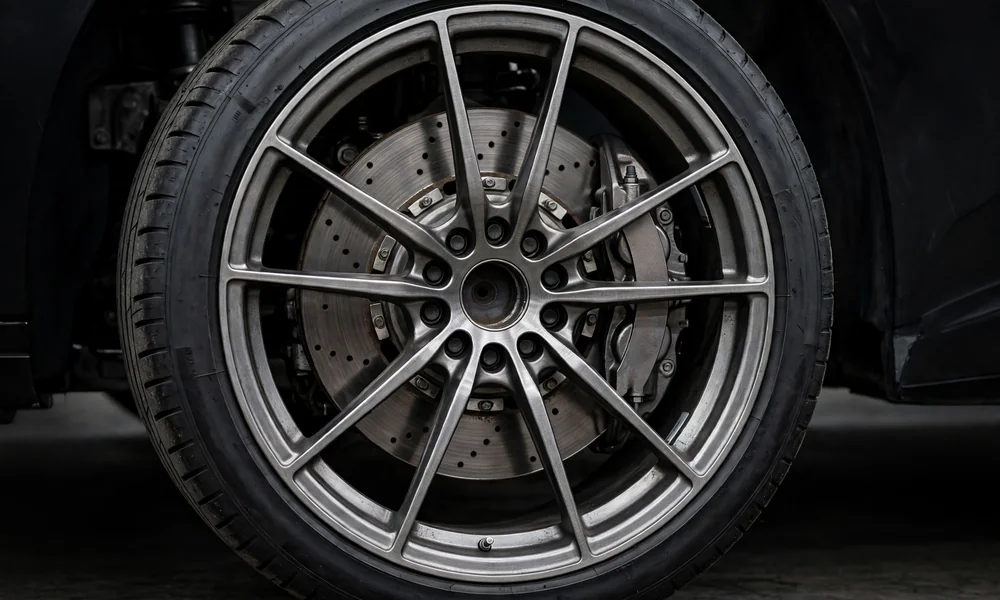
Power is useful only when the car can put it onto the road. Tires determine how effectively the vehicle accelerates, turns, and stops under different conditions. Suspension geometry, chassis stiffness, and electronic stability systems influence control. High-performance brakes help manage the heat generated during repeated hard stops.
Together, these systems determine whether a fast car feels controlled and predictable rather than simply powerful.
Types of Fast Cars
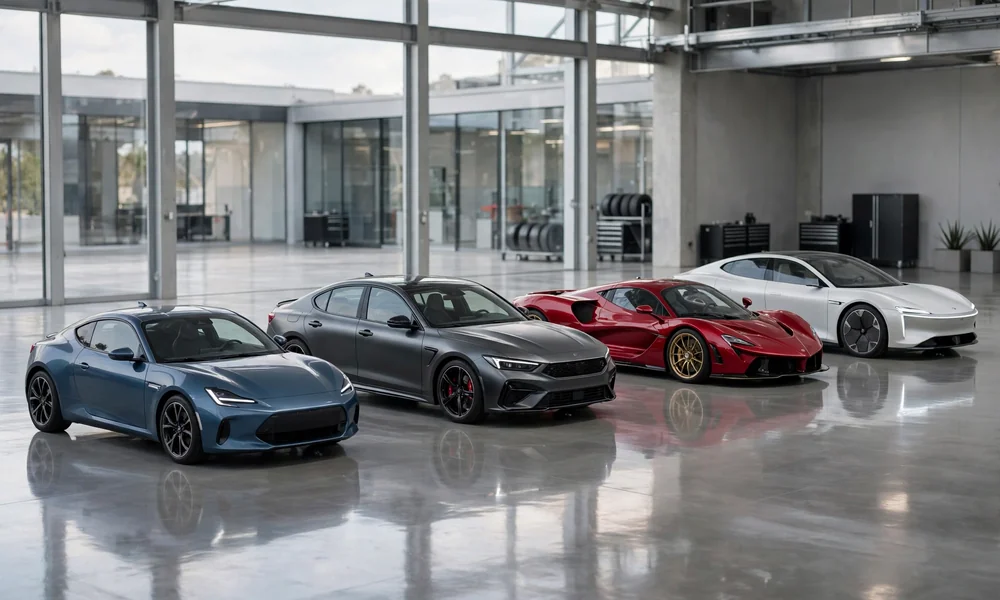
Fast cars come in several categories, each with its own balance of performance, practicality, and price.
1. Sports Cars
Sports cars prioritize driving enjoyment, handling, and responsiveness. Many are relatively compact, with two seats or a small rear seating area. Examples include the Mazda MX-5, Toyota GR86, and Porsche 911.
They occupy different price and performance levels, but each illustrates how a vehicle can emphasize driver engagement. A sports car does not need to have the highest top speed to be enjoyable. Steering feel, balance, braking, and how the car responds through corners can matter just as much.
Best for: Drivers who value handling and an engaging driving experience.
2. Supercars
Supercars push performance and design beyond the conventional sports-car category. They commonly feature dramatic styling, powerful engines or advanced hybrid systems, specialized chassis engineering, and premium materials.
Examples include the Ferrari 296 GTB, Lamborghini Revuelto, and McLaren 750S. Supercars are generally expensive to purchase and maintain. Their low seating positions, limited luggage space, wide bodies, and firm suspensions can also make everyday use less convenient.
Best for: Enthusiasts seeking exceptional performance, distinctive styling, and an exotic ownership experience.
3. Hypercars
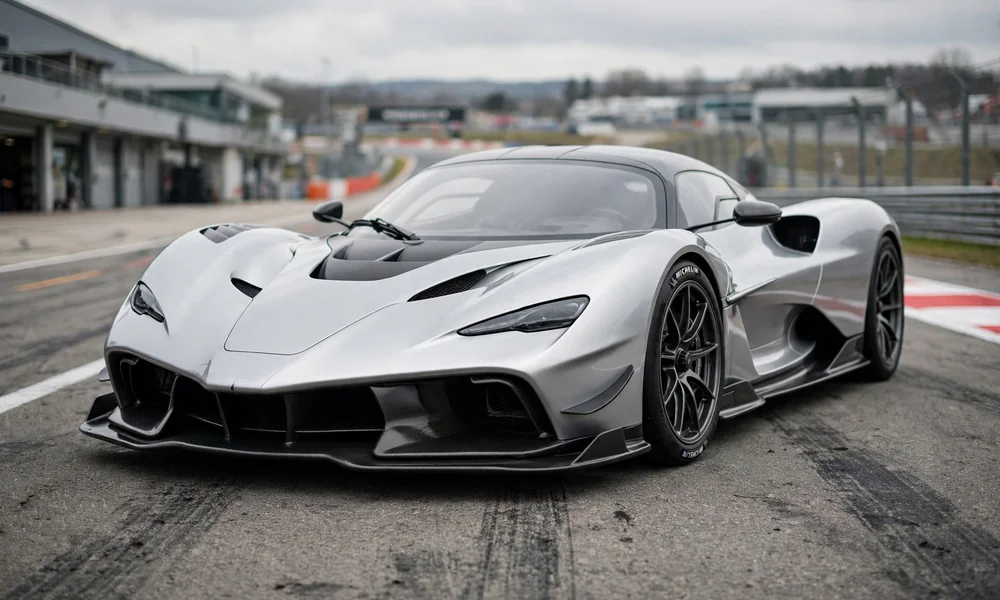
Hypercars occupy the extreme end of the performance-car world. They often combine advanced aerodynamics, cutting-edge powertrains, lightweight materials, and limited production. Examples include the Bugatti Tourbillon, Koenigsegg Jesko, and Mercedes-AMG ONE.
The category has no single official definition, so the label is used somewhat differently by manufacturers and automotive publications. In general, hypercars represent unusually ambitious engineering combined with exceptional performance and exclusivity.
Best for: Collectors and enthusiasts interested in the most specialized road-car engineering.
4. Muscle Cars
Muscle cars traditionally emphasize strong straight-line acceleration, substantial engine output, and a bold appearance. Many familiar examples have American origins. The Ford Mustang and Dodge Challenger illustrate the broader appeal of this category, although their configurations and performance levels vary by version and model year. Modern performance coupes can combine traditional muscle-car character with advanced suspension, braking, and electronic controls.
Best for: Drivers who enjoy powerful acceleration and an unmistakable performance-car personality.
5. Performance Sedans
A performance sedan combines high speed with the practicality of four doors and usable passenger space. Examples include the BMW M5, Mercedes-AMG C 63, and Cadillac CT5-V Blackwing.
These vehicles demonstrate how a car can accommodate daily commuting while delivering performance associated with dedicated sports cars. The trade-off is often greater weight and complexity compared with smaller performance coupes.
Best for: Drivers who need everyday practicality without giving up strong performance.
6. Electric Performance Cars
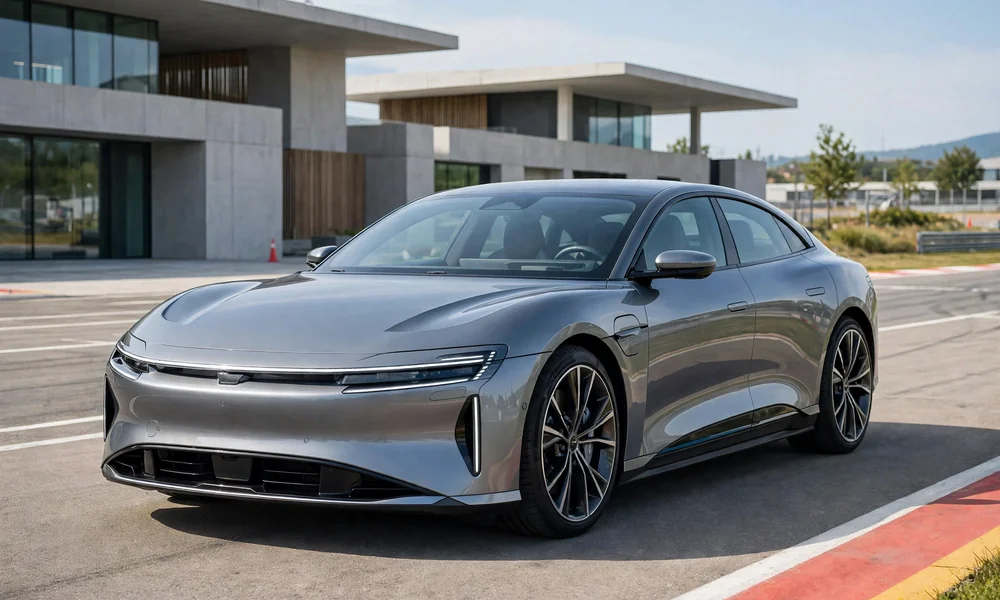
Electric performance cars use electric motors to deliver responsive acceleration. Some are built primarily for speed, while others combine high performance with family-friendly interiors.
Examples include the Porsche Taycan, Tesla Model S Plaid, and Rimac Nevera. Electric performance varies significantly by vehicle. Battery temperature, charge level, repeated acceleration, tire grip, and powertrain design can affect results.
Charging access, battery condition, and the availability of specialist service are also important considerations for ownership.
Best for: Drivers interested in immediate acceleration, quiet operation, and electric technology.
Fast Cars Worth Knowing
The following vehicles illustrate different approaches to performance rather than forming a definitive speed ranking.
| Car | Category | What makes it notable |
| Bugatti Chiron Super Sport | Hypercar | High-speed engineering and aerodynamic development |
| Koenigsegg Jesko | Hypercar | Advanced engineering and track-focused performance |
| McLaren 750S | Supercar | Lightweight construction and driver-focused dynamics |
| Ferrari 296 GTB | Hybrid supercar | Combines a combustion engine with electric assistance |
| Lamborghini Revuelto | Hybrid supercar | Combines a V12 engine with electric motors |
| Porsche 911 Turbo S | Performance sports car | Blends acceleration with everyday usability |
| Chevrolet Corvette Z06 | Performance sports car | Track-oriented engineering and a naturally aspirated V8 |
| Tesla Model S Plaid | Electric performance sedan | Exceptionally rapid electric acceleration |
| Rimac Nevera | Electric hypercar | High-performance electric powertrain technology |
| BMW M5 | Performance sedan | Combines substantial performance with four-door practicality |
Specifications, availability, and model lineups vary by year and market. Some versions may be discontinued or replaced as manufacturers update their vehicles.
Top Speed vs. Acceleration: Which Matters More?
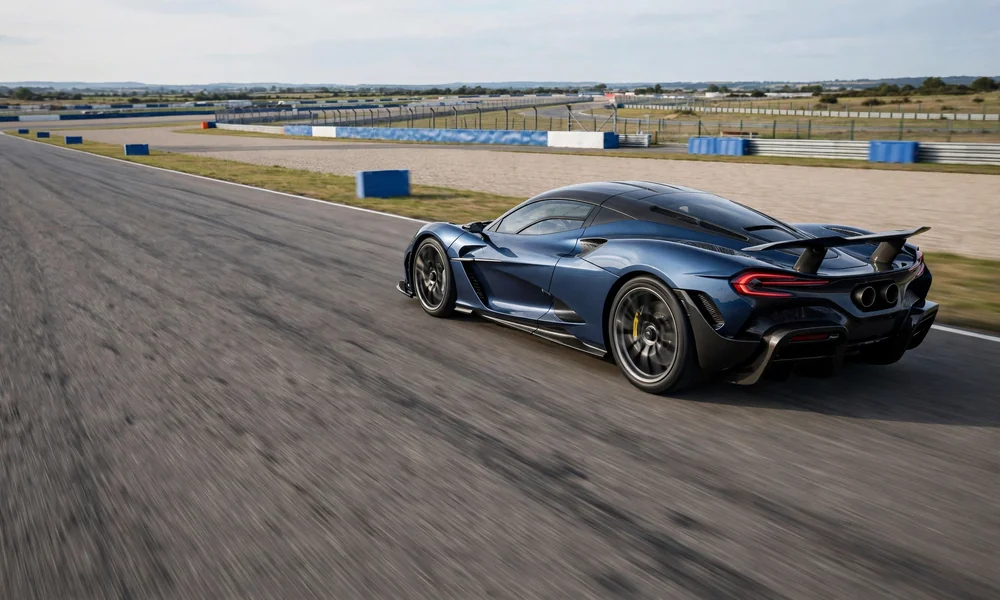
Top speed and acceleration measure different aspects of performance.
Top speed is the maximum speed a vehicle can achieve under suitable conditions. It depends on power, aerodynamic drag, gearing, tires, and electronic restrictions.
Acceleration describes how quickly the vehicle gains speed. Automotive specifications commonly use the time required to travel from zero to 60 mph or zero to 100 km/h.
A car that accelerates exceptionally quickly is not necessarily the world’s fastest in terms of maximum speed. Likewise, a vehicle designed for very high top speeds may not be the quickest from a standstill.
For everyday driving, strong acceleration can help with merging and overtaking when performed safely. Extreme top-speed capability is rarely useful on public roads because legal speed limits, traffic, and road conditions impose practical restrictions.
Are Electric Cars Faster Than Petrol Cars?
Some electric cars accelerate faster than many petrol-powered sports cars and supercars. Electric motors can deliver torque quickly, and multiple motors can distribute power between the wheels. However, electric and petrol performance cars have different strengths. Electric vehicles may offer rapid launches and smooth power delivery, while some petrol-powered cars offer lower weight, sustained performance characteristics, distinctive engine sounds, and different driving feedback.
High-performance EVs can also experience power limitations as batteries heat up or their state of charge changes. Petrol cars face their own thermal and mechanical constraints. The right comparison should consider a specific pair of vehicles, their tested performance, operating conditions, and intended use rather than assuming one powertrain is always faster.
How Much Do Fast Cars Cost?
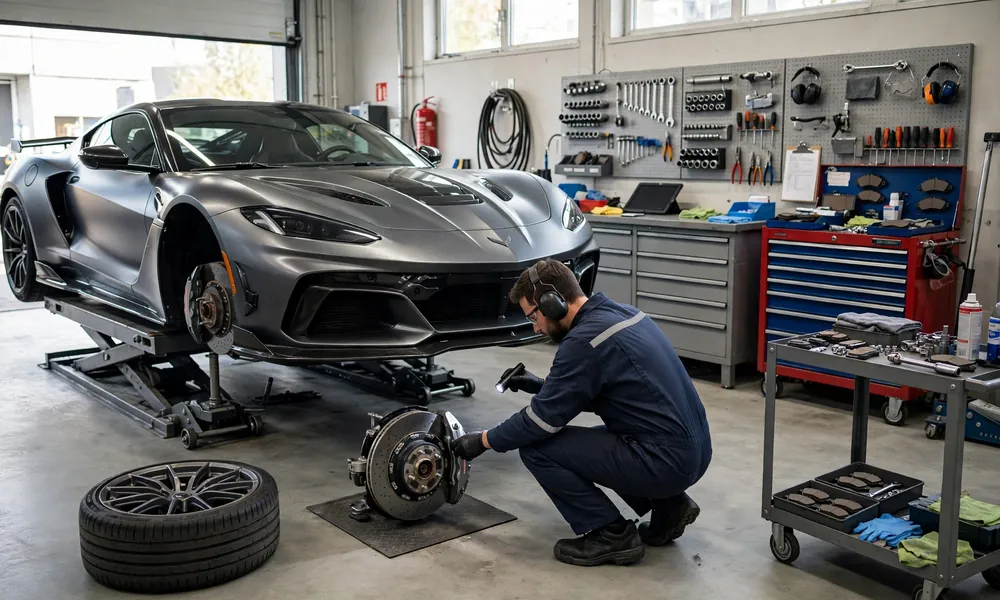
Fast-car prices range from relatively accessible performance models to vehicles costing hundreds of thousands or even millions of dollars. The purchase price depends on the manufacturer, model, engine or motor configuration, equipment, rarity, and market.
Ownership costs can include:
- Insurance: High repair costs and performance capability can affect premiums.
- Fuel or electricity: Consumption varies considerably with driving style and vehicle design.
- Tires: Performance tires can be expensive and may wear quickly under demanding use.
- Maintenance: Specialized components and labor can increase service costs.
- Repairs: Carbon-ceramic brakes, complex electronics, and exotic bodywork can be costly.
- Depreciation: Some cars lose value quickly, while certain rare models may behave differently.
In markets where specialist dealers and parts suppliers are limited, importing and maintaining a performance car can add further expenses.
Before buying, calculate the total ownership cost rather than focusing exclusively on the advertised price.
What to Consider Before Buying a Fast Car
Choosing a fast car requires more than comparing horsepower figures.
Decide How You Will Use It
A track-focused supercar may be thrilling on a circuit but inconvenient in crowded cities. A performance sedan or sports coupe may provide a more useful balance for daily driving. Consider passenger space, ground clearance, visibility, luggage capacity, and road quality.
Check Safety and Driver Assistance
Look for appropriate braking systems, tires, stability control, and available driver-assistance features. Safety equipment varies by model and trim. Remember that electronic systems cannot overcome every physical limit, and high performance does not make unsafe driving less dangerous.
Research Reliability and Service Access
Review model-specific reliability information, maintenance schedules, recalls, and warranty conditions. For used cars, obtain a professional inspection and check service history, accident records, tire condition, and evidence of modifications or track use.
Take a Proper Test Drive
A test drive can reveal whether the seating position, steering, visibility, suspension, and controls suit you. For a performance car, assess comfort and ease of use at ordinary speeds as well as how the vehicle responds in legal, safe driving conditions.
Consider Resale Value
Depreciation depends on demand, mileage, condition, specification, service history, and market trends. Do not assume every exotic or limited-production car will appreciate in value.
Final Verdict
Fast cars represent different interpretations of performance. Sports cars focus on driver engagement, supercars push speed and engineering into exotic territory, hypercars explore the extremes, and performance sedans combine power with practicality. Electric vehicles have added another dimension by delivering exceptionally rapid acceleration without a conventional combustion engine. The right choice depends on what matters most to you: acceleration, top speed, handling, comfort, technology, or ownership costs.
For most drivers, the most rewarding fast car is not necessarily the one with the biggest performance figures. It is the one that delivers excitement, confidence, and usability while remaining suitable for the roads and conditions where it will actually be driven.
What Buyers Should Know Before Choosing a Fast Car
Choosing a fast car requires evaluating more than advertised horsepower or top-speed figures. Buyers should compare official manufacturer specifications, independent performance tests, safety information, and model-specific maintenance requirements before making a decision.
For used vehicles, review the service history, check for accident damage or modifications, and arrange an independent mechanical inspection. Performance figures and equipment can vary by model year, trim, and market, so verify important details with the manufacturer or an authorized dealer. Consider the full cost of ownership and the conditions in which you will drive the car to make an informed choice.
Frequently Asked Questions
What is considered a fast car?
There is no universal definition. A fast car generally offers above-average acceleration, high top speed, or strong overall performance compared with ordinary passenger vehicles.
What is the difference between a sports car and a supercar?
Sports cars generally emphasize driving enjoyment and handling. Supercars usually take performance, design, engineering complexity, and price further, although the categories overlap and have no official universal boundaries.
Are the fastest cars always the most expensive?
Not necessarily. Some expensive cars focus on luxury, exclusivity, or craftsmanship rather than outright speed. Certain less expensive performance vehicles can deliver impressive acceleration and handling.
Are electric cars good performance cars?
Yes. Electric motors can provide rapid acceleration and smooth power delivery. The overall experience still depends on handling, weight, braking, thermal management, and how the vehicle is designed.
Are fast cars suitable for everyday driving?
Some are. Performance sedans, sports coupes, and certain supercars can be used regularly, but running costs, ground clearance, ride comfort, fuel consumption, and visibility may affect practicality.
Can a fast car be fuel-efficient?
Some performance cars use hybrid technology or efficient powertrain designs to balance performance and consumption. However, frequent hard acceleration generally increases energy use, and high-performance vehicles are not automatically economical.
Are fast cars safe?
A well-engineered vehicle can offer strong braking, predictable handling, and modern safety systems. Nevertheless, speed increases the severity of many crashes and reduces the time available to react. Driving responsibly and following speed limits remain essential.
Disclaimer: This article is provided for general informational and educational purposes only and does not promote or endorse any product, service, brand, or individual. Details may change, and no guarantee is made regarding completeness or accuracy.