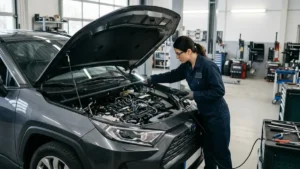
A car maintenance schedule can save you money, but only if you know how to use it. Imagine driving your car to a repair shop at 59,000 miles. The service adviser hands you an estimate for a major service. It includes several fluid changes, new filters, inspections, and other work. The total is much higher than you expected.
Your first question is fair: Do I really need all this work right now?
Some services may be due. Others may depend on your car’s model, driving conditions, service history, or the condition of a part. And some items on a shop’s recommended list may not be required by your owner’s manual at that mileage.
You don’t need to become a mechanic to understand the difference. This guide explains what commonly happens around 5,000, 30,000, 60,000, and 100,000 miles, why the 30-60-90 rule isn’t universal, and which services depend on time rather than distance. You’ll also learn how to check your exact schedule, keep track of your Chevy SUV maintenance records, and question an estimate without guessing. For routine upkeep between major service intervals, follow this practical car maintenance checklist to keep track of essential vehicle checks.
AI Overview: What Is a Car Maintenance Schedule?
A car maintenance schedule lists the services and inspections your vehicle needs at certain mileage intervals or ages, whichever comes first. Your owner’s manual is the main source for the correct timing because schedules vary by model, engine, and year. Cars used for frequent towing, short trips, heavy traffic, or harsh conditions may need more frequent service. Common milestones include 5,000, 30,000, 60,000, and 100,000 miles, but these are planning points, not universal service rules.
Key Takeaways
- Follow your owner’s manual first. A general mileage guide cannot replace the schedule for your exact car.
- Driving conditions matter. Frequent short trips, towing, dusty roads, and heavy traffic can call for more frequent maintenance.
- Time matters, too. Some fluids, tires, batteries, and rubber parts can age even when a car travels few miles.
- Milestones are reminders, not automatic repair orders. At 60,000 miles, for example, check which services are actually due.
- Electric vehicles need maintenance. They usually don’t need engine oil changes, but tires, brakes, coolant systems, and other parts still need attention.
- Costs vary widely. The American Automobile Association (AAA) reported an average annual maintenance cost of $1,769 for a new medium-sized SUV driven about 15,000 miles per year in its November 2025 article. That’s an average, not a quote for your car.
- Keep a record of every service. Dates, mileage, receipts, and the work performed make future decisions easier.
What Is a Car Maintenance Schedule?
A car maintenance schedule is a plan showing when to inspect, service, or replace parts and fluids. It may use mileage, time, or both.
For example, your manual might call for an inspection at a certain mileage but also require a fluid change after a set number of years. If you drive only 3,000 miles a year, you still need to follow any time-based requirements.
The goal is to spot wear early, keep the car safe, and reduce the chance of avoidable repairs.
Car Maintenance Schedule by Mileage
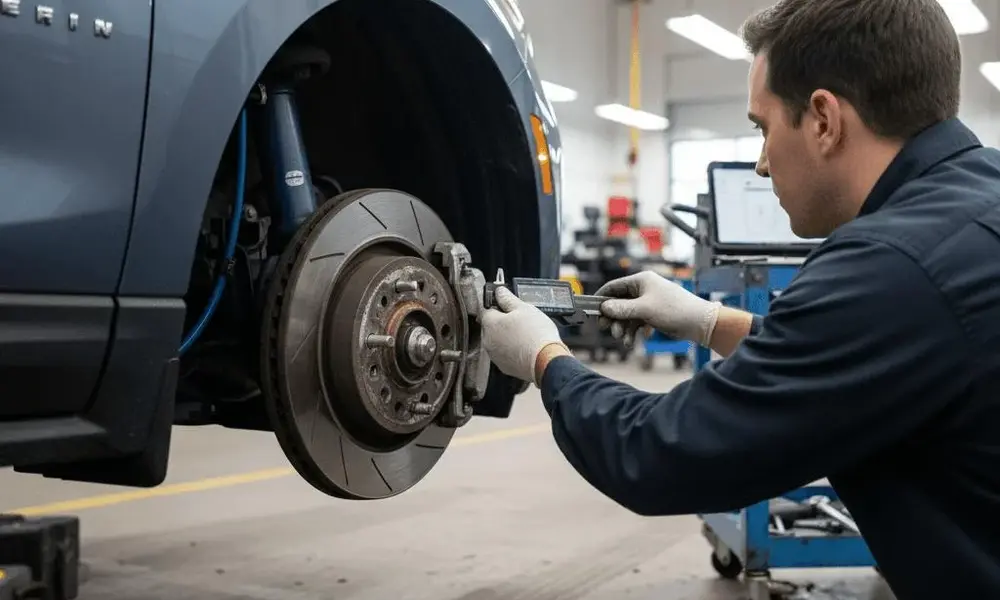
The table below is a general planning guide, not a universal list of required services. To show why that difference matters, it uses the 2025 Chevrolet Equinox owner’s manual as a real example.
Chevrolet’s manual recommends tire rotation and required routine services at 7,500-mile intervals. It also lists additional maintenance at specific intervals, including cabin air-filter replacement at 22,500-mile intervals or every two years, whichever comes first. Reviewing your specific Chevy SUV service schedules helps clarify how these intervals apply to your model year.
| Mileage milestone | What to check or expect | What to confirm |
| Around 5,000 miles | Check oil-life information, tire condition, fluid levels, and warning lights. | Whether an oil change is due. Don’t assume every car needs one at exactly 5,000 miles. |
| Around 7,500 miles | In the 2025 Equinox schedule, routine services include tire rotation and checks; oil service follows the oil-life system or warning. | The correct tire-rotation interval and oil-life instructions for your model. |
| Around 15,000 miles | Repeat scheduled inspections and services due at that interval. | Whether filters, brakes, tires, or other items need attention. |
| Around 30,000 miles | Review the services due at this mileage and any earlier items that are now due again. | The exact filter, fluid, inspection, and replacement requirements in your manual. |
| Around 60,000 miles | Check the full maintenance history and upcoming service requirements. | Whether spark plugs, transmission fluid, coolant, or other parts are due for your particular vehicle. |
| Around 90,000 miles | Review repeated services and parts with mileage or age limits. | Whether your vehicle has specific belt, fluid, or inspection requirements. |
| Around 100,000 miles | Check major scheduled replacements and inspect parts that wear over time. | Whether your engine uses a timing belt, which parts are due, and whether any earlier service was missed. |
Why doesn’t this table promise a fixed list at each milestone? Because vehicles differ. Even two cars from the same brand may have different engines, transmissions, and service needs. The 2025 Equinox manual, for example, specifies a different schedule from the broad 30,000- or 60,000-mile packages some repair shops sell.
Use this table to know when to look at your manual not to approve every item on an estimate.
The 30-60-90 Service Schedule Explained
The 30-60-90 rule is a common way to plan maintenance around 30,000, 60,000, and 90,000 miles. It can be useful when budgeting, especially for an older car, but it is not a law or a standard schedule that every manufacturer follows.
A service package at these milestones might include inspections, filter changes, fluid checks, or other work. Some vehicles may need a specific fluid or part replaced; others may not need that service yet.
Before approving a package, ask the shop to separate the estimate into three groups:
- Required by the owner’s manual now. These are scheduled services due at your current mileage or age.
- Needed because of wear or a fault. Examples include worn brake pads, a damaged tire, or a leaking hose.
- Optional or preventive recommendations. Ask why the shop recommends each item and what evidence supports doing it now.
This small step can make a confusing estimate much easier to judge.
Normal vs. Severe Maintenance Schedule
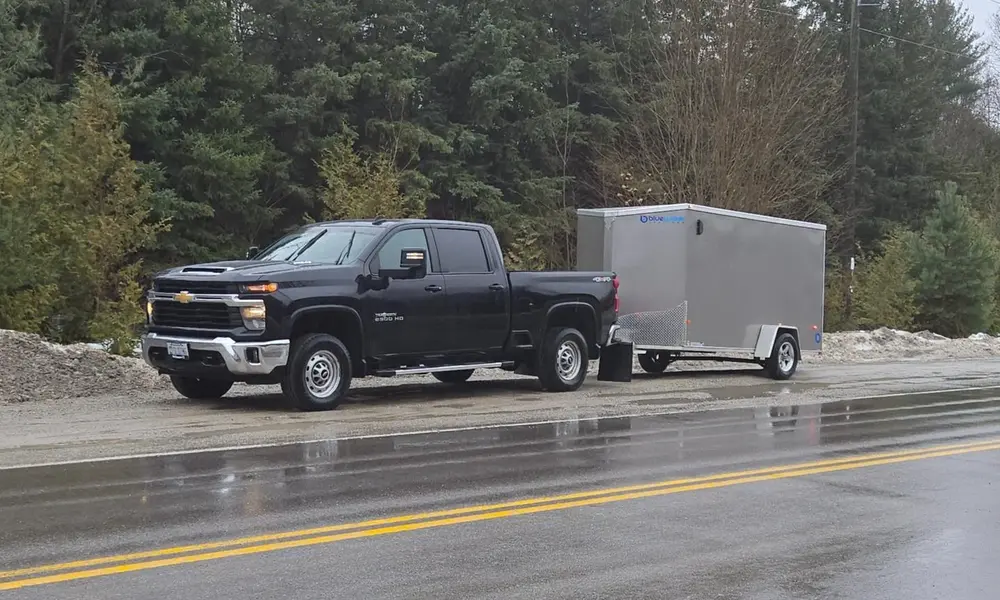
A normal schedule applies when you drive under the conditions described by your manufacturer. A severe-use schedule is for harder driving conditions that can wear parts or fluids more quickly.
Chevrolet’s 2025 Equinox manual lists severe-use examples such as frequent towing, mainly driving in heavy city traffic in hot weather, driving in hilly or mountainous areas, and using the vehicle for taxi or delivery work. Factoring in Chevy towing and severe driving maintenance helps protect critical components under heavy strain.
Chevrolet’s 2025 Equinox manual lists severe-use examples such as frequent towing, mainly driving in heavy city traffic in hot weather, driving in hilly or mountainous areas, and using the vehicle for taxi or delivery work.
Dusty roads, repeated short trips, stop-and-go traffic, and extreme temperatures are also worth checking against your own manual.
Six questions to check your driving habits
Answer yes or no:
- Do you often drive short distances where the engine doesn’t have much time to warm up?
- Do you spend a lot of time in slow, heavy traffic?
- Do you regularly tow a trailer or carry heavy loads?
- Do you often drive on dusty roads or rough terrain?
- Do you regularly drive in very hot or very cold conditions?
- Do you use your car for frequent delivery, taxi, or other work driving?
If you answer yes to even one, check the severe-use guidance in your manual. That doesn’t automatically mean every service interval must be shortened. The manufacturer defines which conditions matter and which services change.
Maintenance That Depends on Time, Not Miles
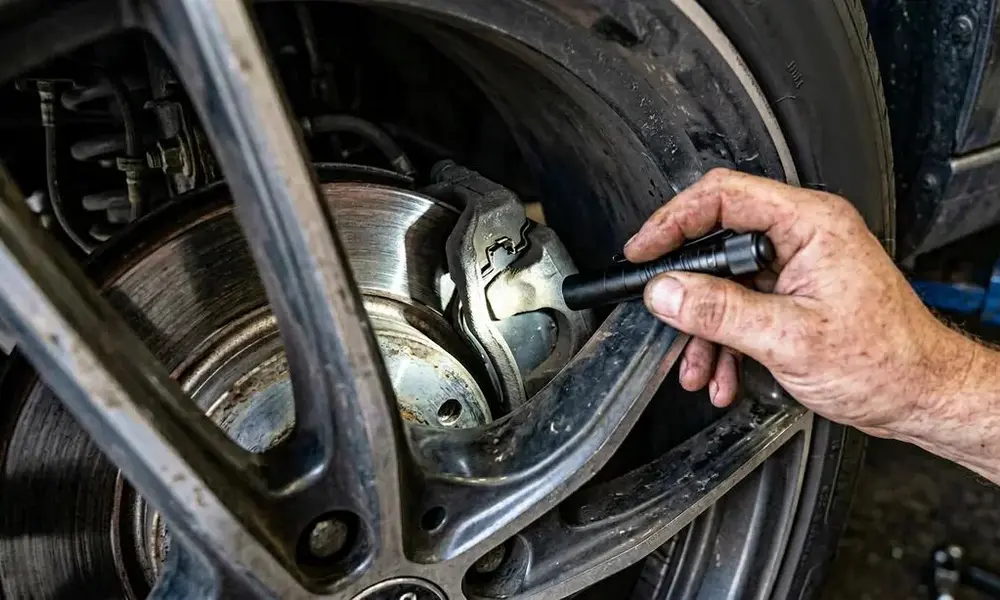
A low-mileage car isn’t automatically a low-maintenance car. Time can affect rubber, fluids, and electrical parts.
- Brake fluid: Some manufacturers specify a time limit, even if the car has not reached a mileage target.
- Coolant: Follow the specified age or mileage interval. Don’t replace it just because another car needs it at a different age.
- Battery: Heat, cold, age, and repeated short trips can affect battery performance. Test it if starting becomes slow.
- Tires: Check pressure and inspect for cracks, damage, and uneven wear. Tire age also matters; follow the tire maker’s guidance and have questionable tires checked.
- Wiper blades: Sunlight, heat, and cold can make the rubber hard or cracked. Replace blades when they streak, skip, or fail to clear the windshield well.
Your manual may include other time-based services. Add them to your calendar so they don’t get forgotten just because the odometer barely moves.
How Often Should You Change Your Oil?
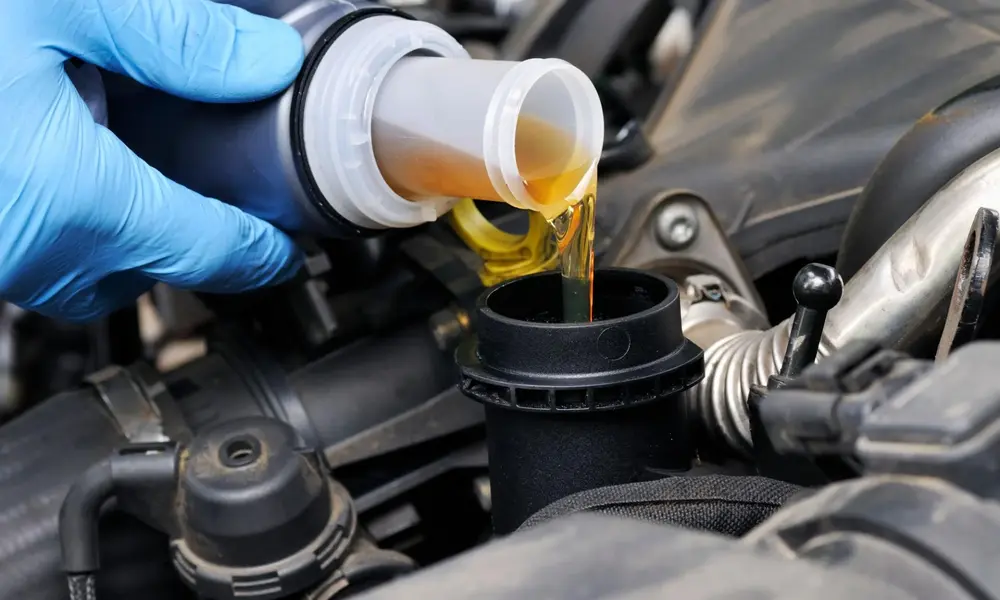
Start with your vehicle’s oil-life monitor and owner’s manual. Some cars estimate oil life based on driving conditions. Others use a set mileage or time interval. The right interval depends on the engine, the oil specification, and how the car is used.
Synthetic oil can handle certain conditions better than conventional oil, but synthetic oil does not mean you can ignore the manufacturer’s interval. Use the oil grade and specification listed for your engine.
For a specific example, the 2025 Chevrolet Equinox owner’s manual says to change the engine oil and filter when the oil-life system calls for it, and at least once a year. It also explains that the oil-life system must be reset after the change. Adhering to manufacturer Chevy oil change intervals protects engine health over the long run.
Don’t follow a neighbor’s oil-change interval just because their car seems similar. If the oil warning appears, check the manual promptly. An oil-life reminder is different from an oil-pressure warning, which can signal a serious problem.
How to Find Your Exact Car Maintenance Schedule
You don’t need to guess or rely on a generic chart.
- Find the model year, make, model, and engine. The same model name can have different service needs across years and engine options.
- Open the owner’s manual. Search for “Maintenance Schedule,” “Service and Maintenance,” or “Scheduled Maintenance.”
- Check the manufacturer’s owner website. Chevrolet owners can access official documentation on the Chevrolet Manuals and Guides page to find a manual by year, make, and model.
- Check the manufacturer’s app or in-car display. Chevrolet’s myChevrolet app can help owners view vehicle information and manage maintenance reminders. Other brands may use a maintenance minder or a different owner app.
- Ask a dealer or repair shop to confirm unclear items. Give them your mileage, vehicle details, and service records. Ask them to identify the exact manual requirement for each recommended service.
If the car is used, check available service records before paying for work that may already have been done.
Maintenance Schedule for Electric Vehicles
Electric vehicles (EVs) don’t have a gasoline engine, so they don’t need engine oil and filter changes, spark plugs, or engine air-filter service. That removes some routine work, but it doesn’t make an EV maintenance-free.
EV owners still need to check tire pressure and wear, brakes, windshield wipers, cabin air filters, lights, and suspension parts. Depending on the model, the manufacturer may also specify checks for coolant systems, battery-related components, and brake fluid.
Regenerative braking can reduce how often friction brakes are used, but brakes still need inspection. Tires may also wear differently because EVs can be heavy and deliver strong acceleration.
Follow the EV-specific schedule rather than applying a gasoline-car service package.
Maintenance Schedule for SUVs and Trucks
SUVs and trucks often share basic maintenance needs with cars, but towing, heavy loads, off-road driving, and four-wheel drive can add work.
If you tow regularly, check the manual’s severe-use and towing guidance. Depending on the vehicle, it may include extra inspections or more frequent service for transmission fluid, the transfer case, differentials, cooling systems, or other components.
A four-wheel-drive system isn’t the same as a two-wheel-drive system, so don’t assume the fluid schedule is identical. Likewise, a truck used mainly for short city trips may have different needs from one that regularly hauls heavy loads.
How Much Does Maintenance Cost at Each Milestone?
There is no reliable price that applies to every 30,000- or 60,000-mile service. The total depends on the vehicle, local labor rates, parts, and which services are actually due.
AAA reported in November 2025 that maintaining a new medium-sized SUV driven about 15,000 miles a year averaged $1,769 annually. This is a broad ownership-cost estimate, not the price of one scheduled visit.
| Service or cost item | What you can safely use for planning |
| Routine service near 5,000 miles | Get a quote for only the services your manual says are due. |
| 30,000-mile service | Request an itemized quote based on your exact vehicle and service history. |
| 60,000-mile service | Ask the shop to list each scheduled replacement separately from repairs and optional work. |
| 100,000-mile service | Confirm whether major items such as a timing belt or specific fluids apply to your engine before budgeting. |
| Annual maintenance | AAA’s reported $1,769 average for a new medium-sized SUV is a broad reference, not a guarantee for every driver. |
For a useful estimate, ask two shops to price the same list of required work. Don’t compare a basic oil change from one shop with a large service package from another. The totals won’t mean much unless the work is the same.
Does Skipping Maintenance Void Your Warranty?
Not automatically. In the United States, the Federal Trade Commission (FTC) says a dealer generally cannot deny warranty coverage simply because you used an independent repair shop or non-brand parts. But a manufacturer may have grounds to deny coverage for damage caused by improper maintenance or a defective part.
Follow the maintenance schedule, use the correct fluids and parts, and keep receipts. Your records should show the date, mileage, service performed, and who did the work.
If you miss a service, don’t assume the entire warranty has vanished. Check your warranty terms, arrange any overdue maintenance, and keep the records. If a claim is denied, ask for the reason in writing and review the FTC Auto Warranties Guidance regarding routine maintenance and service contracts.
How to Track Your Maintenance

You can use a paper notebook, a spreadsheet, your phone’s notes app, or the manufacturer’s app. The tool matters less than keeping accurate records.
Use a simple log like this:
| Date | Odometer | Service performed | Next due | Receipt saved? |
| __________ | __________ | __________________ | __________ | Yes / No |
| __________ | __________ | __________________ | __________ | Yes / No |
| __________ | __________ | __________________ | __________ | Yes / No |
Write down the mileage before and after each service if needed, and keep the receipt. If a shop recommends a service early, record why. That way, the next shop can see what has already been done.
Build Your Own Maintenance Calendar
You can set up a useful calendar in five steps:
- Enter your current mileage. Use the odometer, not a rough guess.
- Find the correct manual. Match the model year, engine, and drivetrain.
- Add time-based services. Include any tasks that are due by age, not just mileage.
- Set reminders. Use your phone calendar or vehicle app. Add a reminder before the next service is due.
- Save receipts and update the log. After each visit, record what was done and when it is next due.
If you bought a used car without a full service history, ask a trusted shop to inspect it and help identify overdue maintenance. Don’t automatically approve every possible replacement at once; prioritize safety problems and manufacturer-required work, then plan the rest.
Conclusion: What Should the 59,000-Mile Driver Approve?
Back to the driver who received that big estimate at 59,000 miles. The sensible next step isn’t to approve everything or reject everything. It’s to compare each line with the correct owner’s manual, check service records, and ask the shop to explain any work that isn’t clearly due.
Approve the scheduled services that apply, and address genuine safety or wear problems. Ask for evidence and a separate price for anything optional. A clear list and a second question can be worth more than a guess.
Frequently Asked Questions
1. How often should a car be serviced?
Follow your owner’s manual, which may set service by mileage, time, or both. Check the oil-life monitor and warning lights, and inspect tires and fluids regularly between visits.
2. What is done at a 60,000-mile service?
It depends on your vehicle. Some cars may need specific fluid changes, filters, spark plugs, or inspections at this point. Check the manual and your service history before approving a package.
3. What is the 30-60-90 rule?
It’s a common planning guide for maintenance around 30,000, 60,000, and 90,000 miles. It isn’t a universal manufacturer requirement, so use your car’s actual schedule.
4. Is a maintenance schedule the same for every car?
No. It varies by model year, engine, transmission, drivetrain, and driving conditions. Use the manual that matches your exact vehicle.
5. What is a severe maintenance schedule?
It’s a shorter or different set of service intervals for harder use, such as frequent towing, heavy traffic, dusty roads, or certain extreme driving conditions. Your manual defines what applies.
6. Do electric cars need a maintenance schedule?
Yes. EVs don’t need engine oil changes, but they still need tire, brake, wiper, cabin-filter, and other model-specific checks.
7. Can I follow the schedule myself?
You can track mileage, check tire pressure, inspect tires, and perform simple tasks if the manual allows it and you have the right tools. Leave work that requires special equipment or skills to a qualified technician.
8. What happens if I miss a service?
Arrange the overdue service and check whether anything needs urgent attention. Missing one service does not automatically mean every warranty benefit is lost, but neglect-related damage may affect a claim.
9. How much does a major service cost?
There isn’t one dependable price for every car. Ask for an itemized quote based on your exact model and the services due. Compare quotes for the same work.
10. What maintenance is needed every year?
That depends on the manual and how you drive. Some vehicles require an annual oil change even if the oil-life monitor hasn’t called for one; other checks and fluids may follow different time or mileage intervals.