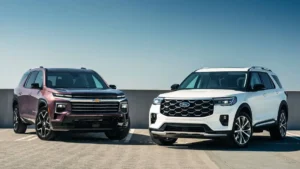
This 2026 Chevy Traverse vs. Ford Explorer comparison explains which SUV is right for many families. The Traverse is superior for cargo space, larger backseat, and bigger touchscreen; the Explorer wins for sportier driving behavior, more V6 power, more secure towing stability, and slightly higher mpgs.
Introduction
2026, Difficult choice between the two icons. For an in-depth Traverse vs Explorer 2026: choose the 2026 Chevy Traverse if you require maximum cargo volume and the largest screen available; opt for the 2026 Ford Explorer if sportier handling, V6 power levels, or superior towing stability interests you.
At ChevySUV, Car and Driver also finds the two SUVs lead the automotive industry in hands-free driving to varying degrees, but they feature very different family wants. The 2026s have evolved into high-tech command centres with various types of adventuring capabilities. Be they hauling some ungrateful youth soccer players or a boat to the lake, these two American staples are THE definition modern utility.
Performance and Powertrains: Efficiency or Pure Muscle
This Traverse vs Explorer 2026 illustrates two radically different vehicle engineering philosophies. Only Chevrolet offers a single engine across the board, Ford provides optional power to get into enthusiast form The bones are the foundation for any serious cross-shop among midsize SUVs.
The Engine Lineup
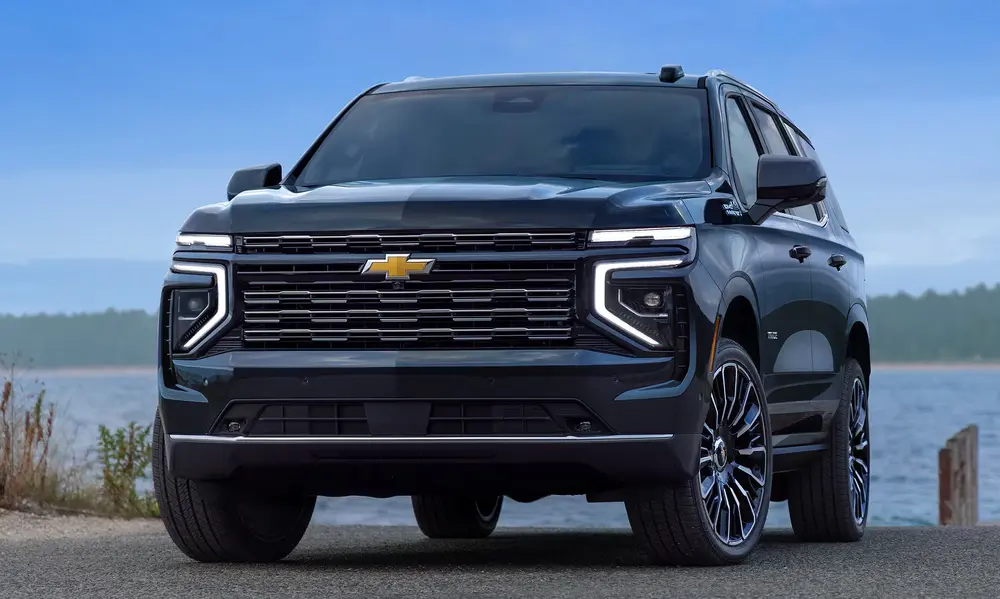
Chevy Traverse: 328 HP, 326 lb-ft in a 2.5L Turbo I4 That means they’re set up for smooth, reliable power for everyday hauling. This has been created to replace the older V6 found in generations prior, producing torque at lower RPMs, which is better for a quick highway pass.
Ford Explorer: 300 HP to 400 HP from a Twin-Turbo V6 at high trims over base 2.3L engine Which is why the Explorer is for somebody who needs a big, performance SUV that can be driven.
Drivetrain Comparison
|
Feature |
2026 Chevy Traverse | 2026 Ford Explorer |
| Standard Engine | 2.5L Turbo I4 |
2.3L EcoBoost I4 |
|
Performance Engine |
N/A | 3.0L Twin-Turbo V6 |
| Max Horsepower | 328 HP |
400 HP |
|
Transmission |
8-Speed Auto | 10-Speed Auto |
| Base Drive Platform | Front-Wheel Drive |
Rear-Wheel Drive |
The Explorer’s rear-wheel-drive architecture is a rarity in this segment, providing a level of cornering agility that its front-wheel-drive competitors struggle to match. This layout is also generally preferred for towing stability, as the weight of the trailer sits more naturally over the driving wheels.
Interior Space and Cargo: The King of Room
When conducting a midsize SUV comparison, interior volume is often the dealbreaker. The Traverse is essentially a “mini-Tahoe,” offering significantly more room than the Explorer. If you have three kids, a dog, and a massive amount of sports equipment, the Traverse is the practical winner.
Cargo and Seating Highlights
- Chevy Traverse: Features a best-in-class 97.6 cubic feet of max cargo space. It is one of the few in the segment where the third row is truly adult-friendly. Even with the third row in use, you still have nearly 23 cubic feet for groceries.
- Ford Explorer: Offers 85.8 cubic feet of max space. While tighter, it provides a more car-like, snug cabin feel. The third row is best suited for children or short trips around town.
Detailed Dimension Matrix
|
Metric |
2026 Chevy Traverse | 2026 Ford Explorer |
| Max Cargo Volume | 97.6 cu. ft. |
85.8 cu. ft. |
|
Space Behind 2nd Row |
56.6 cu. ft. | 44.6 cu. ft. |
| Space Behind 3rd Row | 22.9 cu. ft. |
16.3 cu. ft. |
|
3rd Row Legroom |
32.1 inches | 31.8 inches |
| Max Seating Capacity | 8 Passengers |
7 Passengers |
The Traverse’s ability to seat eight passengers makes it a favorite for carpool duties. Most Explorer trims feature second-row captain’s chairs, which limits total seating to six or seven. At chevySUV, we frequently hear from families who chose the Traverse specifically because that eighth seat was the difference between taking one car or two.
Technology and Infotainment: The Digital War
The Traverse vs Explorer tech war is a battle of screen real estate. Both vehicles are now rolling computers, but they display information in very different ways. As we move through 2026, the interior of a car is judged as much by its software as its leather quality.
Infotainment Systems
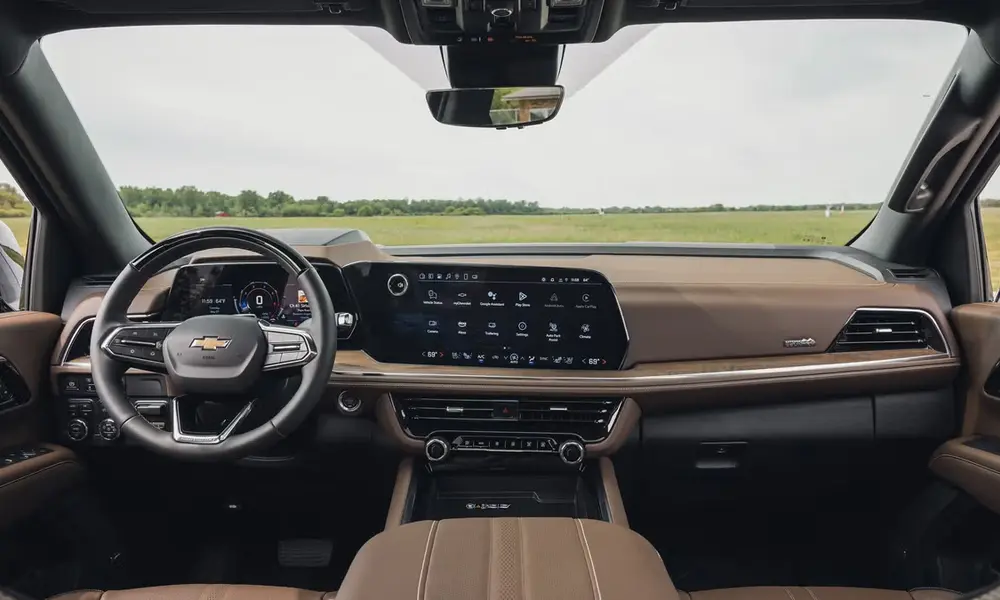
- Chevy Traverse: Boasts a standard 17.7-inch diagonal touchscreen with Google Built-In. It feels futuristic and acts as the primary hub for all vehicle functions. It is tilted slightly toward the driver for easier reach.
- Ford Explorer: Uses a 13.2-inch landscape display. While smaller, it is praised for the “Ford Digital Experience” software which is snappy and features a high degree of personalization.
Hands-Free Driving
Both manufacturers offer industry-leading hands-free driving technology.
- Super Cruise (Chevy): Allows for hands-free driving on over 400,000 miles of highway, including automatic lane changes and the ability to tow hands-free.
- BlueCruise (Ford): Ford’s system focuses on lane centering and smooth “In-Lane Repositioning,” which subtly shifts the vehicle away from large trucks in adjacent lanes.
Towing and Off-Road Capability
Both SUVs are rated for a maximum of 5,000 lbs, but the way they handle that weight differs. In this midsize SUV comparison, equipment choice matters significantly for weekend warriors.
Towing Dynamics
- Chevy Traverse: Its FWD-based platform is easy to manage, but requires the optional Trailering Package to hit the 5,000 lb mark reliably. It includes a heavy-duty cooling system and Hitch Guidance with Hitch View.
- Ford Explorer: Its RWD-based architecture is naturally more stable for towing. Ford often includes the Class III Tow Package as standard on many of the mid-to-high level trims.
Off-Road Trim Comparison
|
Feature |
Traverse Z71 | Explorer Tremor |
| Drivetrain | Twin-Clutch AWD |
Intelligent 4WD |
|
Suspension |
Off-road dampers | Lifted off-road shocks |
| Protection | Aluminum skid plates |
Steel underbody armor |
|
Driving Modes |
Terrain & Hill Descent |
Rock Crawl & Sand |
The Traverse Z71 is perfect for getting to a remote campsite or navigating a muddy trail to a lake house. The Explorer Tremor is a bit more aggressive, featuring hardware like a limited-slip rear differential that handles rockier terrain with more confidence.
Fuel Economy and Long-Term Efficiency
For many, the Traverse vs Explorer 2026 choice comes down to the monthly gas bill. The Explorer’s 10-speed transmission and lighter frame give it a measurable edge in efficiency.
MPG Breakdown
- Explorer Efficiency: The 2.3L engine is highly efficient, often achieving up to 27 MPG on the highway. Even the V6 is relatively frugal considering its power output.
- Traverse Efficiency: Due to its larger size and slightly older 8-speed transmission tech, it averages around 24 MPG highway. While the gap is small, it can add up over years of commuting.
Maintenance Costs
At chevySUV.com, we analyze cost of ownership carefully. The simplified 4-cylinder lineup in the Traverse may lead to lower long-term service complexity. However, because the Explorer is RWD, its tire wear is often more even across all four wheels when rotated properly compared to FWD-heavy platforms.
Safety and Security Features
Safety is non-negotiable for family vehicles. Both the Traverse and Explorer come standard with comprehensive suites, Chevy Safety Assist and Ford Co-Pilot360.
- Chevy Traverse: Includes “Buckle to Drive” and “Teen Driver” technology, which allows parents to monitor driving habits and set volume caps on the audio system.
- Ford Explorer: Features “Reverse Brake Assist” as a standard or near-standard feature, which can stop the car if it detects an object behind you while backing up.
Both SUVs earn 5-star overall safety ratings from the NHTSA, though the Traverse has a slight edge in rollover resistance ratings due to its wider stance.
Value and Final Verdict: Which One Wins?
After a deep midsize SUV comparison, your choice depends on your daily “load.” The market in 2026 has never been more competitive, and both vehicles offer a high-quality experience.
Why Choose the Traverse?
The 2026 Chevy Traverse is the choice for large families. If you frequently use the third row or need to haul oversized items from a home improvement store, the best-in-class cargo space is impossible to ignore. The 17.7-inch screen also gives it a more “premium” tech feel right out of the gate.
Why Choose the Explorer?
The 2026 Ford Explorer is the enthusiast’s choice. If you enjoy the act of driving and want an SUV that feels smaller and more agile than it actually is, or if you need the 400 HP V6 for heavy-duty towing, the Ford is the superior pick. It offers a more tailored driving experience across its wide range of trims.
The Traverse vs Explorer rivalry proves that there is no single “best” SUV, only the best SUV for your specific lifestyle. Visit chevySUV.com to explore the latest inventory and find the perfect fit for your next adventure.
Frequently Asked Questions
Which SUV has better gas mileage, the Traverse or the Explorer?
Fuel economy: Ford Explorer edges Chevy Traverse slightly The 2.3L EcoBoost is hugely efficient, achieving up to a whopping 27 MPG highway in some applications, but the larger frame of the Traverse allows it around a minimum of about 24 MPG highway.
Can the 2026 Chevy Traverse tow a boat?
Yes. The 5,000-lb. towing that the 2026 Chevy Traverse is capable of using a trailering package that’s offered. That is enough for a medium outboard boat or even a small camper.
Is the Ford Explorer bigger than the Chevy Traverse?
No. In all-around interior space, the Chevy Traverse is a full-size or larger SUV among compact crossovers. The Traverse has 97.6 cubic feet behind the front seats, while the Explorer offers about 85.8 cubic feet. The Traverse also has significantly more legroom for third-row occupants.
Does the 2026 Ford Explorer have a V6 option?
One example is the 2026 Ford Explorer’s optional 3.0L EcoBoost V6 in ST and Platinum trims (as much as 400 horsepower) vs Chevy only offering a four-pot, so yes Traverse vs Explorer 2026.
Which SUV is better for off-roading?
Either one is more than capable, but the Explorer Tremor has always been viewed as a better option on rockier trails due to its rear-wheel-drive bias and steel skid plating. This setup is a real winner for light trails, as well as sand and deep snow on the Traverse Z71.