If you’re asking whether Range Rovers are reliable, the honest answer is: they can be, but reliability is not the main reason people buy them.
A Range Rover can give you years of comfortable and enjoyable ownership, especially when it has been properly maintained. The problem is that repairs can be expensive, electrical faults can be frustrating, and some models have a much better track record than others.
That is also why you’ll find very different reliability ratings for the Range Rover depending on where you look. So rather than saying simply “Range Rovers are unreliable,” it makes more sense to look at the data, the generation you’re considering, and what ownership could actually look like.
AI Overview: Are Range Rovers Reliable?
Range Rovers have a mixed reliability record. Some newer models show average or better results in certain reliability surveys, but repair costs can still be high, especially when major electrical, suspension, engine, or drivetrain problems occur. For a used Range Rover, the model year, service history, condition, and pre-purchase inspection matter more than the badge alone.
Key Takeaways
- Range Rover reliability is mixed, and different reliability surveys give very different results.
- Repair costs can be expensive, even when major problems don’t happen frequently.
- Electrical and air suspension issues are two areas used buyers should pay close attention to.
- Newer Range Rovers don’t have enough long-term data yet to prove they’re significantly more reliable.
- A well-maintained used Range Rover can be a reasonable buy, but a cheap, poorly maintained example can quickly become expensive.
- If low running costs are your top priority, Range Rover probably isn’t the safest choice.
What Do Reliability Ratings Say About Range Rover?
There isn’t one reliability score that tells the whole story.
Different companies collect different types of information, which is one reason the results can look confusing.
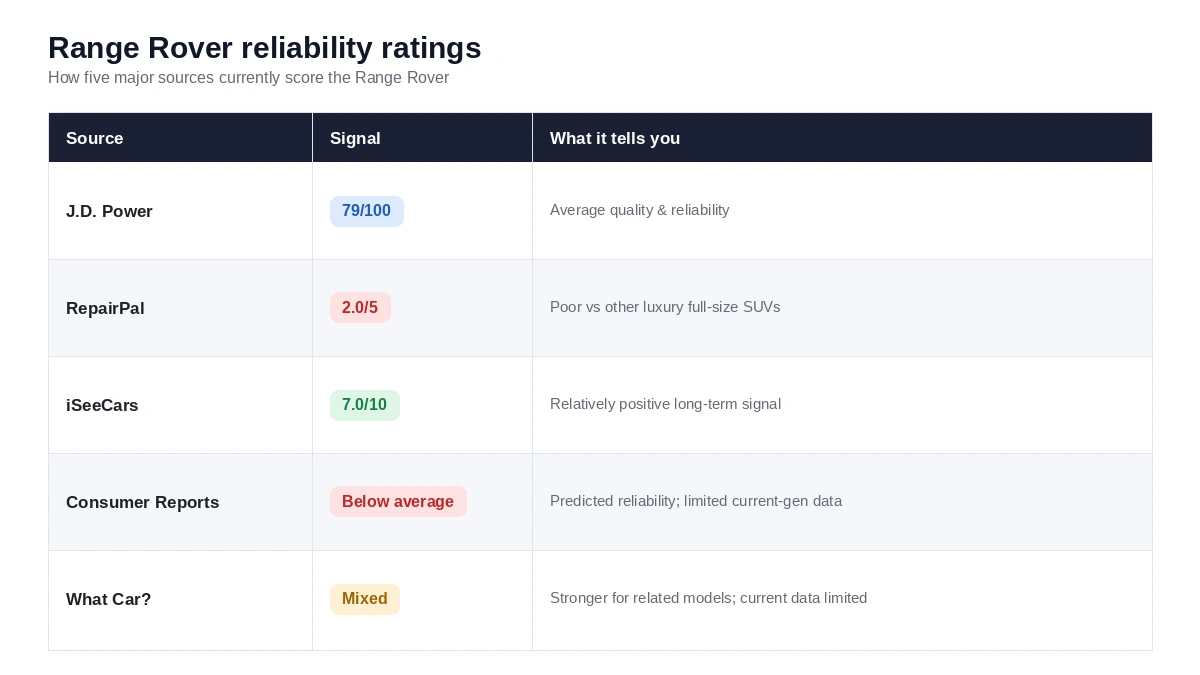
J.D. Power gives the 2026 Range Rover a 79/100 for Quality & Reliability, which it classifies as average.
RepairPal is much less positive. It rates the Range Rover at 2.0 out of 5, placing it 15th out of 19 luxury full-size SUVs. RepairPal also estimates an average annual repair and maintenance cost of about $1,258.
Then there’s iSeeCars, which gives the Range Rover a 7.0/10 reliability score and estimates an average lifespan of around 113,925 miles or 10.7 years.
Consumer Reports currently predicts the 2026 Range Rover to be less reliable than other new cars, although it also notes that detailed reliability data for the current model is limited.
So, which one is right?
In a way, they all are.
Why Are Range Rover Reliability Ratings So Different?
This is one of the most important things to understand before judging the Range Rover. A reliability score isn’t the same thing as a simple pass or fail. Some organizations look at owner-reported problems. Others look at repair frequency, predicted reliability, long-term survival, or the seriousness of repairs.
That can produce very different results.
For example, a vehicle might not visit the repair shop very often, but when something does fail, the bill could be huge. Another vehicle might have frequent small problems but very few major mechanical failures.
Those two vehicles can end up with very different reliability scores. There is another problem with the latest Range Rover: we don’t have decades of data on the current generation yet.
That matters. The current Range Rover generation is still relatively new, so it is too early to confidently say how these vehicles will perform after 10 or 15 years. In other words, don’t confuse a new vehicle with a proven reliable vehicle.
Does Range Rover Reliability Change by Generation?
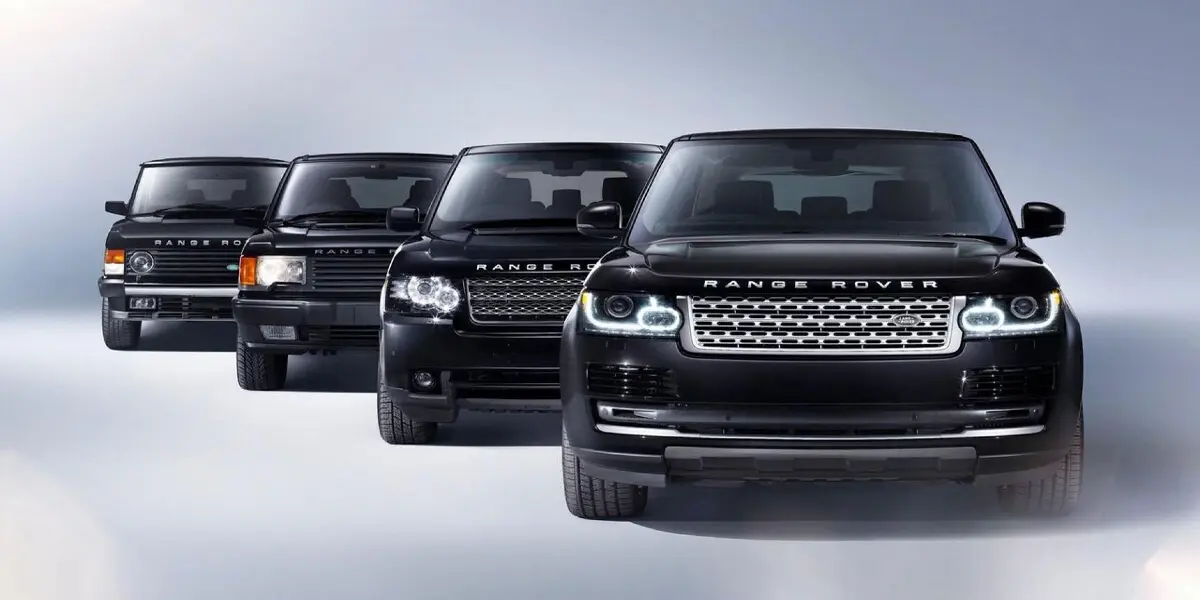
Yes, and this is where things get more interesting. A 10-year-old Range Rover and a brand-new Range Rover shouldn’t really be treated as the same vehicle when you’re talking about reliability.
Older Range Rovers
Older Range Rovers have developed their reputation for a reason.
Owners have reported problems involving electronics, suspension systems, cooling systems, engines and other expensive components. Age also brings another issue: even a vehicle that was reasonably reliable when new can become expensive once seals, sensors, suspension components and electrical parts start aging.
That doesn’t automatically make every older Range Rover a bad purchase. It means condition matters enormously. A well-maintained example with a complete service history can be a much better buy than a cheaper vehicle that has been neglected.
The L405 Range Rover
The fourth-generation Range Rover, commonly known as the L405, has a mixed reputation. There are owners who have had very good experiences with these vehicles. There are also plenty of reports of expensive electrical and mechanical problems.
What Car?’s data on the 2013–2022 Range Rover was actually more encouraging than its general reputation might suggest. In one reliability survey, the model scored 95.6%, with 14% of owners reporting problems, mainly electrical rather than engine-related. That doesn’t mean every L405 is reliable. It does show why blanket statements like “all Range Rovers are unreliable” can be misleading.
The Current Generation
The current fifth-generation Range Rover is the one to watch. It has a completely different level of technology and a more modern platform, but that also means there are more electronic systems and features that can potentially go wrong.
The bigger issue is simply the lack of long-term evidence.
iSeeCars currently says there isn’t enough data to give separate reliability scores for the 2023–2026 Range Rover generation.
What Car? also notes that the current Range Rover wasn’t included in its latest reliability survey because of insufficient data.
So I’d be careful about calling the latest model either “reliable” or “unreliable” with complete confidence.
It’s still too early.
What Are the Most Common Range Rover Reliability Problems?
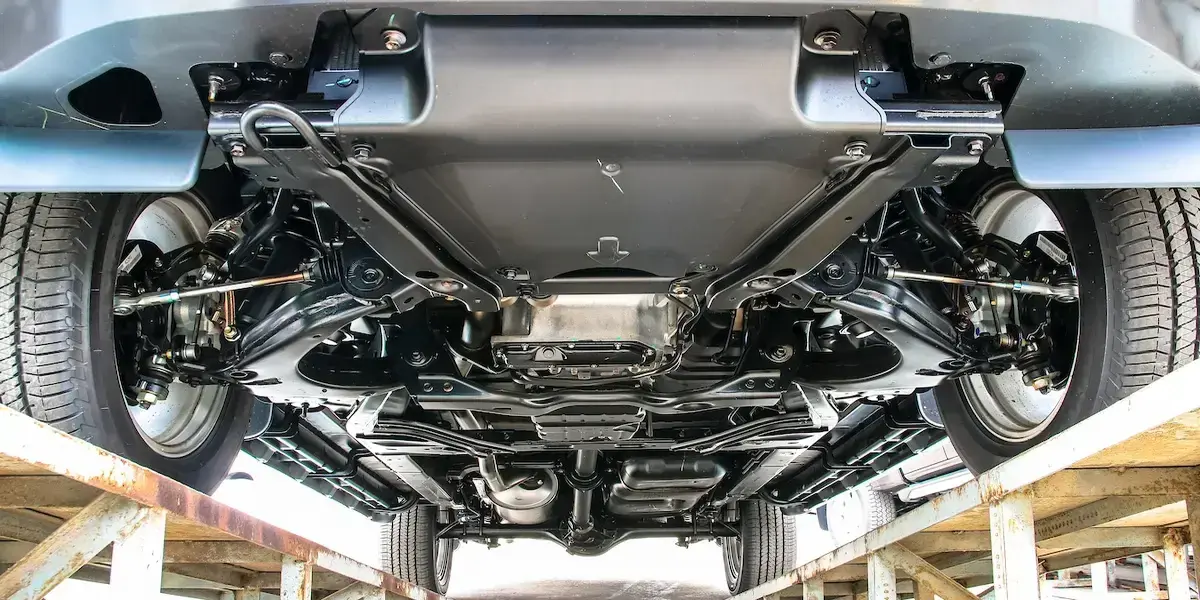
The exact problems depend on the engine, year and generation, but some areas come up repeatedly when discussing Range Rover ownership.
1. Electrical and Electronic Problems
Modern Range Rovers use a lot of electronics. That gives you features such as advanced infotainment, driver-assistance systems, electronic controls and sophisticated vehicle management systems.
It also gives you more things that can potentially develop faults. Electrical problems don’t always mean something catastrophic has failed. Sometimes the problem is a sensor, module, wiring issue or software-related fault.
The frustrating part is finding the actual cause.
2. Air Suspension
The air suspension is one of the things that makes a Range Rover feel like a Range Rover. It’s also one of the systems buyers of older vehicles need to pay attention to.
Air springs, compressors, valves and related components can wear out. If a suspension problem is ignored, the repair bill can become considerably more painful than a normal suspension repair on a simpler SUV. If you’re buying a used Range Rover, check whether the vehicle sits evenly and whether the suspension raises and lowers normally.
3. Engine Problems
Engine reliability depends heavily on the specific engine and model year. Some engines have developed better reputations than others, while certain failures can become very expensive once a vehicle is out of warranty.
This is why “Is a Range Rover reliable?” is sometimes the wrong question.
A better question is:
Which Range Rover, with which engine, from which year, and with what service history?
That gives you a much more useful answer.
4. Transmission and Drivetrain Issues
The transmission and four-wheel-drive systems are also expensive pieces of equipment. A strange shift, hesitation, warning light or unusual noise shouldn’t be ignored just because the vehicle still drives normally. On a used luxury SUV, a small warning today can sometimes become a very large repair bill later.
Are Newer Range Rovers More Reliable?
Maybe, but there isn’t enough evidence yet to say that confidently. This is where the internet can get a little carried away. Someone buys a brand-new Range Rover, drives it for 15,000 miles without a problem and says it’s extremely reliable.
Another person owns an older Range Rover that has needed several major repairs and says they’re terrible. Neither experience tells the whole story.
The current generation simply hasn’t been on the road long enough to give us the same amount of long-term reliability information available for older models.
There are some encouraging signs, but there are also current recalls and reliability concerns.
For example, NHTSA recall 26V248 covers certain 2020–2024 Range Rover vehicles for a DC-DC converter issue that can potentially result in loss of drive power.
Another 2026 recall, 26V389, involves certain 2022–2026 Range Rover vehicles where corrosion at the driver airbag clockspring connector could prevent the airbag from deploying properly. Recalls don’t necessarily mean a vehicle is fundamentally unreliable. They do show why checking the VIN and recall history is important.
How Much Does Range Rover Reliability Affect Ownership Cost?
This is arguably more important than the reliability score itself. You can live with an occasional minor problem. You probably won’t feel the same way when the repair costs several thousand dollars.
RepairPal estimates that Range Rover owners spend around $1,258 per year on repair and maintenance costs on average, although actual costs can vary substantially depending on the vehicle and the repairs needed.
And averages don’t tell you what happens when a major component fails.
That’s the key point.
A Range Rover doesn’t necessarily need to break down every month to become expensive to own. One major repair can wipe out years of relatively normal maintenance costs. This is also why buying one simply because the purchase price looks attractive can be a mistake.
A used Range Rover may be affordable to buy compared with its original price, but the cost of maintaining it doesn’t necessarily fall at the same rate.
Is a Used Range Rover Reliable Enough to Buy?
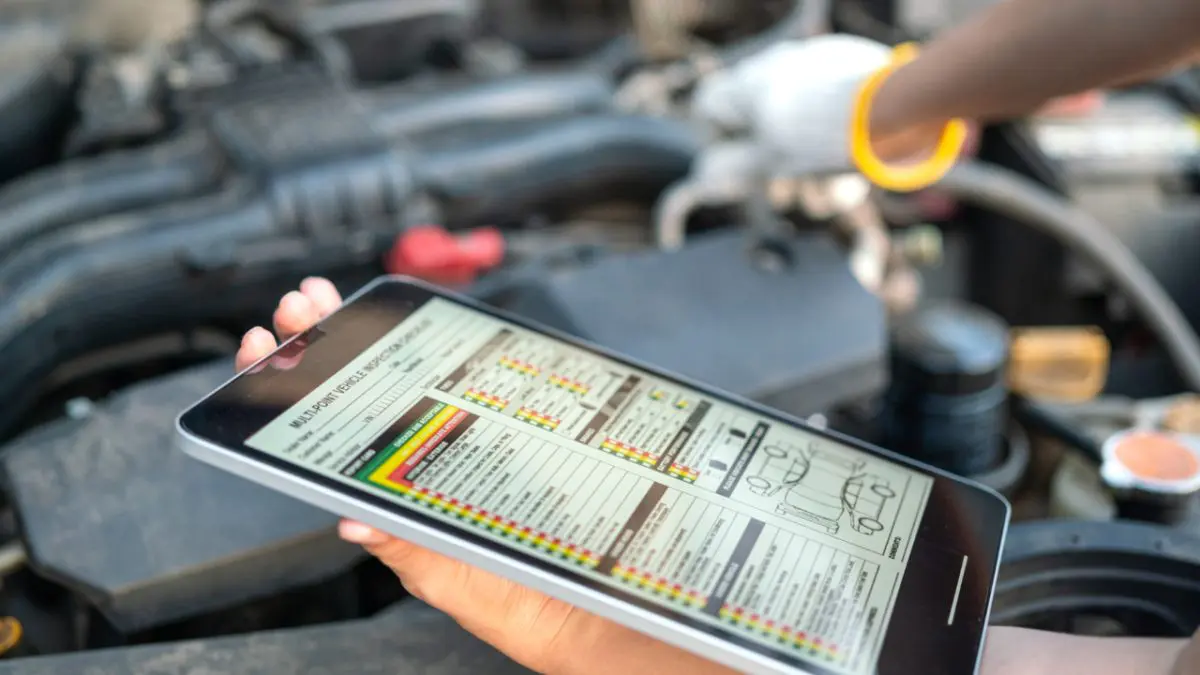
Yes, a used Range Rover can make sense, but I wouldn’t buy one casually. If you’re shopping for one, I’d pay more attention to the individual vehicle than the badge.
Check the Service History
A complete service history is one of the biggest positives you can find. Look for evidence that routine servicing was actually done rather than relying on a seller saying, “It’s been maintained.”
Receipts, service records and dealer or specialist history are much more useful.
Check for Recalls
Always check the vehicle identification number for outstanding recalls. recall doesn’t automatically make the vehicle a bad purchase, but you want to know what has been repaired and what still needs attention.
Get a Pre-Purchase Inspection
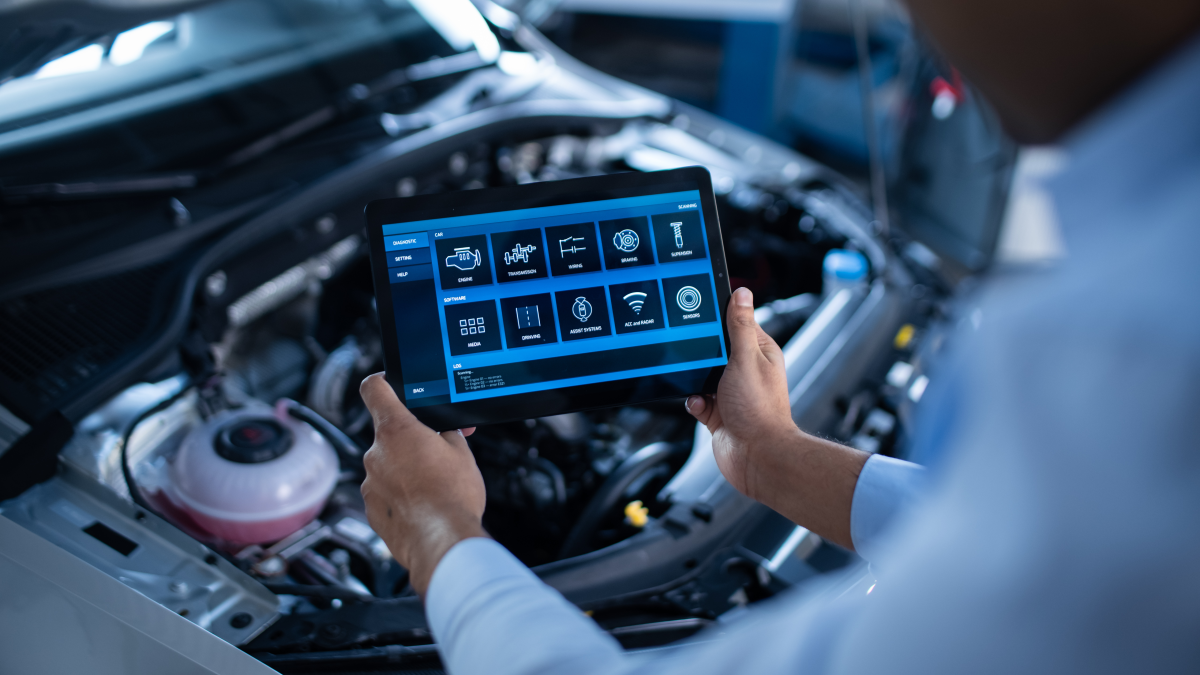
This is especially important with an older Range Rover. Have someone familiar with Land Rover products inspect the vehicle before you buy it. The inspection should cover the suspension, drivetrain, engine, electronics, leaks, warning lights and diagnostic codes. Spending money on an inspection is much easier to accept than discovering a major problem a week after buying the vehicle.
Keep Money Aside for Repairs
Don’t spend your entire budget buying the SUV. If buying a Range Rover leaves you with no money available for unexpected maintenance, you’re probably stretching your budget too far. This is one of those vehicles where having some financial breathing room can make ownership much less stressful.
Consider a Warranty
For a newer used Range Rover, a good warranty can make sense. Just don’t assume every warranty covers everything. Read the actual terms, exclusions, claim limits and approved repair requirements before paying for it.
Who Is a Range Rover a Good Choice For?
A Range Rover can be a great choice if you want luxury, comfort and the driving experience that comes with a premium SUV—and you’re prepared for the possibility of higher ownership costs.
It’s less attractive if your main priority is simple, low-cost, worry-free transportation.
If your thinking is:
“I want an SUV that I can drive for years and spend as little as possible maintaining,”
there are probably better choices.
If your thinking is:
“I really want a Range Rover, I understand that repairs can be expensive, and I’m buying a well-maintained example,”
the decision becomes much more reasonable.
That’s the difference.
So, Are Range Rovers Reliable?
Range Rovers are not consistently class-leading for reliability, but calling every Range Rover unreliable is too simplistic.
The available data is mixed.
J.D. Power currently rates the 2026 Range Rover’s quality and reliability as average, while RepairPal’s rating is considerably less favorable. iSeeCars gives it a more positive long-term reliability score, while Consumer Reports currently predicts below-average reliability for the new model.
The reason for that difference is important: these organizations measure different things, and there isn’t yet enough long-term data on the latest generation to give us a definitive answer.
For a used Range Rover, maintenance history, model year, engine, condition and inspection results can matter more than the badge itself.
So, should you buy one?
If reliability and low running costs are your number-one priorities, I’d look elsewhere. If you want a Range Rover and you’re comfortable with higher maintenance and repair costs, buying the right example can still be worthwhile. Just don’t buy the cheapest one you can find and expect it to behave like a cheap SUV.
Final Verdict
Range Rover reliability isn’t a simple yes-or-no question. The brand has a long history of mixed reliability, and the cost of fixing problems can be a bigger concern than how often those problems occur. At the same time, some reliability surveys show better results than the stereotype would suggest.
The safest approach is to stop looking only at the badge.
Look at the specific generation, model year, engine, service history, recall status and inspection report.
That’s how I’d approach a Range Rover purchase in 2026.
If you’re doing the research before buying one, the next question I’d ask isn’t simply “Are Range Rovers reliable?”
I’d ask:
“Which Range Rover years are the safest bet to buy used?”
That’s where the differences between generations and model years become much more useful.
Frequently Asked Questions
Are Range Rovers reliable?
Range Rover reliability is mixed. Some owners have good experiences, while others face expensive electrical, suspension or mechanical repairs.
Are newer Range Rovers more reliable?
It’s too early to know for certain. The current generation doesn’t yet have enough long-term reliability data to make a strong conclusion.
What are the most common Range Rover problems?
Electrical faults, air suspension problems, engine issues and drivetrain problems are among the areas buyers should pay attention to.
Are Range Rovers expensive to repair?
They can be. RepairPal estimates average annual repair and maintenance costs of about $1,258, but a major repair can cost considerably more.
How long does a Range Rover last?
iSeeCars estimates an average lifespan of around 113,925 miles or 10.7 years, although actual lifespan depends heavily on maintenance and vehicle condition.
Is buying a used Range Rover a bad idea?
Not necessarily. A well-maintained used Range Rover with good service records and a clean inspection can be a reasonable purchase. A neglected one can become very expensive.
Should I avoid a Range Rover because of its reliability reputation?
Not automatically. The reputation is worth taking seriously, but the individual vehicle, generation, service history and inspection are more useful when judging a used example.