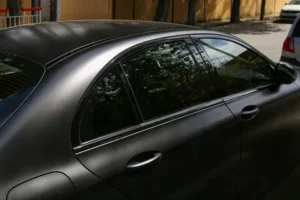
You pull into a tint shop expecting a simple answer: “How much to tint car windows?” Instead, you hear $250 from one shop, $500 from another, and $900 from a third. Same car. Same number of windows. Suddenly, the cheapest quote does not look so simple.
In 2026, a professional full-car tint job commonly falls around $150 to $800+, while premium ceramic work on large or complex vehicles can reach $1,200 or more. The difference usually comes down to the film, vehicle size, glass shape, labor, location, and extras.
So before you choose a price, you need to know what you are actually paying for. Here is how tint pricing works, which film makes sense for your needs, and how to spot a quote that looks cheap for the wrong reasons.
AI Overview: How Much Does It Cost to Tint Car Windows?
Professional car window tinting typically costs $150–$800+ for a full vehicle in 2026. Basic dyed film may cost around $100–$250, while ceramic and premium nano-ceramic films can push the price to $350–$1,200+, depending on the vehicle and installer.
Your final window tint cost also changes with film quality, vehicle size, glass curvature, location, old tint removal, windshield coverage, and roof glass. The best quote is not necessarily the lowest one; compare the film, coverage, installation quality, warranty, and legal VLT together.
Key Takeaways
- A full tint job commonly costs $150–$800+ in 2026.
- Dyed film is usually the cheapest option, while ceramic costs considerably more.
- SUVs, trucks, vans, and vehicles with complex glass generally cost more than sedans.
- Removing old tint can add roughly $50–$150 before the new film is installed.
- Windshield tint can add about $150–$350, depending on film and local rules.
- Premium films from brands such as 3M, LLumar, and XPEL can command higher prices.
- Your legal VLT limit matters before you choose a tint shade.
How Much to Tint Car Windows?
In 2026, professional car window tinting generally costs about $150 to $800+ for a full vehicle. Basic dyed tint can cost roughly $100–$250, carbon film about $200–$450, and ceramic or premium nano-ceramic tint around $350–$1,200+. Larger vehicles, difficult glass, old tint removal, windshield tint, roof glass, location, and film brand can increase the final price.
How Much Does It Cost to Tint Car Windows in 2026?
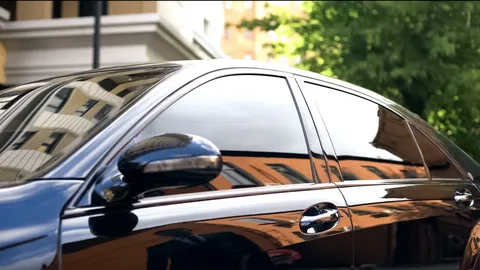
The biggest mistake is treating tint pricing as one fixed number.
For a typical sedan, the supplied 2026 pricing data puts dyed or carbon tint around $200–$350, while ceramic can run roughly $350–$500. SUVs and trucks can reach $250–$450 for dyed or carbon and $400–$650 for ceramic.
At the premium end, nano-ceramic installations can exceed $900–$1,200, particularly on large or complicated vehicles. A Tesla Model Y with roof coverage can reach about $1,400.
| Film / vehicle | Typical 2026 range |
| Dyed full-car tint | $100–$250 |
| Carbon full-car tint | $200–$450 |
| Ceramic full-car tint | $350–$1,200+ |
| Sedan, dyed/carbon | $200–$350 |
| SUV/truck, dyed/carbon | $250–$450 |
| Sedan, ceramic | $350–$500 |
| SUV/truck, ceramic | $400–$650 |
| Large/luxury SUV, ceramic | $550–$800+ |
These are broad market ranges, not guaranteed quotes. Local labor, vehicle design, film series, and coverage can move the number substantially.
What Factors Affect Your Window Tint Cost?
Your final bill can change for more than 15 legitimate reasons. The important part is understanding what each one actually changes.
1. Film technology
Dyed film is generally the budget choice. Ceramic costs much more because it is designed for stronger heat rejection, durability, and performance.
2. Film brand and series
A premium film from 3M, LLumar, XPEL, SunTek, or Solar Gard can cost considerably more than an unnamed film.
The product series matters, too. “Ceramic” alone does not tell you exactly what you are buying.
3. Vehicle size
More glass means more material and labor. SUVs, trucks, and vans therefore tend to cost more than sedans.
4. Number of windows
A full-car package normally costs less per window than buying individual windows separately.
5. Glass curvature
Highly curved windows require additional heat-shrinking and careful fitting. That extra labor can increase the price.
6. Installation labor
Tint installation is not simply sticking film onto glass. Cleaning, shaping, shrinking, trimming, squeegeeing, and finishing all affect the job.
7. Installer experience
An experienced installer may charge more, but the price can reflect cleaner edges, fewer defects, and stronger warranty support.
8. Your location
Labor and shop overhead vary by market. Urban areas can be substantially more expensive than suburban or rural locations.
9. Old tint removal
Old film can add approximately $50–$150 to the bill. Difficult adhesive or delicate defroster lines can make removal more complicated.
10. Windshield tint
A windshield installation can add roughly $150–$350, depending on the film and what local law allows.
11. Sunroof or panoramic roof
Large glass roofs can add approximately $150–$400, making EVs with panoramic roofs particularly expensive to tint.
12. Warranty
A stronger manufacturer or installer warranty can increase the upfront price but may provide better protection against film defects and workmanship problems.
13. Legal VLT requirements
Your state may restrict how dark specific windows can be. That can limit your film choices before installation even begins.
14. IR performance
Some premium films are priced around stronger infrared heat rejection. If heat control is your priority, compare the actual performance specification instead of choosing by darkness alone.
15. UV performance
Higher-grade films can offer strong UV protection. For example, LLumar and XPEL describe their premium films as blocking about 99% of harmful UV rays.
16. Color stability
Cheap dyed films can fade or develop a purple appearance over time. Better-quality films are generally designed for stronger color stability.
17. Additional services
Edge finishing, special removal work, post-installation inspections, and other shop services can add smaller fees.
Dyed vs. Carbon vs. Ceramic: Which Tint Is Worth Paying For?
The cheapest film is not automatically the best value.
| Feature | Dyed | Carbon | Ceramic / Nano-Ceramic |
| Price | Lowest | Mid-range | Highest |
| Heat rejection | Low | Moderate | High |
| UV protection | Moderate | High | Very high |
| IR blocking | Minimal | Moderate | High |
| Fade resistance | Lower | Better | Highest |
| Signal interference | None | None | None |
| Best for | Tight budgets | Balanced value | Heat and performance |
Dyed tint: Who should use it?
Choose dyed film when your priority is low upfront cost and a darker appearance.
Ceramic tint: Who should use it?
Ceramic makes more sense when you regularly deal with intense heat and want stronger heat and UV performance.
Who should avoid paying for premium ceramic?
If your main goal is simply appearance and privacy, premium ceramic may be unnecessary. You are paying for performance features that matter more to some drivers than others.
Is Ceramic Window Tint Worth the Extra Cost?
For a driver who regularly parks or drives in strong heat, ceramic can make financial sense because its main advantage is performance rather than darkness.
For example, 3M Crystalline uses multilayer nano-technology and is designed to reject substantial solar and infrared energy while blocking up to 99.9% of UV light. XPEL PRIME XR PLUS reports up to 99% UV protection and 98% infrared heat rejection.
LLumar’s IRX is another premium ceramic option, with manufacturer data showing more than 99% UV protection and strong infrared performance.
The key lesson is simple: compare specifications, not marketing labels.
Factory Privacy Glass vs. Aftermarket Tint
This is one of the easiest ways to misunderstand what you are buying.
Factory privacy glass is darkened during manufacturing. Aftermarket tint is a film installed on the glass, so you can choose its shade and technology.
That distinction matters because darker glass does not automatically mean stronger heat rejection.
If your vehicle already has factory privacy glass, ask the installer whether you actually need additional film and what benefit the new layer provides.
How Tint Laws Can Change What You Buy
Before choosing a dark shade, check your local tint laws.
VLT means Visible Light Transmission. A higher VLT number means more visible light passes through the window, so the film is lighter.
Rules vary by location and by window. For example, the Texas Department of Public Safety says driver and front-passenger windows with less than 25% light transmission fail inspection, while windshield sunscreening devices have additional requirements.
Do not rely on a shop saying, “Everyone uses this shade.” Verify the current rules for your vehicle and location.
How to Tell Whether a Tint Quote Is Fair
Do not compare two prices until you know whether you are comparing the same product.
Ask every shop:
- What exact film brand and series is included?
- How many windows are covered?
- Is windshield or roof glass included?
- Is old tint removal included?
- What VLT will be installed?
- What warranty comes with the film?
- Is the warranty from the manufacturer, installer, or both?
- Is installation performed by an experienced or certified installer?
A $450 quote can be better than a $300 quote if the first includes a significantly better film, proper removal, stronger warranty, and cleaner installation.
On the other hand, a high price does not automatically prove high quality.
How Professional Tint Installation Works
Good installation takes more than applying a sheet of film.
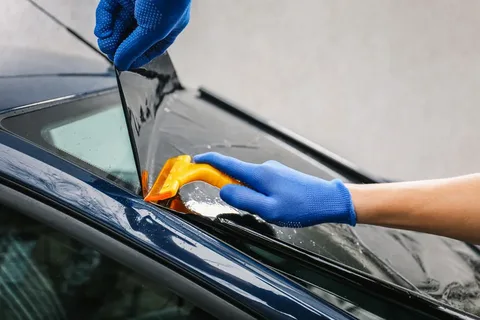
The installer cleans the glass, cuts the film to shape, heat-shrinks it when needed, prepares the inside surface, positions the film, removes trapped water and air, trims the edges, and finishes the installation.
Afterward, the film needs time to cure. A slightly hazy appearance during the early curing period can be normal.
That is why installation quality should be part of your window tint cost calculation, not an afterthought.
Common Tinting Mistakes That Can Cost You More
The first mistake is choosing entirely by price.
A second is buying a “ceramic” package without asking for the exact brand and series. The word alone does not tell you the product’s actual specifications.
Another mistake is ignoring legal VLT requirements. Paying for an expensive installation and then having to replace illegal film is a poor bargain.
Finally, do not roll the windows down immediately after installation. Installer guidance commonly recommends waiting several days while the film cures.
Practical Application: How to Choose Your Tint Without Overpaying
Start with your vehicle and the exact windows you want covered.
Then decide what matters most: appearance, privacy, heat reduction, UV protection, or a combination of these.
Next, request at least two or three written quotes using the same specifications. Ask for the film brand, series, VLT, coverage, removal cost, warranty, and installation price.
Finally, compare the quotes side by side.
If one shop is dramatically cheaper, find out why before paying. The difference may be film quality, installer experience, coverage, or warranty, not simply a better deal.
How Much Should You Budget for Car Window Tint?
If you want a simple starting point, budget roughly $150–$800+ for a professional full-car installation, then adjust upward for premium ceramic film, large vehicles, complicated glass, old tint removal, windshield coverage, or panoramic roofs.
For a budget-focused driver, dyed film can keep the initial bill low. Carbon is a middle-ground choice, while ceramic is the stronger option when heat and UV performance matter more than the lowest price.
Remember the driver standing in that tint shop at the beginning? The problem was never just the price. It was not knowing what the price included.
Now you do.
The best tint job is rarely the one with the smallest number on the quote; it is the one where the film, installation, legal shade, warranty, and final price all make sense together.
Frequently Asked Questions
How much does it cost to tint all car windows in 2026?
A full-vehicle tint job typically costs about $150–$800+ in 2026. Basic dyed film can fall around $100–$250, while premium ceramic installations can reach $1,000 or more. Vehicle size, film series, location, and additional coverage can push the price higher.
Is car window tinting worth the cost?
It can be, particularly if heat reduction, UV protection, glare reduction, privacy, and interior protection matter to you. Ceramic film costs more but offers stronger performance than basic dyed film. If appearance is your main goal, a premium film may not be necessary.
What is the cheapest way to tint car windows?
Basic dyed film is generally the least expensive professional option, often around $100–$250 for a full vehicle. The lower price comes with lower heat rejection and generally shorter durability than higher-grade films. Compare the film and warranty before choosing purely on price.
How long does car window tint last?
The supplied 2026 data estimates roughly 3–5 years for dyed film, 5–10 years for carbon, and 10–15+ years for ceramic with proper care. Actual life depends on film quality, installation, exposure, and maintenance. Fading, bubbling, or peeling can signal that replacement is needed.
How much does it cost to remove old window tint?
Professional removal commonly adds around $50–$150 for many sedans, with more complicated vehicles potentially costing more. A single side-window removal may cost around $25–$50. Difficult adhesive and delicate defroster lines can increase the labor involved.
Can I tint my windshield?
Windshield rules vary by state, and full windshield tint is restricted in many locations. Some laws allow only a limited strip near the top or specific high-VLT film. Always check your current local requirements before adding windshield film.
What does VLT mean in window tint?
VLT means Visible Light Transmission. It describes how much visible light passes through the glass and film together. A higher VLT percentage means a lighter window, while a lower percentage means a darker appearance.
How soon can I roll down my windows after tinting?
Installers commonly recommend waiting several days before rolling the windows down. The film needs time to settle and adhere properly to the glass. Following the installer’s curing instructions helps reduce the risk of edge lifting or peeling.