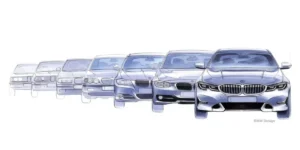
If BMW model names look confusing, you’re not alone. A name such as M340i xDrive packs several pieces of information into a few letters and numbers.
The first number usually tells you the BMW family. The letters and extra numbers then tell you more about the body style, powertrain, drivetrain or performance level.
So a 3 Series, 4 Series and 5 Series aren’t simply three versions of the same car. They sit in different parts of BMW’s lineup and can come with very different body styles and powertrains.
BMW series explained in simple terms
BMW uses numbers to group many of its cars into model families. The 2 Series sits below the 3 Series in BMW’s traditional car range. The 4 Series is closely related to the 3 Series but focuses more heavily on coupe-style body designs. The 5 Series moves into the executive-sedan class while the 7 Series is BMW’s flagship sedan. Then you have labels such as M, i, e and xDrive. These tell you more about what sits underneath the badge. The easiest way to understand a BMW name is to read it from left to right.
For example:
BMW 550e xDrive
- 5 = 5 Series family
- 50 = model/performance position within that family
- e = plug-in hybrid
- xDrive = all-wheel drive
BMW’s current model range also uses the i name for fully electric models such as the i5 and i7.
Key takeaways
- The first number usually identifies the BMW series.
- A higher series number generally places the car higher in BMW’s traditional sedan and coupe range.
- The number after the series does not simply tell you engine size anymore.
- M Performance models such as the M340i sit below full M cars such as the M3.
- i identifies BMW’s electric models while e is used for plug-in hybrids in current model names.
- xDrive means BMW’s all-wheel-drive system.
1. What do the numbers in BMW series mean?
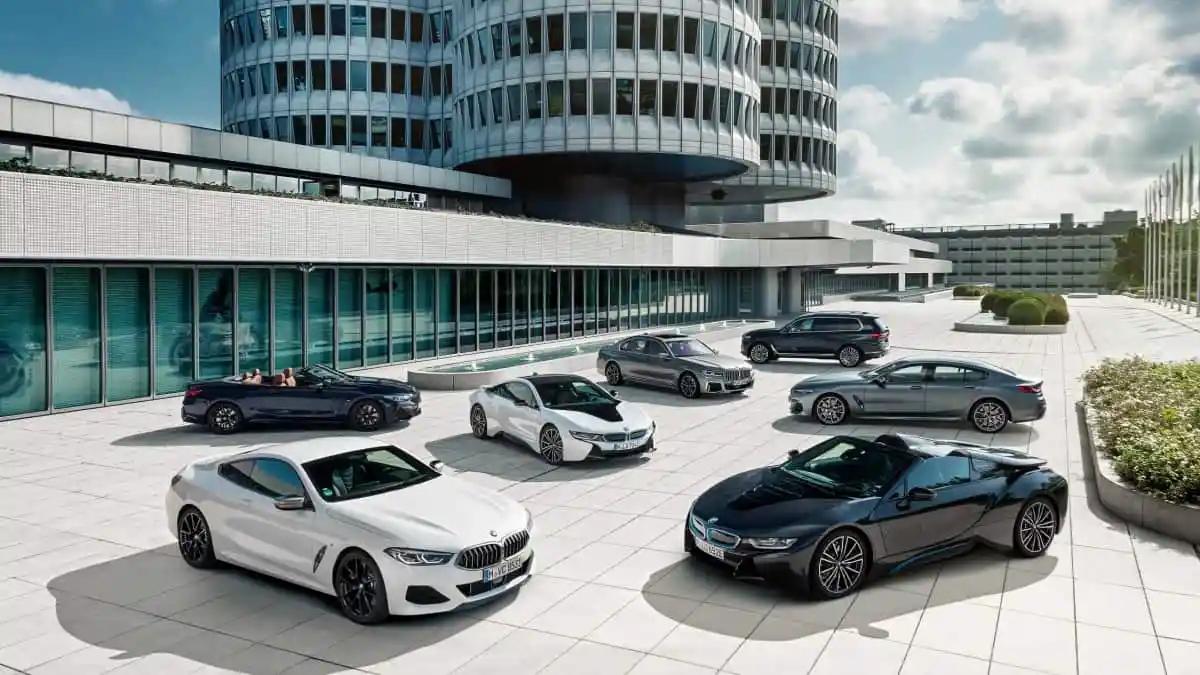
The first number is the easiest part. A 2 Series belongs to the 2 Series family. A 3 Series belongs to the 3 Series family. The same idea continues with the 4, 5 and 7 Series. BMW doesn’t use the series numbers as a perfect ladder of quality or price. Body style matters too.
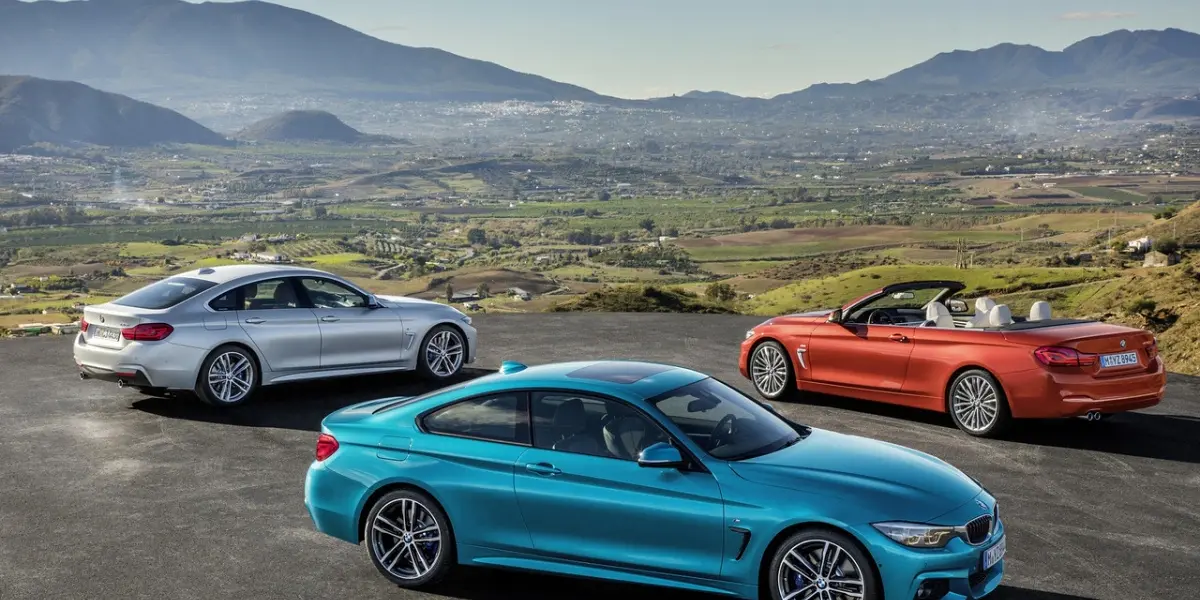
The 4 Series is a good example. It sits close to the 3 Series in BMW’s range but is built around coupe-style models, including the 4 Series Coupe, Convertible and Gran Coupe. So when you see a BMW number, think model family first. The extra digits need a little more explanation.
2. What is the BMW 2 Series?
The 2 Series is BMW’s compact car family. In the current U.S. lineup, BMW separates it into the 2 Series Coupe, 2 Series Gran Coupe and M2. The Coupe range includes models such as the 230i and M240i while the Gran Coupe range includes the 228 and M235 xDrive.
The important detail is that the 2 Series name covers cars with different layouts and different purposes. The 2 Series Coupe is a compact two-door car with rear-wheel-drive architecture. The Gran Coupe is a four-door model with a different mechanical layout. That distinction matters if you’re shopping for one.
3. What is the BMW 3 Series?
The BMW 3 Series is one of the company’s best-known sedan families. It has traditionally been the smaller sport sedan positioned below the 5 Series. Current versions include regular 3 Series models along with M Performance and full M versions.
For example, the M340i is an M Performance model while the M3 is a full BMW M car. BMW is also moving the 3 Series into a new generation. The new electric BMW i3 Sedan is scheduled for the U.S. in 2027 while BMW says other versions of the new generation will follow. That means model year matters when you’re comparing a 3 Series today.
4. What is the BMW 4 Series?
The 4 Series is closely related to the 3 Series but gives buyers more coupe-focused body styles. BMW currently sells the 4 Series as a Coupe, Convertible and Gran Coupe. The 430i sits in the regular range. The M440i is an M Performance model while the M4 is the full M version.
There’s also the electric i4, which sits within the broader 4 Series family. This is why saying “a 4 Series” doesn’t tell you enough. You need to know whether you’re talking about the Coupe, Convertible or Gran Coupe.
5. What is the BMW 5 Series?
The 5 Series is BMW’s larger executive sedan family. For the 2027 U.S. model year, BMW lists the 530i, 530i xDrive and 540i xDrive alongside the 550e xDrive plug-in hybrid. The electric side of the family is covered by the i5. There is also the high-performance M5. The interesting part here is how much choice BMW gives you inside one series. You can have a conventional gasoline car, a plug-in hybrid or a fully electric model while staying within the broader 5 Series family.
6. What is the BMW 7 Series?
The 7 Series is BMW’s flagship sedan. It is larger and more focused on luxury than the 5 Series. The current U.S. range includes the gasoline-powered 740 and 740 xDrive, the 750e xDrive plug-in hybrid and fully electric i7 models.
The i7 50 xDrive and i7 60 xDrive sit on the electric side of the family. The 7 Series also puts a lot of attention on rear-seat comfort. BMW offers features such as the available 31.3-inch Theatre Screen for rear passengers. So the 7 Series isn’t simply a bigger 5 Series. The way BMW designs and equips it reflects its flagship position.
7. Does a higher BMW series always mean a better car?
Not necessarily. A 7 Series sits higher in BMW’s traditional luxury hierarchy than a 3 Series. But that doesn’t mean it will be the better car for every person. A 3 Series is smaller and easier to place on narrow streets. A 4 Series Coupe may make more sense if you want a two-door car. A 5 Series gives you more space without moving all the way into 7 Series territory.
The useful question is what do you need the car to do? Series numbers tell you where the model sits in BMW’s lineup. They don’t tell you which car fits your life.
8. What do BMW X models mean?
BMW uses X for its SUV and crossover families. You’ll see names such as X1, X3, X5 and X7. The number generally gives you an idea of where the SUV sits within the BMW X range. The X3, for example, sits below the X5 while the X7 is larger and more focused on the upper end of the range.
There are also electric versions and M Performance or full M variants within parts of the X range. The X family deserves its own guide because BMW’s SUV naming system has enough detail to become confusing quickly.
9. What does BMW i mean?
The i name identifies BMW’s electric models in the current lineup.
Examples include:
- BMW i4
- BMW i5
- BMW i7
- BMW iX
- BMW iX3
The important point is that “i” doesn’t always mean a completely separate vehicle family. The i5 is part of the broader 5 Series story. The i7 belongs to the 7 Series family. The i4 sits within the 4 Series family. BMW is increasingly putting gasoline and electric choices closer together in its model structure.
10. What does BMW M mean?
The M badge tells you you’re looking at BMW’s performance range. But there are two levels that shoppers often mix up. Take the 3 Series. The M340i is an M Performance model. The M3 is a full BMW M car.
The same idea appears in the 2 Series with the M240i and M2. That distinction matters because an M240i can be extremely quick while still sitting in a different part of BMW’s performance range than an M2. If you’re shopping for a BMW because performance is the main reason you’re interested, learn the M naming system before comparing prices.
11. What does M Performance mean?
M Performance is the middle ground between a regular BMW and a full M car.
Examples include:
- M240i
- M340i
- M440i
BMW describes the M240i as an M Performance model while the M2 is a full M car. This gives buyers another choice. You can get a BMW with considerably more performance than a standard model without moving into the full M range. The difference isn’t only about horsepower. Chassis setup, brakes, suspension, cooling and other mechanical details can separate these cars.
12. What does xDrive mean?
xDrive is BMW’s all-wheel-drive system.
You’ll see it at the end of names such as:
- 530i xDrive
- 540i xDrive
- 550e xDrive
- 740 xDrive
- M240i xDrive
If a BMW has xDrive in its name, it uses all-wheel drive.
That can be useful in rain, snow and other low-grip conditions. It can also affect how the car puts power down when you accelerate. BMW also uses M xDrive on some high-performance M cars. That’s a performance-oriented version of all-wheel drive with additional control options depending on the model.
13. What do the “i” and “e” at the end of BMW names mean?
This is where BMW naming gets confusing.
In current model names, e generally identifies a plug-in hybrid.
For example, the 550e xDrive combines a gasoline engine with electric drive.
The i at the beginning of a name identifies a fully electric BMW, such as the i5 or i7.
So:
550e xDrive
5 Series + plug-in hybrid + all-wheel drive
i7 60 xDrive
i electric model + 7 Series family + model level + all-wheel drive
Older BMWs used these letters in different ways, so don’t assume every historical BMW badge follows today’s rules.
14. Why can two BMWs with similar numbers be very different?
Because the badge only tells part of the story. Take the 2 Series. A 230i Coupe and a 228 Gran Coupe both carry “2 Series” names. Yet they are different body styles with different engineering layouts.
The same thing happens higher up. A 530i is a gasoline 5 Series. A 550e is a plug-in hybrid 5 Series. An i5 is fully electric. The series tells you the family. The rest of the badge tells you more about the specific car. This is why reading the entire BMW name is more useful than looking only at the first number.
15. How should you read a BMW name?
Try this simple method.
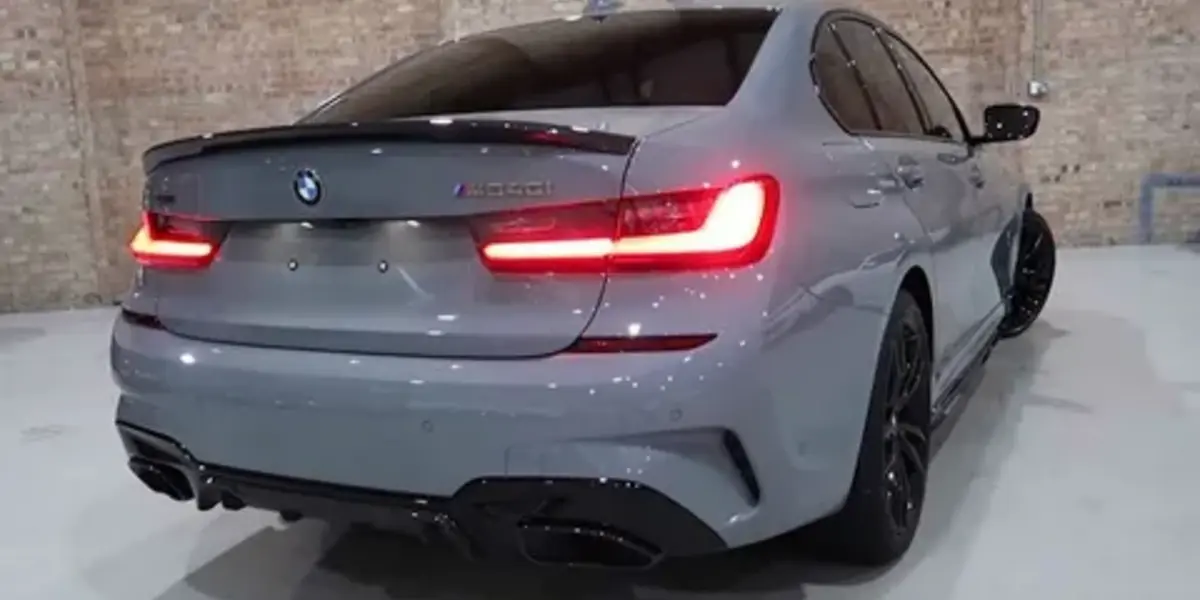
Example 1: BMW M340i xDrive
M340i xDrive
- 3 = 3 Series
- 40 = model/performance position
- i = current BMW naming convention for this gasoline model
- M = M Performance
- xDrive = all-wheel drive
Example 2: BMW 550e xDrive
- 5 = 5 Series
- 50 = model/performance position
- e = plug-in hybrid
- xDrive = all-wheel drive
Example 3: BMW i7 60 xDrive
- i = fully electric
- 7 = 7 Series family
- 60 = model/performance position
- xDrive = all-wheel drive
Once you break the name into pieces, BMW’s badges become much easier to read.
BMW series quick comparison
| BMW family | General position | Common body style | Powertrain choices |
| 2 Series | Compact | Coupe / Gran Coupe | Gasoline / performance |
| 3 Series | Sport sedan | Sedan | Gasoline / electric transition |
| 4 Series | Coupe-focused | Coupe / Convertible / Gran Coupe | Gasoline / electric |
| 5 Series | Executive sedan | Sedan | Gasoline / PHEV / electric |
| 7 Series | Flagship luxury sedan | Sedan | Gasoline / PHEV / electric |
| X Series | SUV/crossover | SUV | Gasoline / PHEV / electric depending on model |
| M | Performance family | Varies | High-performance versions |
| i | Electric family | Varies | Fully electric |
This is a guide to the model families rather than a complete worldwide BMW catalog. BMW changes availability by market and model year.
Which BMW series fits which type of driver?
If you want a small sporty BMW, start with the 2 Series. If you want a traditional BMW sport sedan, the 3 Series is the natural place to look. If you want a coupe or convertible, look at the 4 Series. If you want a larger executive sedan, look at the 5 Series. If rear-seat space and flagship luxury are high on your list, the 7 Series is the relevant family. And if you want an SUV, move across to the X range rather than trying to compare an X5 directly with a 5 Series as if they were the same type of vehicle.
The simple way to understand BMW’s lineup
BMW’s naming system gets much easier once you separate the pieces. The series number tells you the family. The additional numbers tell you where the model sits within that family. Letters such as M, i, e and xDrive then add information about performance, powertrain or drivetrain.
And always check the model year and market before comparing two BMWs. A badge that exists in the U.S. may have a different name or availability elsewhere. That small step saves a lot of confusion when you’re comparing BMW models online.
BMW series FAQ
What is the difference between BMW 3 Series and 5 Series?
The 3 Series is smaller and positioned as a sport sedan below the 5 Series. The 5 Series is larger and sits in BMW’s executive-sedan range.
Is BMW 4 Series better than 3 Series?
They are aimed at different preferences. The 4 Series puts more emphasis on coupe-style body designs while the 3 Series is the more traditional sedan family.
What does BMW 330i mean?
The 330i is a model within the BMW 3 Series. The “30” identifies its position within the range while the “i” is part of BMW’s model naming convention for that gasoline model.
What does M340i mean?
The M340i is an M Performance version of the 3 Series. It sits below the full M3 in BMW’s performance lineup.
What does xDrive mean on a BMW?
xDrive is BMW’s all-wheel-drive system. When you see xDrive at the end of a BMW model name, that version uses all-wheel drive.
Is the BMW i5 a 5 Series?
Yes. The i5 is BMW’s fully electric member of the 5 Series family.
Is the BMW i7 a 7 Series?
Yes. The i7 is the fully electric version of BMW’s flagship 7 Series sedan family.
Sources reviewed
The current model information was checked against BMW USA’s 2027 model pages and BMW’s official model information. Current references include the 2 Series Coupe and Gran Coupe, 4 Series Coupe/Gran Coupe/Convertible, 5 Series, 7 Series and the new i3 information.
Update policy
BMW changes model names, engines, trim availability and technology by model year and market. This article should be reviewed whenever BMW announces a new generation or changes the U.S. lineup.