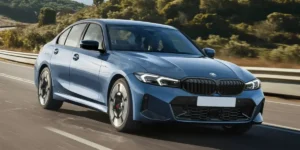
The BMW 3 Series is one of the names most closely associated with BMW.
It has spent decades sitting in the middle of BMW’s sedan range while building a reputation around rear-wheel-drive-based handling, strong engines and a driver-focused feel. But the 3 Series is changing again for 2027.
The new generation keeps the gasoline 3 Series alive while BMW also brings in the fully electric i3 Sedan as part of the same broader 3 Series story. That makes this a particularly interesting point in the model’s history.
AI Overview
The BMW 3 Series is BMW’s compact executive sport sedan. For the 2027 U.S. model year, the lineup is moving into a new generation with the 330 as the core gasoline model and the M350 xDrive above it. The M3 remains the high-performance model while the new fully electric i3 Sedan joins the next-generation 3 Series family in 2027. The main differences between these models come down to powertrain, drivetrain, performance and price.
Key takeaways
- The BMW 3 Series is BMW’s compact executive sport sedan.
- The new 2027 3 Series introduces a new generation for the gasoline models.
- The 330 is the core gasoline model while the M350 xDrive adds substantially more performance.
- The M3 is the full BMW M performance sedan rather than simply a more powerful regular 3 Series.
- The new BMW i3 Sedan brings a fully electric model into the next-generation 3 Series family.
- Model year matters because BMW is changing names and specifications during this transition.
What is the BMW 3 Series?
The BMW 3 Series is BMW’s compact executive sport sedan.
In the current U.S. lineup the regular gasoline 3 Series is built around the 330 while the performance side includes the M350 xDrive. The fully electric i3 Sedan is arriving separately in 2027.
For buyers, the basic idea is still easy to understand: the 3 Series is smaller and more driver-focused than a 5 Series while giving you more room and a more traditional sedan format than the smaller 2 Series.
The confusing part is the model names and the transition between generations. So let’s break those down.
1. Why does the BMW 3 Series matter so much?
The 3 Series has been part of BMW’s lineup for roughly five decades.
That history matters because the name has become closely linked with the idea of a sporty four-door BMW. BMW itself describes the new i3 Sedan as carrying on the legacy of the eighth-generation 3 Series.
Over the years the formula has changed. Engines have changed, technology has changed and the cars have grown. The basic idea of a BMW sport sedan has remained.
That is why the 3 Series is more than just another number in BMW’s lineup.
2. What BMW 3 Series models are available now?
This is where model year matters.
For the 2027 U.S. 3 Series, BMW lists the 330 Sedan with a 2.0-liter turbocharged four-cylinder engine. The M350 xDrive uses a 3.0-liter turbocharged inline-six and all-wheel drive.
The current performance lineup also includes the M3, with BMW listing the M3, M3 Competition and M3 Competition xDrive.
Then there is the electric i3 Sedan, which BMW says will be available in the U.S. starting in 2027.
So when you see an article discussing a 330i or M340i, check the model year. Older and newer 3 Series generations overlap during this transition.
3. The 330 is the starting point for the new generation
For 2027, BMW calls the core gasoline model the 330 Sedan.
It uses a 2.0-liter BMW TwinPower Turbo four-cylinder engine producing 255 hp. BMW offers it with rear-wheel drive or xDrive all-wheel drive.
That makes the 330 the logical starting point for someone who wants the new-generation 3 Series without moving into the more expensive performance models.
It also shows why BMW model names need to be read by model year. The familiar 330i name from the previous generation should not automatically be treated as the exact name of the new 2027 car.
4. What happened to the M340i?
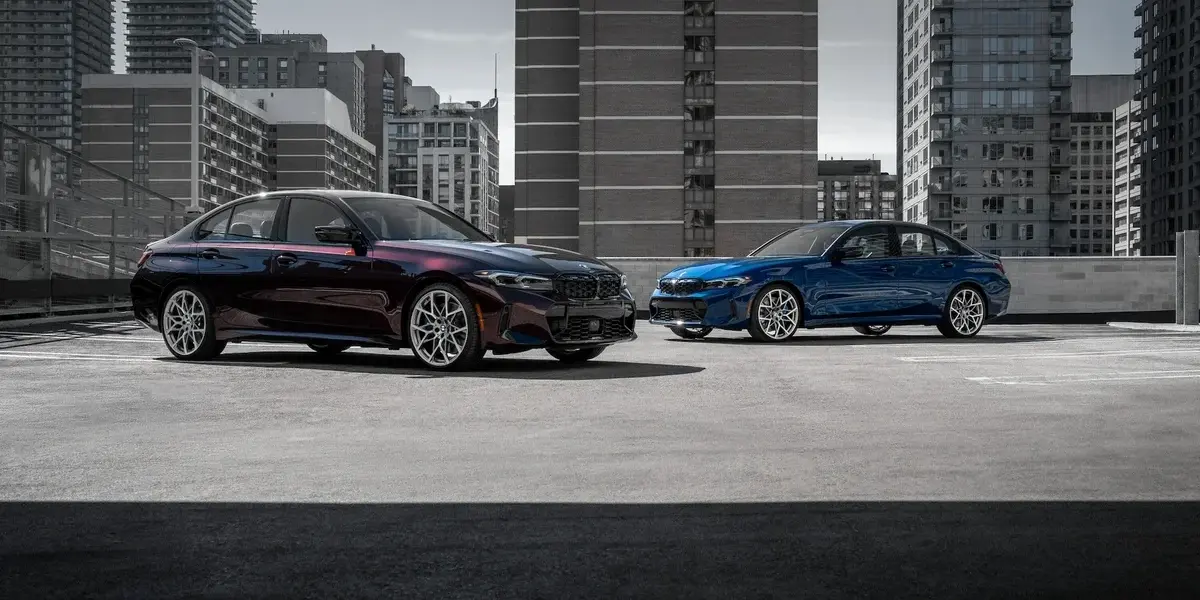
This is one of the biggest changes buyers will notice. The previous 3 Series generation used the M340i as the powerful six-cylinder model below the M3. BMW’s current 2027 U.S. information instead lists the M350 xDrive for the new generation.
BMW gives the M350 xDrive a 3.0-liter turbocharged inline-six with 443 hp. It also uses all-wheel drive.
So if you’re comparing a 2026 3 Series with a 2027 model, don’t assume the M340i and M350 xDrive are simply the same car with a new badge. The 2027 model is part of the new generation. This is exactly the kind of detail that gets lost when BMW model guides mix different model years together.
5. Where does the M3 fit?
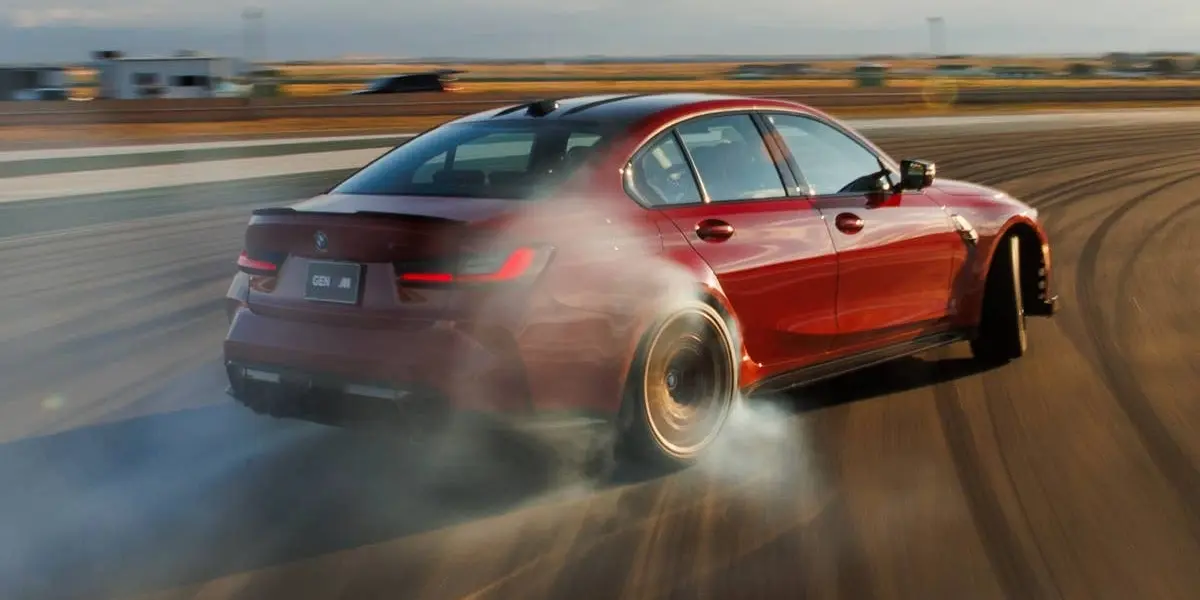
The BMW M3 sits at the top of the gasoline 3 Series performance family.
BMW’s current U.S. M3 page lists the M3 Sedan at 473 hp, the M3 Competition at 503 hp and the M3 Competition xDrive at 523 hp. BMW lists a preliminary 3.4-second 0–60 mph time for the Competition xDrive.
The M3 gets much more performance hardware than a normal 3 Series.
That includes changes to the engine, chassis, suspension, brakes and other systems. So the M3 should be viewed as a serious performance car that happens to share the 3 Series name rather than simply a very powerful 330.
6. M340i vs M3: what is the actual difference?
For the previous generation, this was one of the most useful comparisons in the 3 Series lineup. The M340i was designed as a fast everyday BMW. The M3 took the performance idea much further. For the current 2027 lineup, the comparison is shifting toward M350 xDrive vs M3 because BMW has replaced the M340i with the M350 in the new generation.
The M350 has 443 hp while the current M3 Competition xDrive has 523 hp. Those numbers alone don’t tell the whole story, but they show the gap in positioning. If you want a quick everyday sport sedan, the non-M 3 Series performance models are easier to live with. If maximum performance is the priority, the M3 occupies a different part of the lineup.
7. The new BMW i3 Sedan changes the 3 Series story
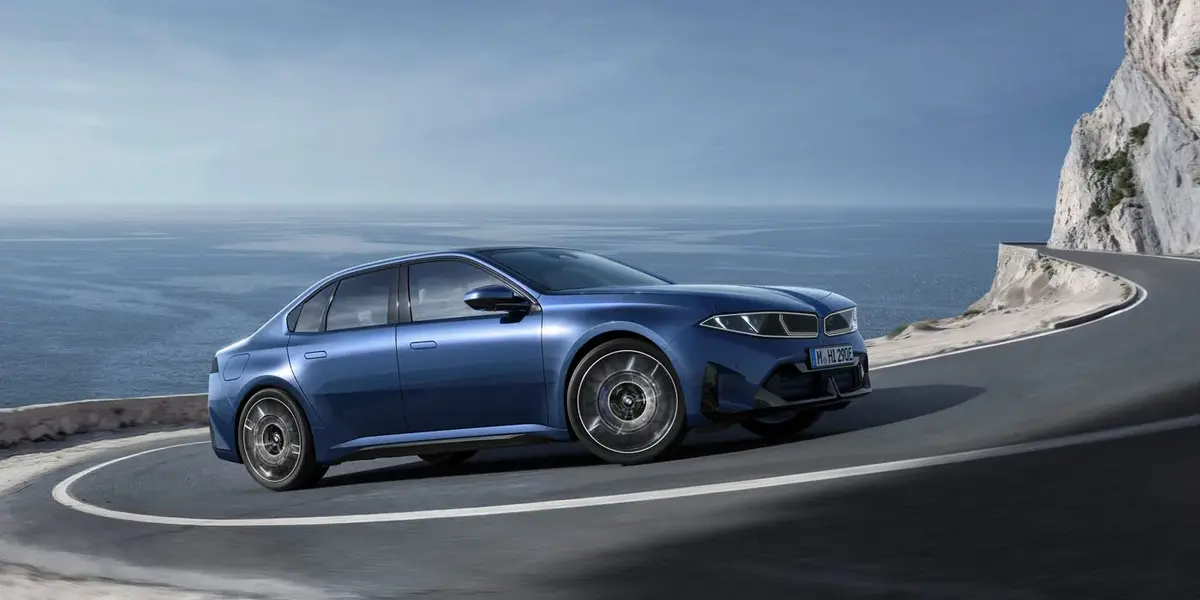
The name i3 may sound familiar because BMW previously used it for a small electric hatchback.
The new i3 Sedan is something very different.
BMW says the new fully electric i3 Sedan will be available in the U.S. starting in 2027 and describes it as the second model of the Neue Klasse. BMW also says it carries on the legacy of the eighth-generation 3 Series.
BMW estimates up to 440 miles of range for the i3 Sedan under ideal conditions. The company also says the car uses an 800-volt battery system with DC charging capability of up to 400 kW. These figures are preliminary and actual range will depend on conditions and configuration.
So the electric future of the 3 Series family is becoming much clearer.
8. Is the BMW i3 a replacement for the gasoline 3 Series?
Not in the simple sense of one car disappearing and another taking its place.
BMW says the upcoming 3 Series generation will include different drive variants and separately describes the i3 as the fully electric version.
That means buyers are moving toward a 3 Series family where the choice of powertrain matters more than it did before.
You can still choose a gasoline-powered 3 Series. You can also choose the new electric i3 Sedan if an EV fits your needs.
That is a major change in the way BMW is defining the model family.
9. What does xDrive mean on the 3 Series?
xDrive means BMW all-wheel drive.
The 2027 330 is available as a rear-wheel-drive sedan or as a 330 xDrive. The M350 is listed with xDrive as standard.
All-wheel drive can be useful in rain, snow and other low-grip conditions. It can also provide additional traction when putting down power.
But there is a simple reason some BMW buyers still look for rear-wheel drive: it keeps the traditional drivetrain layout associated with the sport-sedan character of the 3 Series.
Neither choice is automatically right for everyone.
10. What makes the 3 Series different from the 2 Series?
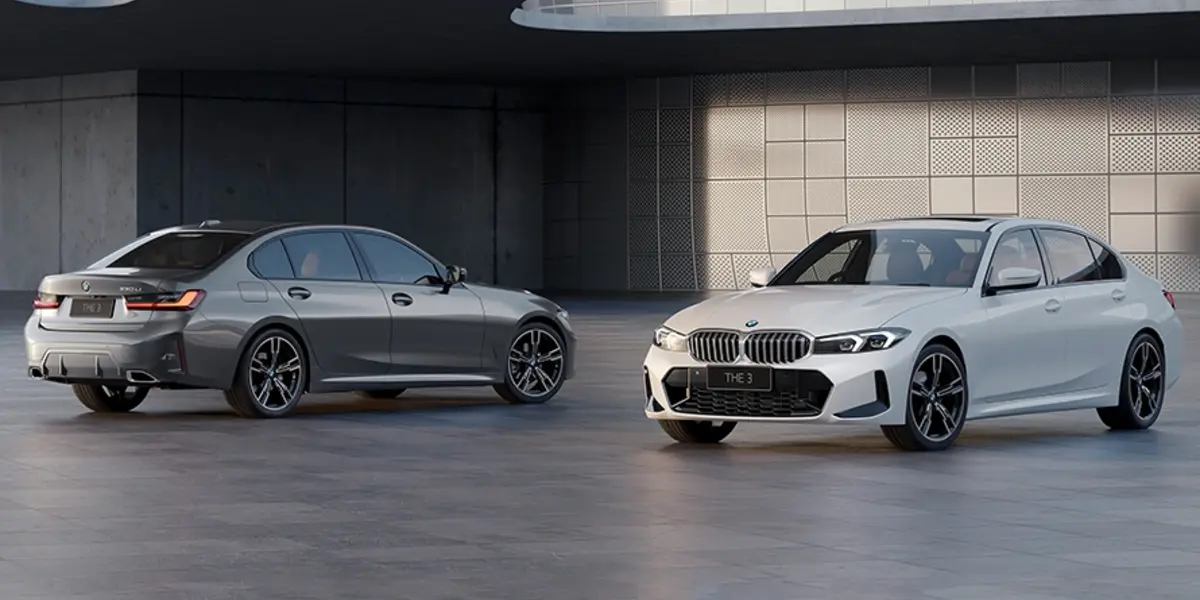
The easiest distinction is size and body style.
The 2 Series gives you a smaller BMW platform with Coupe and Gran Coupe versions. The 3 Series is centered on the four-door sport sedan.
There is also a difference in the way BMW positions them.
The 2 Series is the more compact entry into BMW’s smaller car families. The 3 Series gives you more space and sits higher in the traditional BMW sedan range.
If you’re deciding between them, the real question is whether you want the smaller 2 Series format or the more conventional sport-sedan package of the 3 Series.
A full 2 Series vs 3 Series comparison should cover dimensions, engines, rear-seat space, pricing and driving character separately.
11. How is the 3 Series different from the 4 Series?
The 4 Series is closely related to the 3 Series but uses different body styles.
The 3 Series is the classic four-door sedan. The 4 Series focuses on Coupe, Convertible and Gran Coupe versions.
This means the decision often comes down to body style before engine.
Someone who wants a traditional four-door sport sedan will naturally look at the 3 Series. Someone who prefers a lower two-door Coupe may move toward the 4 Series.
There is plenty more to compare between them, including design, practicality and model pricing, so that deserves its own article rather than being squeezed into this one.
12. What is the 3 Series like for everyday driving?
This is where the 3 Series has always had a useful advantage.
You can drive it to work, use it for longer trips and still have a car that feels sporty when you take an interesting road.
The 330 is the easier version to understand for someone who wants a normal daily sedan. The M350 adds considerably more performance while keeping the basic sedan format. The M3 goes much further toward performance driving.
That range is one reason the 3 Series has stayed relevant for so long.
You don’t have to buy the fastest version to get the basic 3 Series experience.
13. How has the 3 Series changed for 2027?
The 2027 model begins a new generation.
BMW’s new 3 Series brings a redesigned exterior and a new cabin built around the company’s latest digital interface. BMW’s current information also points buyers toward the new electric i3 as part of this next stage.
The transition is important because the old and new cars can appear together in search results for a while.
That means a specification from a 2026 3 Series should not automatically be used when describing the 2027 car.
For anyone shopping now, model year is one of the first things to check.
14. Which 3 Series model makes sense for different drivers?
There is no single 3 Series that fits every buyer.
| Your priority | Model to investigate |
| Traditional everyday 3 Series | 330 |
| More traction in difficult weather | 330 xDrive |
| Strong six-cylinder performance | M350 xDrive |
| Serious performance driving | M3 |
| Electric driving | i3 Sedan |
This is a starting point rather than a ranking.
A person who drives mostly in the city may care more about comfort and running costs. Someone who spends weekends on mountain roads may care much more about power, suspension and chassis setup.
The useful part of the 3 Series lineup is that you can choose based on how you actually drive.
15. What should you check before buying a BMW 3 Series?
First, check the model year.
This matters more than usual because BMW is moving from the previous 3 Series generation to the new 2027 generation. The names and specifications are changing during that transition.
Then check the drivetrain. A rear-wheel-drive 330 and a 330 xDrive can feel different and have different equipment and pricing.
After that, decide how much performance you really need. The M350 and M3 are much more performance-focused than the regular 330.
Finally, if you’re considering an i3, look at your charging situation and your real driving pattern. BMW’s published range figures are estimates and real-world EV range varies with temperature, wheels, driving style and other conditions.
BMW 3 Series lineup at a glance
| Model | Powertrain | Drive | Main role |
| 330 | 2.0L turbo four-cylinder | RWD | Core 3 Series |
| 330 xDrive | 2.0L turbo four-cylinder | AWD | Core 3 Series with xDrive |
| M350 xDrive | 3.0L turbo inline-six | AWD | High-performance everyday sedan |
| M3 | High-performance gasoline | RWD | BMW M performance sedan |
| M3 Competition | High-performance gasoline | RWD | Higher-performance M3 |
| M3 Competition xDrive | High-performance gasoline | AWD | Top current M3 variant |
| i3 Sedan | Fully electric | Variant-dependent | Electric 3 Series family |
BMW’s current U.S. pages list the 330 and M350 for the new 2027 generation while the M3 remains in the current performance lineup. The i3 Sedan is scheduled for U.S. availability in 2027.
Final takeaway
The BMW 3 Series is going through an important change.
The traditional gasoline sedan is continuing with the new 2027 generation while the i3 Sedan brings a fully electric version of the 3 Series idea. At the same time, the performance lineup is changing from the familiar M340i to the new M350 xDrive while the M3 remains the high-performance benchmark within the family.
If you’re researching a 3 Series today, don’t stop at the badge.
Check the model year, engine, drivetrain and whether you’re looking at a regular BMW, an M Performance model, an M3 or the new electric i3. That tells you far more about the car than the number “3” alone.
BMW 3 Series FAQ
Is the BMW 3 Series a luxury car?
Yes. The 3 Series is part of BMW’s premium sedan lineup. It sits below the larger 5 Series and 7 Series in BMW’s traditional sedan hierarchy.
Is the BMW 3 Series still available with a gasoline engine?
Yes. BMW’s 2027 U.S. lineup includes the gasoline-powered 330 and M350 xDrive.
Is the BMW i3 the same as the old BMW i3?
No. The new i3 Sedan is a four-door electric sedan connected to the new 3 Series generation. BMW says it carries on the 3 Series legacy and will arrive in the U.S. in 2027.
What is the difference between the 330 and M350?
The 330 uses a 2.0-liter turbocharged four-cylinder with 255 hp. The M350 xDrive uses a 3.0-liter turbocharged inline-six with 443 hp and all-wheel drive.
Is the BMW M3 part of the 3 Series?
Yes. The M3 is BMW M’s high-performance version of the 3 Series Sedan. It has substantially more performance hardware and power than the regular 3 Series models.
Should you buy a 3 Series or 5 Series?
The 3 Series is the smaller sport sedan while the 5 Series is larger and positioned higher in BMW’s sedan range. The better fit depends on how much space, comfort, performance and budget you need.