Key Takeaways
- Chevy Blazer offers sportier styling and sharper handling.
- Ford Edge provides more cargo space and cabin room.
- Blazer has a lower starting price across most trims.
- Edge includes standard AWD on most models.
- Blazer delivers better towing capacity and highway efficiency.
- Edge ST excels in straight-line performance and comfort.
- Choose Blazer for driving enjoyment; Edge for practicality.
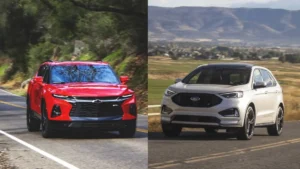
There are so many two-row mid-size SUVs on the market that you could feel overwhelmed trying to find the right one. However, if you are debating the blazer vs edge, you are considering two of the hottest American players in this field. When evaluating the blazer or edge for your next vehicle, both options feature a similarly high driving position, seating for five, and whizzy tech.
The blazer vs edge comparison boils down to style and driving dynamics versus all-out interior utility. Featuring well-proportioned, Camaro-influenced styling and lively handling, the 2026 Chevy Blazer is clearly designed for drivers with sportier intentions. In contrast, the 2026 Ford Edge sticks to a conventional layout with an emphasis on comfort, and most configurations come standard with all-wheel drive. From the data we have for automotive testing, the Chevy Blazer is a more entertaining drive behind the wheel, while the Ford Edge will serve you better with a softer, quiet highway ride.
Regardless of your preference, both models make for great daily drivers for families and commuters. Now we’ll get information into the finer points to help you understand whether or not you need a purchase of the blazer or edge for your driveway.
Everything Comes Down to Price and Trim Levels
Budget is always a driving force when it comes to selecting a new vehicle, and examining the blazer vs edge price structure reveals vastly different packaging approaches taken here by both automakers. When reviewing the overall blazer vs edge price, Chevrolet has a very staged offering, allowing people to pay for what they want and little more. Even simpler is Ford, which has fewer configurations that pack more standard features into each model, but it usually ends up being a higher entry price when analyzing the blazer vs edge price breakdown.
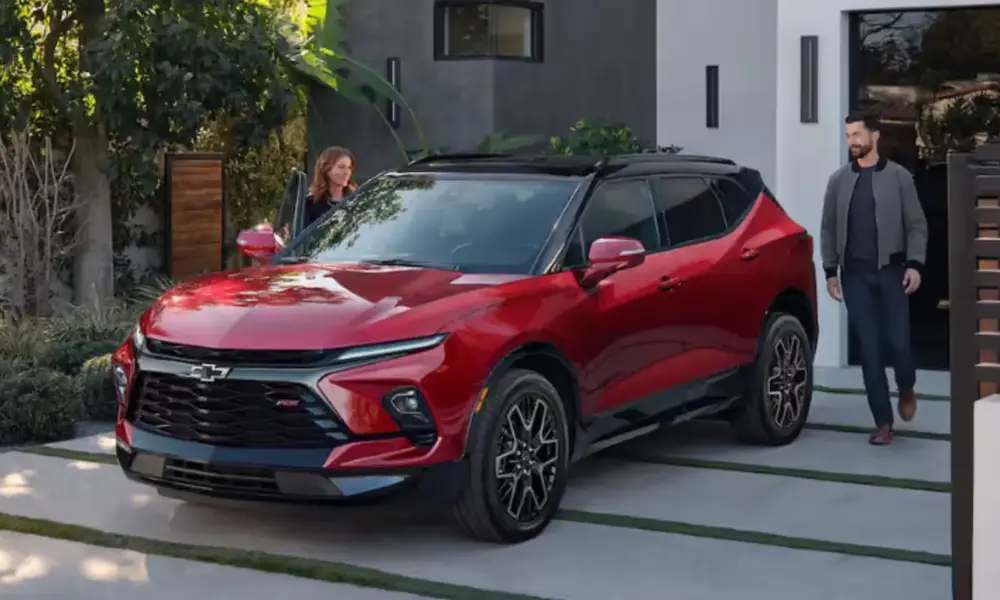
The blazer vs edge price should range from $36,500 to start for the base 2LT up to around $50K. This gives you all the key tech but without pressuring you into paying for performance improvements that you might not even need. By the time you reach the 3LT, Premier, and sporty RS trim levels, prices climb upward into the mid-$40,000 range. Visiting an authorized dealer, similar to chevySUV, for reliable breakdowns of recent incentives and availability regionally may help you obtain the correct financing option.
The competitor CUV is expected to start from about $38,500 in the entry-level trim in late 2026, as Ford includes AWD as standard equipment on most gas-powered Ford models. The Edge lineup trims range from the Titanium up to the performance-oriented ST, which is closing in on a projected $48,000 for MSRP.
Here is a quick rundown on how the pricing of the blazer vs edge compares across their primary trim levels:
| Trim Level Tier | 2026 Chevy Blazer Trims | Estimated MSRP | 2026 Ford Edge Trims | Estimated MSRP |
| Base / Entry | Blazer 2LT | $36,500 | Edge SE | $38,500 |
| Mid-Tier Value | Blazer 3LT | $39,300 | Edge SEL / ST-Line | $40,500 |
| Luxury / Premium | Blazer Premier | $43,800 | Edge Titanium | $44,000 |
| Sport / Performance | Blazer RS | $44,500 | Edge ST | $48,000 |
Interior Comfort and Cargo Space
Step inside either cabin, and you will notice immediately how differently these two brands approach interior design. The blazer vs edge interior comparison highlights a battle between sporty aesthetics and traditional utility. Evaluating the blazer vs edge interior setup shows how Chevrolet prioritizes driver engagement while Ford emphasizes maximum cabin volume.
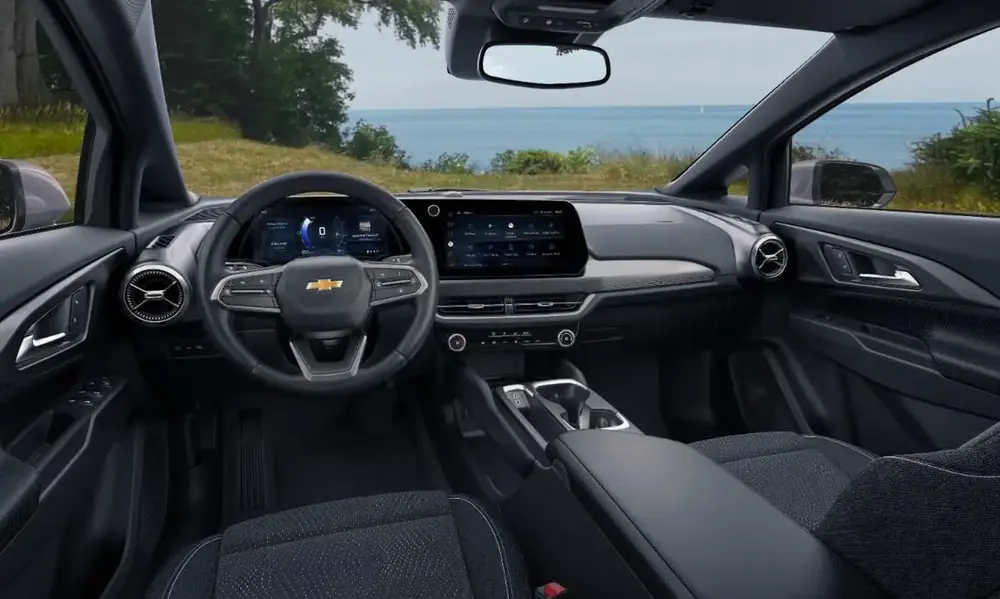
The Chevy Blazer features a blazer vs edge interior layout inspired heavily by the Chevrolet Camaro sports car. It boasts round, tactile air vents that rotate to adjust the temperature, a standard 10.2-inch high-definition touchscreen, and available red accent stitching on higher trims. It feels driver-centric and youthful. Behind the second row, the Blazer offers 30.5 cubic feet of cargo space, which expands to 64.2 cubic feet when you fold the rear seats completely flat.
The Ford Edge takes a more conservative approach with its blazer vs edge interior, focusing heavily on maximizing passenger volume. The dashboard is dominated by a large vertical touchscreen that handles most climate and media controls. While it lacks the physical styling flair of the Blazer, it wins clearly on raw dimensions. The Edge provides 39.2 cubic feet of cargo room with the rear seats upright, opening up to a generous 73.4 cubic feet with the seats folded down. If you regularly haul large boxes, strollers, or bulky sports gear, the Edge offers a clearer advantage in pure volume.
To compare the dimensions and capabilities of the blazer vs edge interior spaces accurately, consider the following structural breakdown:
| Dimension / Spec | 2026 Chevy Blazer | 2026 Ford Edge | Winner |
| Infotainment Screen Size | 10.2-inch horizontal | 12.0-inch vertical | Ford Edge (Size) |
| Cargo Volume (Seats Up) | 30.5 cubic feet | 39.2 cubic feet | Ford Edge |
| Cargo Volume (Seats Down) | 64.2 cubic feet | 73.4 cubic feet | Ford Edge |
| Max Towing Capacity | Up to 4,500 lbs (V6) | Up to 3,500 lbs (V6) | Chevy Blazer |
| Cabin Styling Direction | Camaro-inspired, sporty | Open, traditional utility | Tie (Preference) |
Performance and Fuel Economy
Your daily driver needs to mix efficiency and performance. Indeed, when you compare the blazer vs edge mpg ratings, both automakers have largely drawn upon recent turbocharging advances to help keep fuel consumption more reasonable without putting highway passing power on long-loan! Optimizing your commute means finding the perfect balance within the blazer vs edge mpg statistics.
Chevy Blazer Engine Options
-
Standard 2.0L Turbocharged 4-Cylinder: This engine path contributes heavily to the competitive blazer vs edge mpg numbers, rated at 22 mpg city and 28 mpg highway in front-drivers by the EPA.
-
Available 3.6L V6 Engine: With an output of 308 horsepower, it slightly lowers the blazer vs edge mpg efficiency to an estimated 26 mpg on the highway, but increases maximum tow rating to 4,500 pounds (when properly equipped).
Ford Edge Engine Options
-
Standard 2.0L EcoBoost 4-Cylinder: Since it comes standard with all-wheel drive, its blazer vs edge mpg performance is estimated at 21 mpg city and 28 mpg highway.
-
Available 2.7L EcoBoost V6: Only available with the performance trim, produces 335 hp for faster acceleration but lowers overall fuel efficiency.
If keeping your costs down on long road trips is your priority, then the front-wheel-drive Blazer spaced with the 2.0L turbocharged engine path secures a top spot for highway blazer vs edge mpg in this comparo.
Performance Showdown: Blazer RS vs Edge ST
Both brands offer dedicated performance trim levels for drivers that want to spice things up with their daily commuter. This is how we pit the blazer rs vs edge st against one another, so you have two very different personalities going head-to-head. Reviewing the blazer rs vs edge st specs shows how differently each brand handles speed.
This is where the Chevy Blazer RS makes its mark. right on the corner, with a superb natural feel and agile attitude. When choosing between the blazer rs vs edge st, the RS combines a 308-horsepower naturally aspirated V6 engine with an advanced twin-clutch all-wheel-drive system. The system can send power to the rear wheel with the most traction, making the SUV feel agile and level-headed as it glides on twisty roads. The RS stands out visually with a black-out grille, dark 20-inch wheels, and bold exterior color choices, Habanero Orange and Riptide Blue.
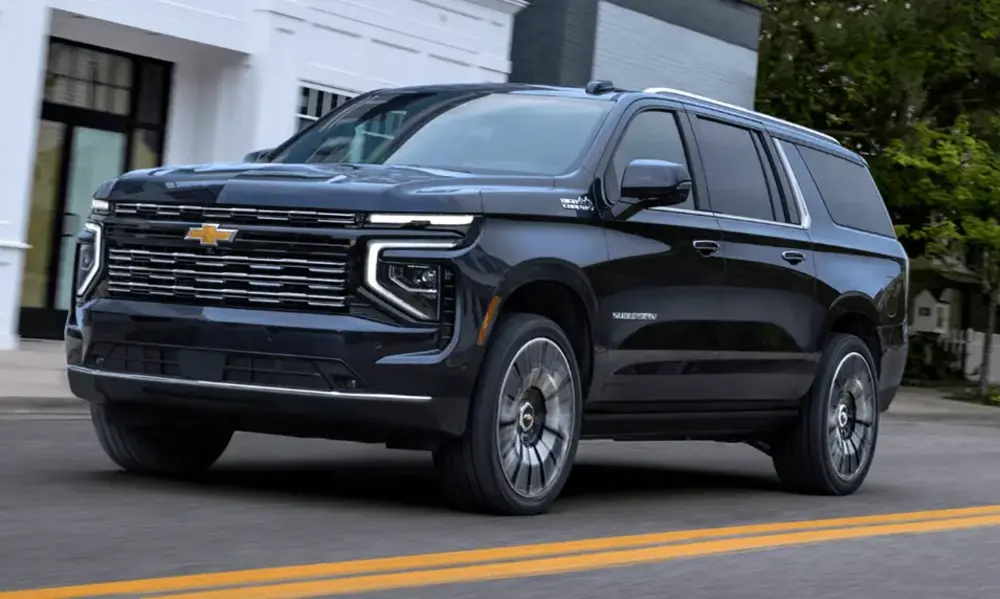
The Ford Edge ST takes a more muscle-bound turbocharged route to performance in this blazer rs vs edge st matchup. The 2.7-liter twin-turbo V6 produces a healthy 335 hp, making it brisker than the Blazer RS in straight-line sprints. The ST variant also gets a stiffer, sport-tuned suspension and larger performance brakes. This also means that the stiffer suspension is quite noticeable on normal urban streets with plenty of bumps and imperfections. The Edge ST gives you that instant punch on the highway, while the Blazer RS is a more well-rounded package with sharp steering response to boot and a smoother ride.
Reliability, Safety, and Ownership Costs
Testing the car is all well and good, but when it comes to buying a family vehicle, longevity matters as much as initial peace of mind. A quick look at blazer vs edge reliability numbers shows that both vehicles have formed a good history through years of production development. Examining long-term blazer vs edge reliability ratings helps determine which SUV holds up best over time.
The Chevy Blazer earns consistently high consumer quality ratings from J.D. Power, usually landing with scores in the mid-to-high 80s for general blazer vs edge reliability within its mid-size SUV class. Of course, even on that list, the Ford Edge can be quite competitive regarding blazer vs edge reliability, although owners sometimes complain about small electronic issues with the central infotainment software after long use.
Both vehicles are equipped with a range of active safety systems meant to prevent crashes when possible.
Standard Safety Features Included in Both Models
-
Automatic Emergency Braking: Applies brakes automatically when a forward collision is imminent and the driver does not respond in time.
-
Lane Keep Assist: Lightly torques the steering wheel to assist in keeping the vehicle safely centered in its lane on a highway.
-
Forward Collision Alert: Provides visual and audible warning of a detected imminent collision with traffic ahead.
The new Blazer is supported by bumper-to-bumper coverage for 3 years/36,000 miles and powertrain backing for 5 years/60,000 miles from Chevrolet. A coverage plan covers the base for Ford’s Edge as well. However, both models being mature in terms of their mechanical layouts should keep unplanned maintenance costs and overall blazer vs edge reliability concerns low for the first five years of ownership.
Final Verdict: Which SUV Should You Buy?
Overall, although there is no ‘wrong’ answer when it comes to the blazer vs edge debate, there is an ideal choice for your lifestyle. Deciding on the blazer or edge depends entirely on your daily driving requirements.
Go with the Chevy Blazer if you want a vehicle that stands out, has a sportier interior, handles more sharply, and is better on the highway. The Blazer doesn’t make you feel like you’re putting up the couple-hundred-mile day with a generic family hauler. So, if you wish to shop your options or snag a deal on the latest model, call on a particular showroom like chevySUV to take one for a test drive instead of wondering if you should buy a blazer or edge.
The Ford Edge is the real winner here if your priorities include maximum rear cargo volume, enough shoulder room for three adult passengers up front, and especially if you want the peace of mind of standard all-wheel drive in a rig built for winter. When choosing between the blazer or edge, the Edge proves to be quite a lovely long-distance highway cruiser.
Frequently Asked Questions
Which has a lower starting price, the Blazer or the Edge?
When comparing the blazer vs edge price, the Chevy Blazer has a lower starting cost for its entry-level trim. This is because the base Blazer comes standard with front-wheel drive, allowing buyers who do not need all-wheel drive to save money upfront. The Ford Edge costs more initially because all-wheel drive is built into its base price.
Which SUV gets better gas mileage?
The blazer vs edge mpg comparison favors the Chevy Blazer slightly. A front-wheel-drive Blazer with the standard 2.0-liter turbocharged engine achieves an EPA-estimated 29 mpg on the highway. The standard Ford Edge maxes out at an estimated 28 mpg on the highway due to the added weight of its standard all-wheel-drive system.
Does the Chevy Blazer or Ford Edge have more cargo room?
The blazer vs edge interior dimensions show that the Ford Edge offers more total cargo space. The Edge provides up to 73.4 cubic feet of room with the rear seats folded down, compared to 64.2 cubic feet inside the Chevy Blazer.
How do the performance models compare?
The battle between the blazer rs vs edge st comes down to acceleration versus handling. The Ford Edge ST uses a twin-turbo V6 to deliver 335 horsepower for faster straight-line acceleration. The Chevy Blazer RS uses a 308-horsepower V6 paired with an advanced twin-clutch AWD system built for nimbler handling and a smoother overall ride.
Which SUV is more reliable over time?
Data regarding blazer vs edge reliability indicates that both models perform well over long periods. The Chevy Blazer frequently earns slightly higher predicted reliability marks from consumer research groups like J.D. Power, driven by its robust engine designs and user-friendly mechanical components.