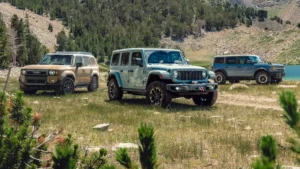
Best rugged SUVs combine strong traction, generous ground clearance, tough construction, and equipment built for poor roads. They can handle rocky trails, muddy tracks, sand, and uneven ground, and they still carry passengers and cargo on ordinary days.
Leading choices include the Jeep Wrangler Rubicon, Ford Bronco Badlands, Toyota Land Cruiser, Toyota 4Runner TRD Pro, and Land Rover Defender. Each suits a different kind of driving, from technical rock crawling to long-distance expeditions.
Be careful, though: an aggressive look does not make an SUV capable. The drivetrain, suspension, tires, clearance, and available equipment matter far more. This guide compares eight strong options and explains what to look for.
Specifications below are U.S.-market 2026 model-year figures where available. Trim, package, and country can change them.
Best Rugged SUVs at a Glance
| Rugged SUV | Best for | Main strength |
|---|---|---|
| Jeep Wrangler Rubicon | Rock crawling | Lockers and Rock-Trac 4×4 |
| Ford Bronco Badlands | Challenging trails | G.O.A.T. Modes, off-road suspension |
| Toyota Land Cruiser | Mixed terrain | Full-time 4WD |
| Toyota 4Runner TRD Pro | Trail driving | Specialized suspension, Crawl Control |
| Land Rover Defender 110 | Comfortable off-roading | Terrain Response |
| Lexus GX 550 Overtrail | Luxury off-roading | Rear locker, E-KDSS |
| INEOS Grenadier | Traditional off-roading | Beam axles, two-speed transfer case |
| Subaru Outback Wilderness | Light trails | Symmetrical AWD, extra clearance |
These vehicles are not equally capable everywhere. A true 4×4 with low-range gearing usually handles technical trails better than a road-focused AWD crossover.
Detailed Reviews
1. Jeep Wrangler Rubicon
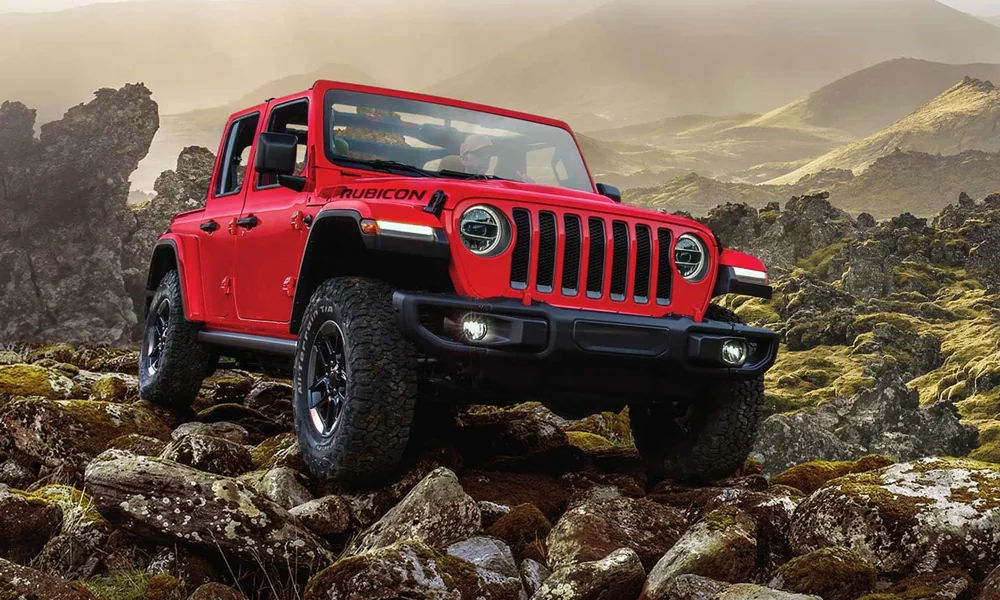
The Rubicon is a top pick for drivers who regularly face rocky, difficult routes. Its design puts traction, low-speed control, and suspension movement ahead of road comfort.
It uses Jeep’s Rock-Trac 4×4 system with a 4:1 low-range ratio. Front and rear Tru-Lok electronic locking differentials help when wheels lose grip, and an electronic front sway-bar disconnect allows more suspension travel.
- 33-inch off-road tires
- Front and rear locking differentials
- Rock-Trac 4×4 system
- Electronic front sway-bar disconnect
- Rock rails and underbody protection
Removable doors and a removable roof add open-air driving.
Advantages: excellent rock-crawling hardware and strong low-range gearing.
Limitations: more road noise and a firmer ride than most SUVs.
Best for: technical trails and specialized 4×4 equipment.
2. Ford Bronco Badlands
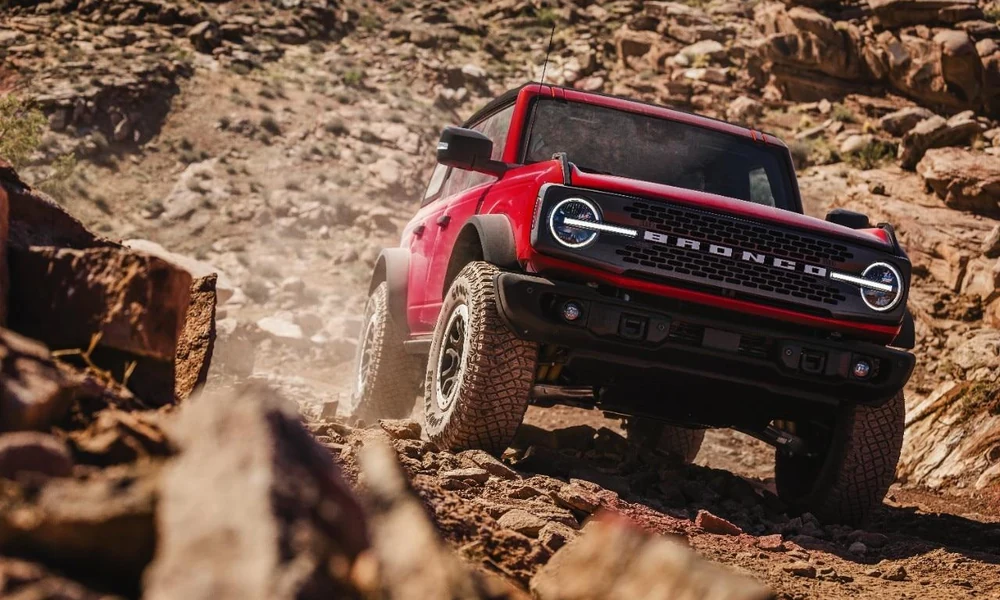
The Badlands pairs a dedicated four-wheel-drive system with selectable driving modes and trail equipment. For 2026 it comes as a two-door or four-door. Engine choices include a 2.7-liter EcoBoost V6, rated at roughly 315–330 horsepower depending on fuel.
- Seven G.O.A.T. Modes
- HOSS 2.0 suspension with Bilstein dampers
- Front stabilizer-bar disconnect
- Steel bash plates
- Optional Sasquatch package, which brings 35-inch tires and about 11.6 inches of ground clearance
Equipment differs by configuration, so check the exact build before comparing numbers.
Advantages: strong trail technology and suspension, plus body-style choice.
Limitations: options raise the price, and large tires affect comfort and fuel use.
Best for: drivers who want one versatile SUV for rocks, mud, and trails.
3. Toyota Land Cruiser
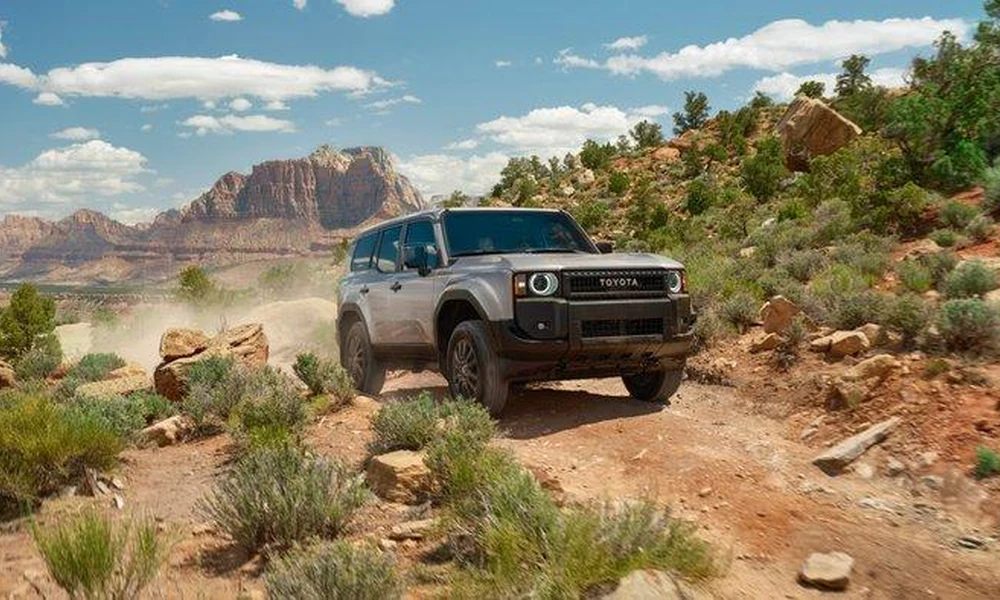
The Land Cruiser blends off-road ability with a comfortable, practical cabin. The 2026 U.S. model uses Toyota’s 2.4-liter i-FORCE MAX hybrid, which combines a turbocharged engine with an electric motor for 326 horsepower and 465 lb-ft of torque.
Full-time four-wheel drive handles different surfaces, and the equipment list is strong:
- Two-speed transfer case
- Center and rear locking differentials
- Crawl Control
- Multi-Terrain Select
- Downhill Assist Control
Advantages: strong torque, full-time 4WD, standard lockers, and roomy seating.
Limitations: its size can make narrow trails and tight parking difficult.
Best for: mixed terrain, family travel, and long trips.
4. Toyota 4Runner TRD Pro
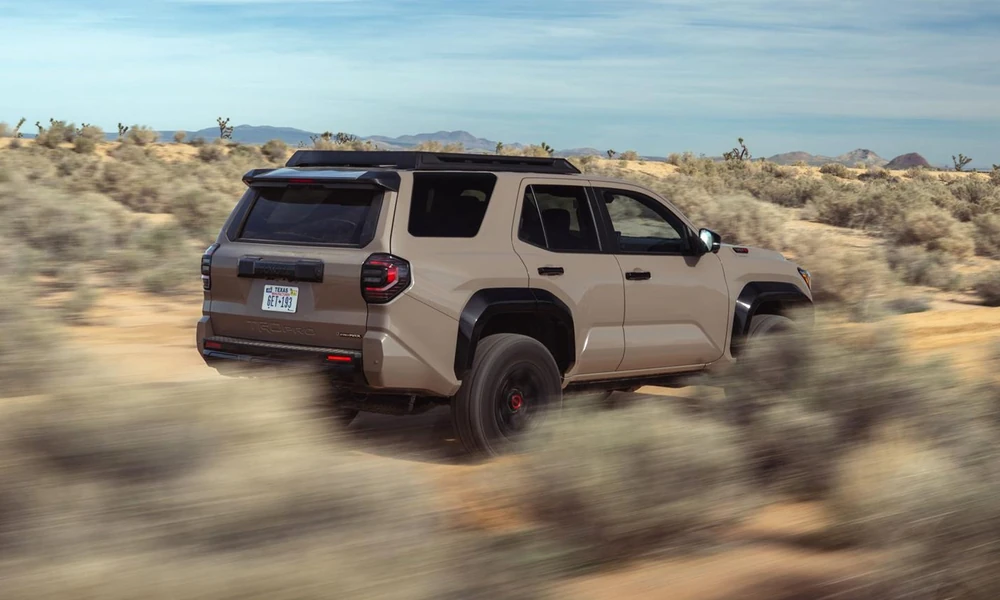
The TRD Pro uses body-on-frame construction and trail-tuned suspension. In 2026 it comes with the i-FORCE MAX 2.4-liter turbo hybrid (326 horsepower, 465 lb-ft) and four-wheel drive with a two-speed transfer case.
- TRD-tuned FOX adjustable shocks with rear remote reservoirs
- 33-inch all-terrain tires
- Stabilizer Disconnect Mechanism
- Multi-Terrain Select, Crawl Control, and Downhill Assist Control
The related Trailhunter trim leans toward overlanding, with Old Man Emu suspension and an ARB roof rack.
Advantages: trail-focused suspension, low-range gearing, and travel-ready equipment.
Limitations: higher cost, and the gear may be wasted on paved-road drivers.
Best for: trail driving, camping, and overlanding.
5. Land Rover Defender 110
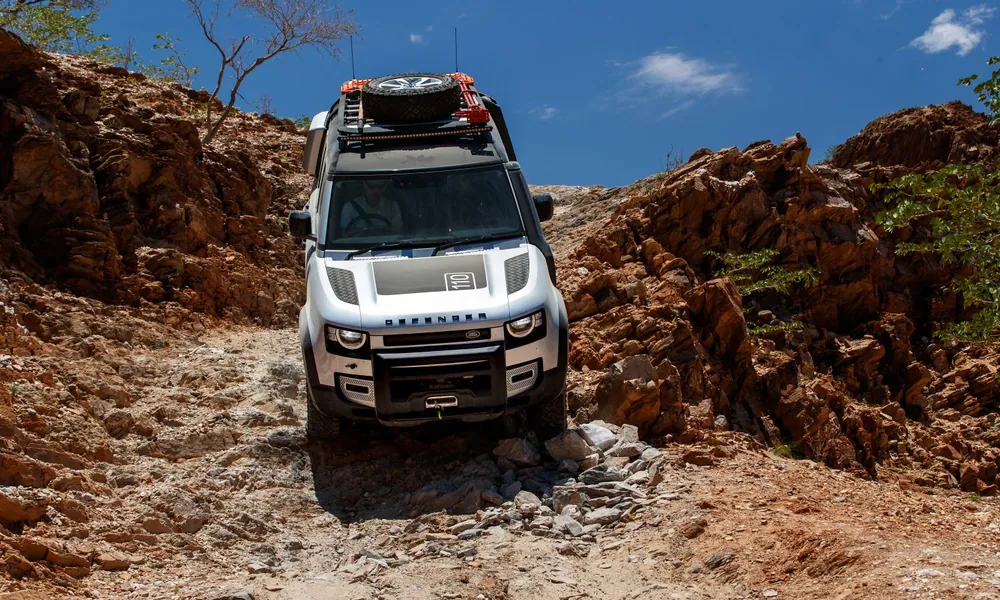
The Defender 110 pairs off-road technology with a premium interior. Every Defender has permanent four-wheel drive with a two-speed transfer case. Terrain Response adjusts the vehicle for different surfaces, and optional electronic air suspension raises ride height when needed.
- Terrain Response
- Two-speed transfer case
- Wade Sensing and Hill Descent Control
- 3D Surround Camera
- Optional air suspension
Land Rover lists wading depths of about 850 mm with coil springs and up to 900 mm with air suspension. A published rating does not guarantee a safe crossing, since water flow and conditions matter.
Advantages: advanced off-road tech, a comfortable cabin, and helpful driver aids.
Limitations: higher purchase and ownership costs.
Best for: buyers who want off-road ability with long-distance comfort.
6. Lexus GX 550 Overtrail
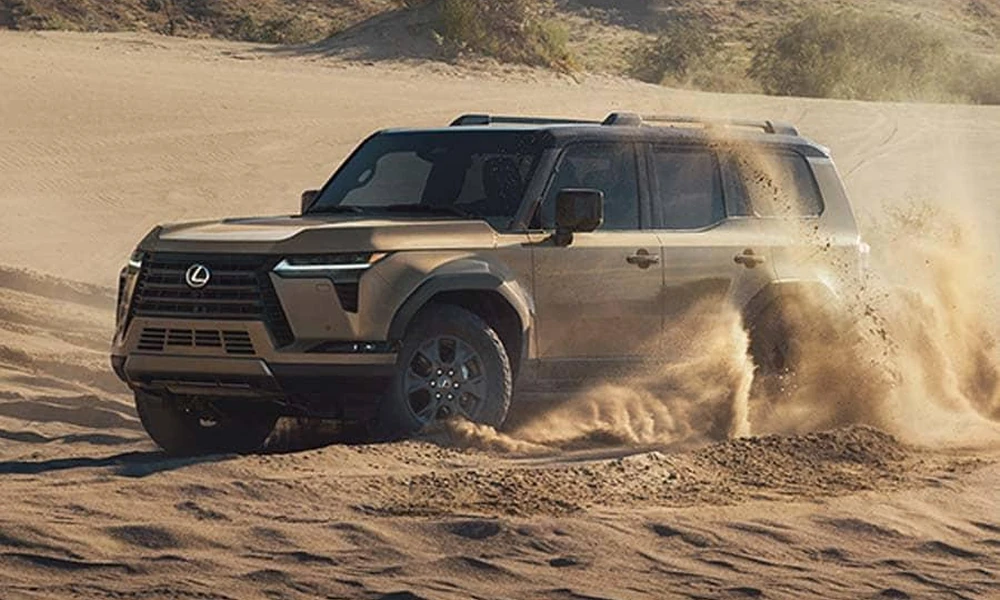
The GX 550 Overtrail is a luxury SUV equipped for rougher driving. All 2026 GX models use a 3.4-liter twin-turbo V6 making 349 horsepower and 479 lb-ft, with full-time four-wheel drive and a Torsen locking center differential.
The Overtrail trims add:
- Electronically controlled locking rear differential
- Electronic Kinetic Dynamic Suspension System
- Crawl Control and Multi-Terrain Select
- 18-inch wheels with 33-inch all-terrain tires
- A standard one-inch lift, giving 9.84 inches of minimum running ground clearance
Overtrail and Overtrail+ are five-passenger, two-row versions. Other GX trims offer a third row.
Advantages: luxury cabin, full-time 4WD, and serious off-road hardware.
Limitations: high price and large size.
Best for: drivers who want comfort without giving up capability.
7. INEOS Grenadier
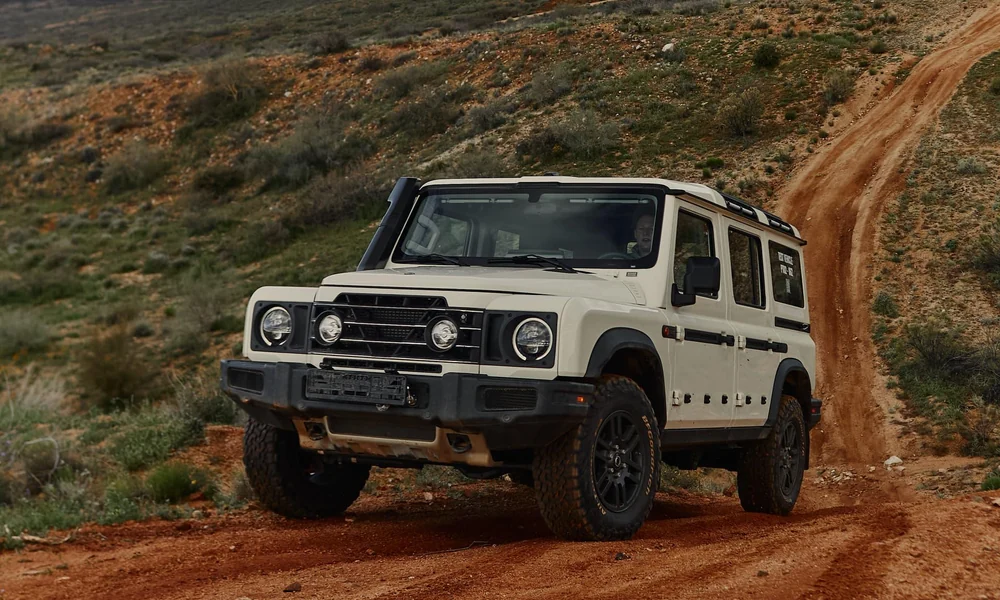
The Grenadier is a utility-first SUV built on traditional off-road engineering. It has a full box-section ladder frame, Carraro beam axles front and rear, permanent four-wheel drive, a two-speed transfer case, and a locking center differential. Front and rear differential locks are optional, and skid plates come with the vehicle.
INEOS lists 10.4 inches (264 mm) of ground clearance, a 28.2-degree breakover angle, and an 800 mm wading depth for the Station Wagon.
Advantages: traditional 4×4 construction, good clearance, and practical hardware.
Limitations: less refined than luxury SUVs and less convenient for daily use.
Best for: drivers who value classic off-road engineering.
8. Subaru Outback Wilderness
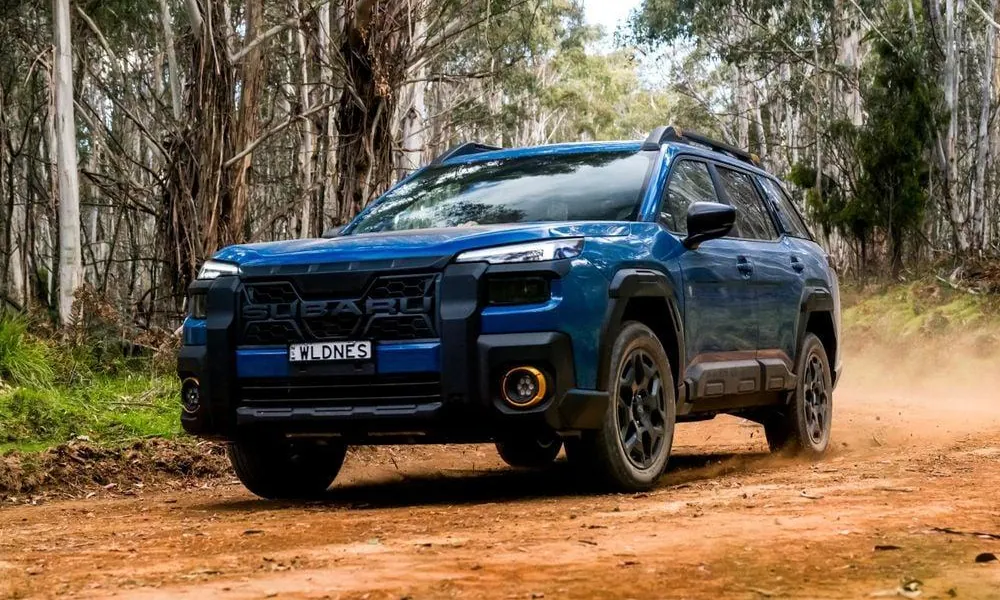
The Outback Wilderness is a road-friendly option for outdoor trips and occasional trails. It uses a unibody platform and Symmetrical All-Wheel Drive instead of traditional body-on-frame 4×4 hardware.
- About 9.5 inches of ground clearance
- Symmetrical AWD with X-MODE
- All-terrain tires
- Underbody protection
It copes well with gravel, dirt roads, and moderate trails. It lacks the low-range gearing of a Wrangler Rubicon or Grenadier.
Advantages: comfortable daily driving and useful traction.
Limitations: not meant for technical rock crawling.
Best for: light off-roading and everyday use.
What Makes an SUV Rugged?
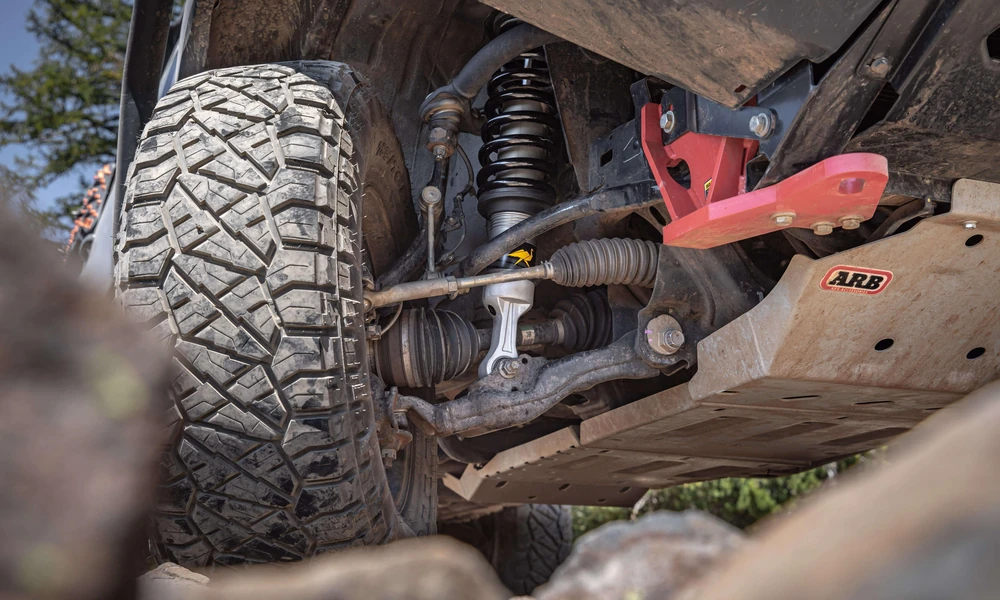
A tough look and big tires do not make an SUV rugged. Drivetrain, suspension, clearance, and underbody protection decide how it performs off pavement.
4WD vs AWD. Many traditional 4WD systems have a two-speed transfer case. Low range multiplies torque and improves control at low speed, which helps on steep climbs, rocks, and descents. AWD mostly manages traction automatically. It can work well on gravel and light trails but usually has no low range.
Ground clearance. This is the distance from the ground to the lowest underbody point. More clearance helps clear rocks and ruts, but tires, suspension, wheelbase, and weight also matter.
Approach, departure, and breakover angles. The approach angle is the steepest slope the front can climb without scraping. The departure angle is the same for the rear. The breakover angle is how sharp a crest the underside can pass over without touching. Higher angles generally help on steep or rocky ground.
Locking differentials and traction control. A locking differential forces wheels on an axle to turn together, which keeps the vehicle moving when one wheel has little grip. Traction control uses braking and engine adjustments to reduce wheelspin. Both help, but they work differently.
Suspension and protection. Good suspension keeps tires on uneven ground, and greater articulation helps traction over rocks. Skid plates protect the engine, transmission, and fuel tank, while rock rails guard the sides.
Tires and recovery gear. All-terrain tires balance road comfort with traction. Mud-terrain tires grip better in loose, muddy ground but are noisier on pavement. Recovery points, rated tow gear, and a properly rated winch can help in difficult situations when used correctly.
Best Rugged SUVs for Different Terrain
| Terrain or activity | SUV to consider | Key features |
|---|---|---|
| Rock crawling | Wrangler Rubicon | Lockers, low range |
| Muddy trails | Bronco Badlands | Terrain modes, available off-road tires |
| Overlanding | 4Runner Trailhunter | Trail suspension, expedition gear |
| Long-distance trips | Land Cruiser | Full-time 4WD, roomy interior |
| Luxury off-roading | GX 550 Overtrail | Rear locker, full-time 4WD |
| Mixed terrain | Defender 110 | Terrain Response, air suspension |
| Traditional off-roading | INEOS Grenadier | Beam axles, two-speed transfer case |
| Gravel and light trails | Outback Wilderness | Symmetrical AWD, clearance |
Tire choice, vehicle weight, driver experience, and route difficulty also affect the right pick.
Rugged SUVs vs. Regular SUVs
| Feature | Rugged SUV | Regular SUV |
|---|---|---|
| Purpose | Rough terrain, outdoor travel | Daily driving, highways |
| Drivetrain | Often dedicated 4WD | Often FWD or AWD |
| Low range | Common on traditional 4x4s | Rarely available |
| Suspension | More articulation | Road comfort |
| Tires | All-terrain or mud-terrain | Road-focused |
| Fuel economy | Usually lower | Usually better |
Body-on-frame construction is common on traditional off-roaders, but it is not required. A well-designed unibody SUV can handle light and moderate trails.
How to Choose the Best Rugged SUV
- Think about where you drive. Rock crawling needs different hardware from gravel roads and campsite access.
- Compare the equipment. Check the drivetrain, clearance, angles, suspension, and protection. Do not assume every trim has the same gear.
- Weigh comfort and space. For family use, check seating, cargo space, visibility, and safety features.
- Count the costs. Larger tires and heavier equipment raise fuel, tire, insurance, and repair costs.
- Research reliability. No single model is the most reliable 4WD SUV for every buyer. Reliability varies by model year, engine, and maintenance history, so study the exact version.
For a used 4×4, service records matter most, since a vehicle that has seen hard trails may have more wear than one driven on pavement.
Advantages and Disadvantages
Advantages: better traction on tough surfaces, higher clearance, available low range, and specialized equipment.
Disadvantages: higher fuel use, larger size, a firmer ride on some models, and costly tires and repairs.
Drivers who mostly stay in cities may find a regular AWD SUV more practical and economical.
New vs. Used Rugged SUVs
A new SUV gives you a known history, current technology, and a warranty, and you can choose the trim and packages you want. A used one usually costs less, but its condition matters more.
Before buying used, inspect these areas:
- Frame and underbody: cracks, dents, rust, and rock damage
- Suspension: worn shocks, damaged parts, and noises
- Drivetrain: test the transfer case and 4WD as the owner’s manual directs
- Differentials: leaks, odd sounds, and neglected service
- Water damage: damp carpets and electrical problems
- Tires: tread depth, uneven wear, and sidewall damage
- Service history: maintenance and repair records
A mechanic who knows 4×4 vehicles can spot problems a short test drive will miss.
Frequently Asked Questions
Do bigger tires make an SUV better off-road?
They can add clearance and help over obstacles, but tread design, pressure, weight, and available clearance matter as well.
Do I need low range for occasional off-roading?
Not always, since many gravel roads and easy trails don’t require it. Low range helps on steep climbs, slow descents, and difficult obstacles.
Can an SUV safely cross water at its published wading limit?
Not necessarily. The rating is a capability figure, not a guarantee. Flow, depth changes, and surface conditions matter, so follow the owner’s manual and avoid uncertain crossings.
Should I buy factory off-road trims or modify later?
Factory trims are often sensible because their suspension, tires, and drivetrain are designed together. Modifications can add cost and affect warranty and handling.
How can I tell if a used SUV was heavily off-roaded?
Look for underbody damage, bent suspension parts, dented skid plates, scratched rock rails, worn tires, and signs of water entry. Ask for service records.
Is a rugged SUV worth it if I only drive on paved roads?
Usually not. A regular SUV or AWD crossover typically gives better fuel economy and a smoother ride. A rugged 4×4 makes sense when you regularly use its extra capability.
Conclusion
The best rugged SUV depends on where and how you drive. The Wrangler Rubicon and Bronco Badlands lead on technical trails, while the Land Cruiser and 4Runner mix capability with everyday practicality. The Defender and GX 550 Overtrail add comfort, the Grenadier offers traditional engineering, and the Outback Wilderness suits lighter use.
Compare the exact trim, drivetrain, tires, clearance, and running costs before you buy. A vehicle matched to your real needs is worth more than extra off-road features you will rarely use.