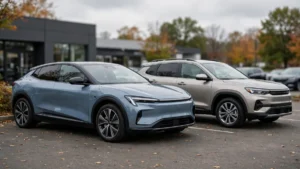
0 percent financing for 72 months cars can appeal to buyers looking for lower monthly payments without paying interest on their auto loan. Car prices remain near record highs, pushing buyers toward longer loan terms to lower their monthly bills. Industry data shows that 35.55% of new-car loans had repayment terms longer than six years in Q1 2026, up from 30.83% a year earlier. The average amount financed for a new vehicle reached $43,925, while the average monthly payment rose to $770.
In this market, securing a 0% APR financing deal for 72 months sounds appealing: you spread payments across six full years without paying interest on the loan. However, zero-percent 72-month offers are limited to selected models and qualifying buyers. Some promotions also require you to choose between interest-free financing and a cash rebate.
This guide explains current 0% APR offers for 72 months, compares them against cash rebates, outlines credit eligibility requirements and explains risks such as negative equity.
Key takeaways
- Zero-interest savings: With a genuine 0% APR loan, your scheduled loan payments go toward the principal balance rather than interest.
- Limited availability: Automakers offer 72-month zero-interest loans on selected models and specific terms. Offers can change by region and expiration date.
- Credit requirements: These promotions generally target borrowers with strong credit, but there is no universal credit-score cutoff for every manufacturer.
- Rebate trade-off: Some 0% APR offers require you to forgo a cash rebate. Compare the total cost of both options before deciding.
- Upcoming expiration: The October 2026 offer tracker lists November 2, 2026, as the expiration date for the six 72-month offers covered below. Confirm the exact terms for your ZIP code before visiting a dealership.
What is 0 percent financing for 72 months?
A 0% APR auto loan for 72 months allows you to borrow money for six years without paying interest on the loan. With a genuine 0% APR promotion, the amount financed is divided into 72 scheduled monthly payments.
For example, if you finance $30,000 at 0% APR for 72 months, your scheduled principal payment is $416.67 per month, before considering any separate fees or amounts not included in the loan.
How it works
Automakers often offer promotional financing through their affiliated financing companies, sometimes called captive finance companies. The manufacturer may subsidize the financing to make a particular model more attractive to buyers.
The advertised rate is not automatically available to every applicant. Approval depends on the promotion’s terms, the lender’s requirements and the buyer’s financial profile. You should also confirm whether the offer applies to the trim and vehicle you want.
The payment breakdown
Experian reported that the average amount financed for a new vehicle reached approximately $43,925 in Q1 2026. Here is how a 0% APR loan compares with a loan at 7.13% APR over 72 months.
At 0% APR over 72 months:
[
$43,925 \div 72 = $610.07 \text{ per month}
]
- Total interest paid: $0
- Total loan payments: $43,925
At 7.13% APR over 72 months:
- Monthly payment: approximately $751.80
- Total interest paid: approximately $10,205
- Total loan payments: approximately $54,130
These figures assume the full $43,925 is financed, with no additional fees added to the loan. Taxes, registration, dealer charges, down payments and other costs can change the amount you actually finance.
Compared with the $770 average new-car payment reported by Experian for Q1 2026, the 0% example has a lower monthly payment. However, the comparison is illustrative rather than a direct comparison of identical borrowers and vehicles.
0 Percent Financing for 72 Months Cars: Best Deals in October 2026
The following models appear in an October 2026 offer tracker updated on October 2. It lists six vehicles with 0% APR for 72 months, with the Kia Niro EV being the only one of the six listed with a cash bonus. Offers may vary by location, credit approval and dealer participation, so confirm the current terms before relying on them.
| Vehicle model | APR and term | Extra cash or credits | Listed expiration | Best for |
|---|---|---|---|---|
| Jeep Cherokee | 0% for 72 months | No cash bonus listed | Nov 2, 2026 | Buyers considering a hybrid SUV |
| Kia Niro EV | 0% for 72 months | $3,500 APR bonus cash listed | Nov 2, 2026 | Commuters considering an electric vehicle |
| Mazda CX-70 PHEV | 0% for 72 months | No cash bonus listed | Nov 2, 2026 | Buyers wanting a two-row plug-in hybrid SUV |
| Mazda CX-90 PHEV | 0% for 72 months | No cash bonus listed | Nov 2, 2026 | Families considering a three-row plug-in hybrid SUV |
| Subaru Trailseeker | 0% for 72 months | No cash bonus listed | Nov 2, 2026 | Buyers interested in an electric SUV |
| Subaru Uncharted | 0% for 72 months | No cash bonus listed | Nov 2, 2026 | Buyers considering a smaller electric SUV |
The Kia offer is also listed on Kia’s official offers page for qualified customers. Before applying, confirm the offer’s eligibility requirements, exact expiration date and whether the advertised bonus applies to your purchase.
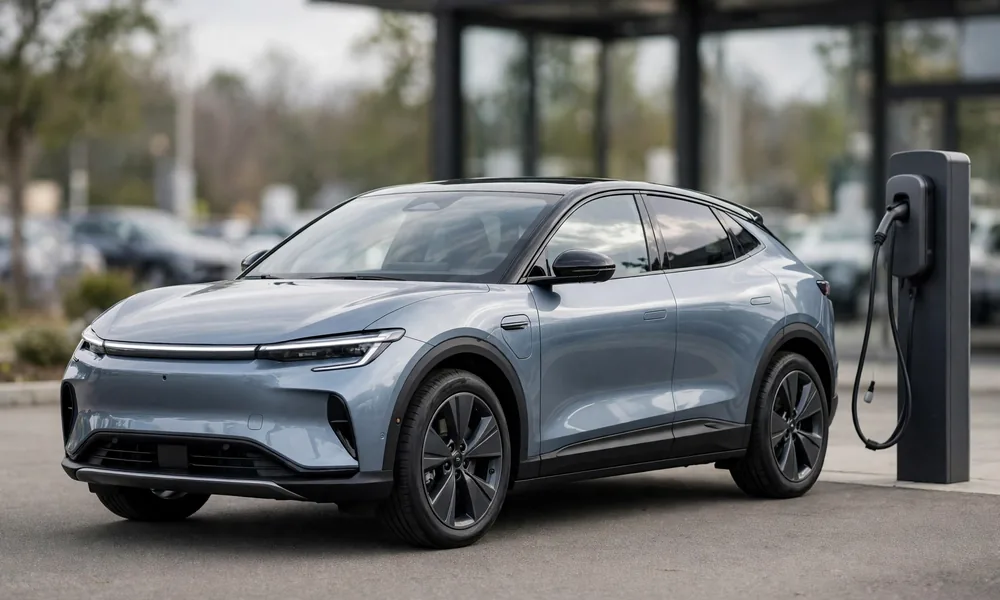
Brand-by-brand breakdown
Automakers structure their financing programs differently across model lines and loan terms. The following overview separates the listed 72-month offers from shorter-term promotions.

1. Kia
72-month offer: The October offer tracker lists the 2026 Kia Niro EV at 0% APR for 72 months with $3,500 bonus cash. Kia’s official offers page also lists this promotion for qualified customers.
60-month offer: Kia’s current offers page lists the 2026 EV9 at 0% APR for 60 months, including $5,000 APR bonus cash for qualified customers in the displayed offer results.
Shorter terms: Kia also lists 0% APR for 48 months on selected 2026 Sportage and Sorento models in the displayed offers. These shorter promotions are separate from the 72-month offers and may have different eligibility rules.
2. Mazda
72-month offers: The October offer tracker lists 0% APR for 72 months on the Mazda CX-70 PHEV and CX-90 PHEV. Neither model is listed with an additional cash bonus in that tracker.
Other models: Mazda’s gas-powered SUVs may have different promotional rates and terms. Check the official offer for your model, trim and location instead of assuming the PHEV promotion applies to the rest of the lineup.
3. Subaru
72-month offers: The October offer tracker lists the Subaru Trailseeker and Uncharted at 0% APR for 72 months, without an additional cash bonus.
Regional availability: Subaru’s advertised offers can vary by model, location and financing approval. Check the manufacturer’s current offer page and your local dealer’s terms before treating a listed rate as available to you.
4. Jeep
72-month offer: The October offer tracker lists the 2026 Jeep Cherokee at 0% APR for 72 months, with no additional cash bonus listed.
Other Jeep models may have different financing promotions. Do not assume a 72-month offer applies to the Wrangler, Grand Cherokee or Gladiator without checking their current official offers.
0% APR vs. cash rebate: which is better?
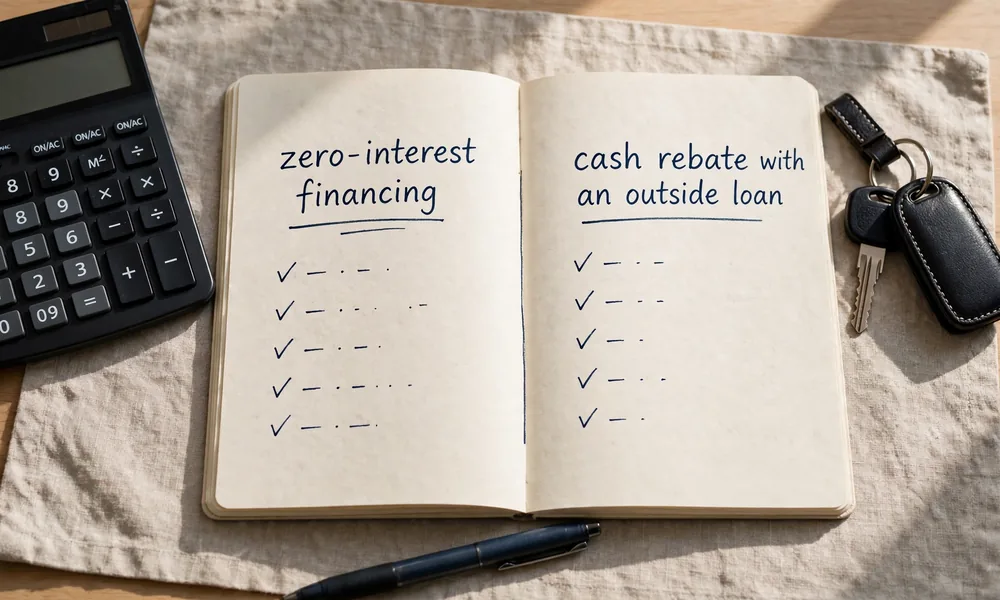
Automakers sometimes offer a choice between 0% APR financing and a cash rebate paired with a standard loan rate. Taking the rebate reduces the amount you need to borrow, while 0% APR removes interest charges.
The better option depends on the vehicle price, rebate amount, available interest rate and loan term. Compare the total payments for both options rather than choosing based only on the monthly payment.
Worked example 1: 0% APR costs less
- Vehicle selling price: $38,000
- Option A: 0% APR for 72 months
- Option B: $5,000 cash rebate plus a bank loan at 6.98% APR for 72 months
Option A: 0% APR
[
$38,000 \div 72 = $527.78 \text{ per month}
]
- Total loan payments: $38,000
- Total interest: $0
Option B: Cash rebate plus loan
Amount financed after the rebate:
[
$38,000 – $5,000 = $33,000
]
At 6.98% APR for 72 months:
- Monthly payment: approximately $562.11
- Total loan payments: approximately $40,472
- Total interest: approximately $7,472
Verdict: Under these assumptions, Option A costs approximately $2,472 less overall than Option B. The 0% APR option wins in this example.
Worked example 2: Cash rebate wins
- Vehicle selling price: $30,000
- Option A: 0% APR for 72 months
- Option B: $4,500 cash rebate plus a credit union loan at 4.50% APR for 60 months
Option A: 0% APR over 72 months
[
$30,000 \div 72 = $416.67 \text{ per month}
]
- Total loan payments: $30,000
- Total interest: $0
Option B: Rebate plus 4.50% loan over 60 months
Amount financed after the rebate:
[
$30,000 – $4,500 = $25,500
]
At 4.50% APR for 60 months:
- Monthly payment: approximately $475.48
- Total loan payments: approximately $28,529
- Total interest: approximately $3,029
Verdict: Under these assumptions, Option B costs approximately $1,471 less overall, despite charging interest.
These examples compare loan payments on the stated purchase prices. Actual out-the-door costs may differ if taxes, fees, down payments or other charges vary between offers.
Rule of thumb
Do not rely on a fixed rebate percentage to decide which offer is better. Calculate both options using the actual vehicle price, available rebate, APR and loan term. Also check whether the rebate is available to you and whether it can be combined with the advertised financing rate.
Do you qualify for a 72-month 0% deal?
Promotional zero-interest offers generally target borrowers with strong credit profiles. Lenders may also consider income, debt-to-income (DTI) ratio, loan amount, down payment, vehicle eligibility and other factors.
There is no single credit-score threshold that guarantees approval for every manufacturer’s 0% APR offer. A lender may use a different credit-scoring model from the one shown in a credit-monitoring app.

Credit score tiers and average auto loan rates
The following table uses published Q2 2026 new-car APR averages based on Experian data. These are averages for loans borrowers received, not the promotional APRs advertised by automakers. Experian’s reported credit tiers use VantageScore 4.0 classifications.
| Credit tier | Score range | Average new-car APR |
|---|---|---|
| Super prime | 781–850 | 4.41% |
| Prime | 661–780 | 6.15% |
| Near prime | 601–660 | 9.71% |
| Subprime | 501–600 | 13.52% |
| Deep subprime | 300–500 | 16.11% |
These averages help illustrate how credit profiles can affect borrowing costs. They do not establish the exact score needed for a particular 0% APR promotion. Check the lender’s criteria for the specific offer you want.
Documents commonly required for approval

- Proof of income: Recent pay stubs or tax returns, depending on the lender’s requirements.
- Proof of residency: A utility bill or lease agreement matching your application, if requested.
- Credit verification: The lender may review your credit history and score.
- Valid insurance: The lender may require full coverage with comprehensive and collision protection.
The exact documentation requirements depend on the financing company and your application.
Risks of a 72-month loan

A 0% interest rate removes loan interest, but spreading payments over six years can still introduce financial risks.
- Negative equity (“upside-down loan”): New cars depreciate over time. If the car’s market value falls below your remaining loan balance, you may owe more than the vehicle is worth. This can make selling or trading it in more difficult.
- Outliving warranty coverage: Many bumper-to-bumper warranties last three years or 36,000 miles, while some powertrain warranties last five years or 60,000 miles. Coverage varies by manufacturer and model. You could face repair costs after some warranty coverage ends while still making loan payments.
- Long-term financial commitment: A six-year loan keeps part of your income committed to the vehicle for an extended period. Experian reported that 35.55% of new-car loans had terms longer than six years in Q1 2026. Edmunds later reported that 25.5% of new vehicles financed in Q3 2026 had loan terms of 84 months or longer.
A lower monthly payment does not necessarily mean a vehicle is affordable. Consider insurance, maintenance, fuel or charging costs, registration and depreciation as well as the loan payment.
Hidden catches of 0% financing
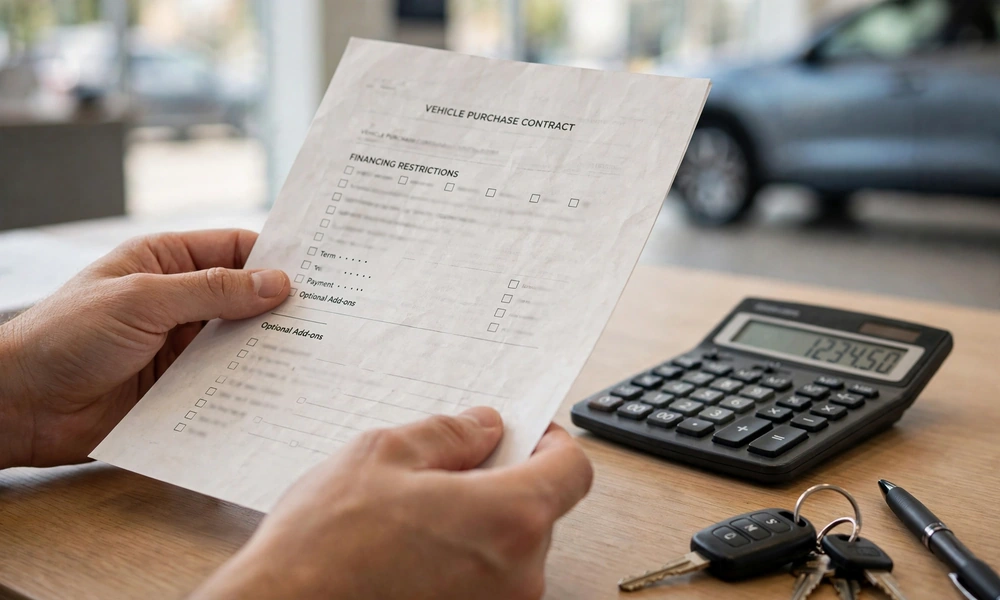
- Restricted to selected models and trims: Promotional financing usually applies only to specific vehicles, model years, trims or inventory.
- Less room for negotiation is possible: A dealer may be less willing to discount a vehicle, but the advertised financing rate does not prevent you from negotiating the purchase price.
- Rebates may not be combinable: You may have to choose between promotional financing and certain customer cash rebates or other incentives. Read the offer terms carefully.
- Strict expiration dates: Promotional rates can expire or change. The offers listed in this October guide show November 2, 2026, as the expiration date, but your location’s terms may differ.
- Additional costs still apply: A 0% APR loan does not eliminate sales tax, registration, documentation charges, insurance or other ownership costs.
Step-by-step: how to secure a 0% APR deal

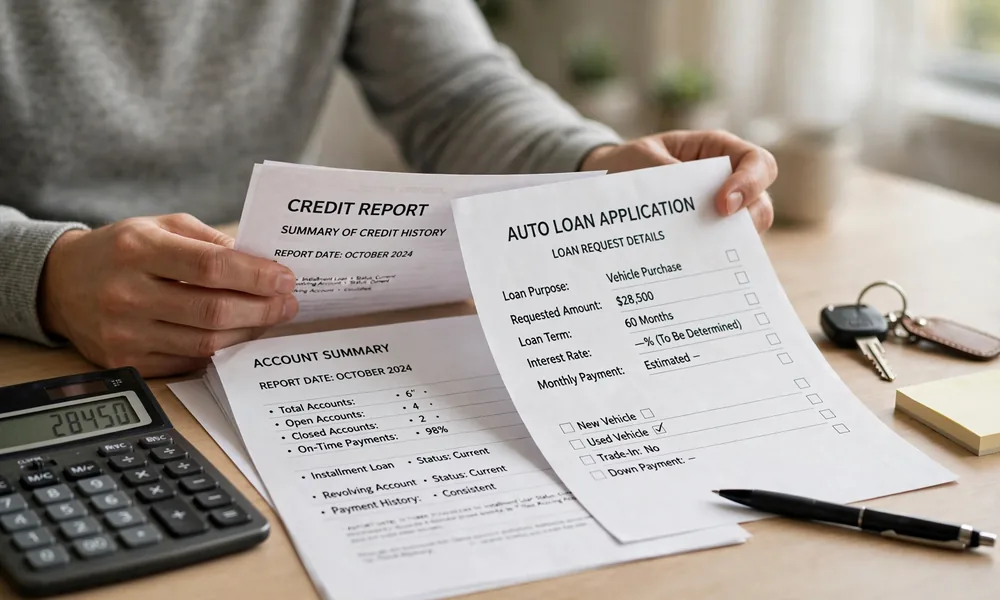
- Check your credit profile: Review your credit reports for errors and understand your current credit position. Strong credit may improve your chances, but no single score guarantees approval.
- Get outside pre-approval: Request a quote from a bank or credit union to establish a comparison rate.
- Check manufacturer incentive pages: Confirm the current 0% APR offer, eligible model and term directly through the automaker’s official website.
- Request an out-the-door (OTD) quote: Ask the dealer for an itemized written price including sales tax, registration fees and documentation charges before comparing financing options.
- Compare total costs: Calculate the total loan payments under the 0% APR offer and any rebate alternative. Make sure you compare the same vehicle price and account for applicable incentives.
- Review the final contract: Confirm the APR, 72-month term, amount financed, total of payments, final purchase price and any add-on products or fees before signing.
Alternatives if you don’t qualify for 0%

- Credit union financing: Request quotes from credit unions as well as banks and dealer-arranged lenders. The best rate depends on your credit profile, membership eligibility, loan term and lender.
- Auto refinancing: Refinancing may reduce your rate or monthly payment if you qualify for better terms. Experian reported that refinancing reduced auto loan rates by an average of 2.2 percentage points and lowered monthly payments by an average of $81 in Q1 2026. These are historical averages, not guaranteed savings for every borrower.
- Shorter terms (48 to 60 months): A shorter loan term can help you build equity faster and may reduce total interest when the APR is above zero. However, the monthly payment will generally be higher than for the same loan spread over 72 months.
About the research and methodology
This article compares advertised promotional financing offers with published auto-finance data and illustrative loan calculations.
Offer data: The October 2026 list of 0% APR offers for 72 months is based on a monthly offer tracker last updated October 2, 2026. Kia’s official offers page was also checked for its listed Niro EV promotion. Offers can change by ZIP code, dealer participation, credit approval and expiration date. Readers should verify the terms on the relevant manufacturer’s website before applying.
Financial data: The article uses Experian’s Q1 2026 auto-finance figures for average loan amounts, monthly payments and refinancing outcomes, along with published Q2 2026 credit-tier APR averages.
Loan calculations: Payment and total-cost examples are illustrative calculations based on the stated principal, APR and loan term. Actual dealer quotes can differ if the amount financed, fees, incentives or terms change.
Financial disclaimer: This article provides general consumer information and does not constitute personalized financial or credit advice. Promotional APR offers depend on the lender’s eligibility requirements, credit approval and dealer participation.
Frequently asked questions
1. Is 0% financing for 72 months really free?
It means you do not pay interest on the loan if the contract genuinely specifies 0% APR. You must still pay the agreed vehicle price, applicable sales taxes, registration fees and any other charges.
2. What credit score is needed for 0% financing?
There is no universal score requirement for all manufacturers. These offers generally target borrowers with strong credit, but approval also depends on the lender’s criteria, income, debt obligations and the specific promotion.
3. Can you negotiate the price of a car with 0% financing?
Yes. You can negotiate the vehicle’s selling price and ask for an itemized out-the-door quote. Compare the final price and financing terms rather than assuming the advertised APR represents the best overall deal.
4. Which is better: 0% APR or a cash rebate?
It depends on the size of the rebate, the alternative loan’s APR and the repayment term. Calculate the total cost of both options before choosing. A large rebate combined with a low outside interest rate can sometimes cost less than 0% APR.
5. Do used cars ever get 0% financing?
Zero-percent offers are much more commonly advertised for selected new vehicles. Some lenders or manufacturers may offer special financing on certain used or certified pre-owned vehicles, but availability and eligibility vary. Check the specific offer rather than assuming all used-car loans have standard rates.
6. Is a 72-month car loan a good idea?
It can lower the monthly payment, but it also commits you to six years of payments and can increase the risk of negative equity. Consider the total cost, expected ownership period, warranty coverage and your budget before choosing the term.
7. How do I secure a 0% offer before it expires?
Check the official offer terms and ask the dealer or financing company what must happen before the deadline. Application, approval, vehicle delivery and contract dates may affect eligibility. Do not assume that simply contacting a dealer locks in the rate.
8. Is there an early payoff penalty on 0% APR auto loans?
It depends on your loan contract and applicable state law. The Consumer Financial Protection Bureau advises borrowers to check their contract and ask the lender about any prepayment penalty before signing. Do not assume every auto loan has the same early-payoff terms.
Conclusion
A 0% APR financing deal for 72 months can reduce borrowing costs because you do not pay interest on the loan. However, these promotions are limited, require lender approval and may involve trade-offs with cash rebates.
Before choosing an offer, compare the complete purchase price and total loan payments, and explore the latest new car deals for October 2026. Verify the current offer and review the contract before visiting a dealership or signing.
Next step: Calculate your total out-of-pocket costs using your actual dealer quotes and compare the available financing options before committing to a loan.