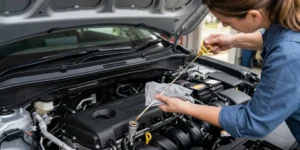
A car maintenance checklist helps you catch small problems before they become expensive repairs or roadside emergencies. You don’t need to be a mechanic or spend every weekend checking your car. A few regular checks can help you spot trouble early and know when to get professional help.
This checklist covers weekly, monthly, seasonal, annual, and pre-trip checks, plus emergency supplies and a simple maintenance log. It works as a general starting point for gasoline cars, SUVs, and trucks, with extra notes for electric vehicles.
Your owner’s manual always comes first. Maintenance needs vary by make, model, year, engine, and driving conditions. Use this checklist for routine inspections, not as a replacement for your vehicle’s service schedule.
AI Overview: What Is a Car Maintenance Checklist?
A car maintenance checklist organizes vehicle checks by frequency, including weekly, monthly, seasonal, annual, and pre-trip tasks. Drivers can handle simple inspections, such as checking tire pressure and lights, while a qualified mechanic should address safety-critical repairs. Always follow your owner’s manual for service intervals and fluid requirements.
Key Takeaways
- Weekly: Look for tire damage, leaks, warning lights, and new noises.
- Monthly: Check tire pressure, tread, accessible fluids, lights, and wipers.
- Seasonally: Prepare tires, batteries, and visibility equipment for local weather.
- Annually: Review scheduled inspections and time-based services in your owner’s manual.
- Before a trip: Check tires, spare or repair kit, fluids, lights, brakes, and emergency supplies.
- Keep records: Note dates, mileage, work completed, and the next service due.
Car Maintenance Checklist: The Essential Five Checks

Check tire pressure and tread, engine oil, lights, accessible fluid levels, and windshield wipers regularly. Look for leaks and dashboard warnings, too. Use the pressure listed on your driver’s door-jamb label, check fluids according to your owner’s manual, and fix safety problems before driving. This quick routine supportsbut never replaces scheduled maintenance.
Weekly and Monthly Car Maintenance Checklist
A weekly walk-around takes only a few minutes. Once a month, spend a little longer checking the items below.
| Item | How to check | Normal condition | When to worry |
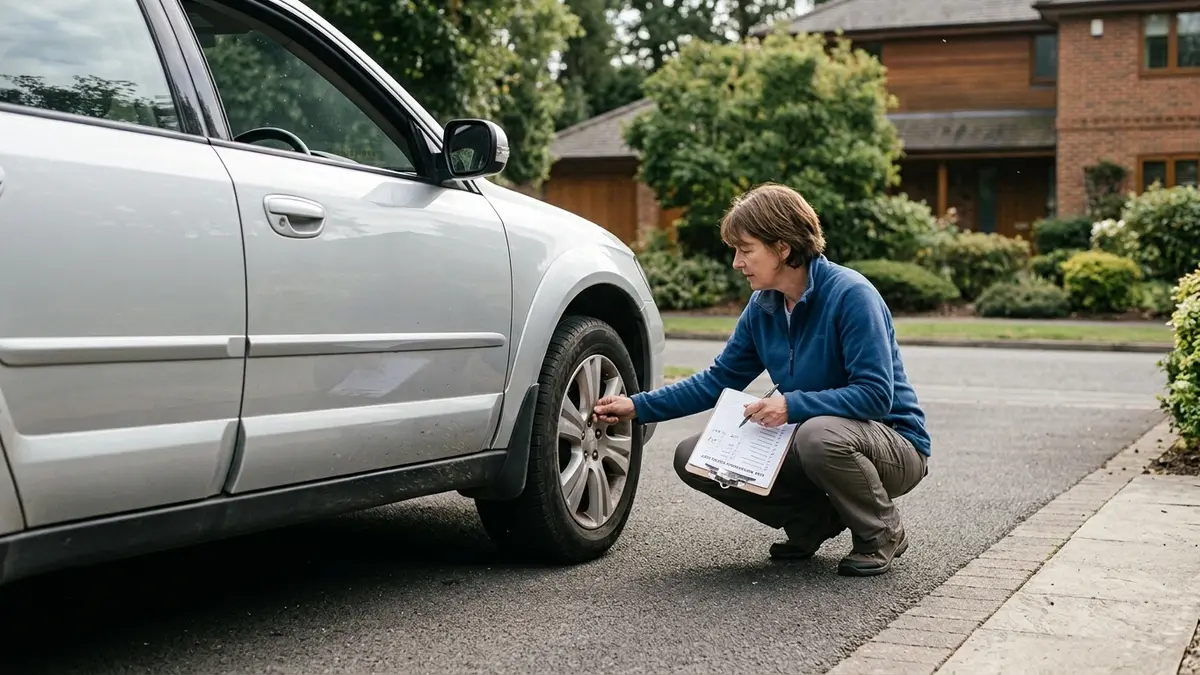
| Tires | Look for cuts, bulges, nails, and uneven wear. Check cold pressure with a gauge. | Correct pressure and no visible damage. | Bulges, exposed cords, or repeated pressure loss. |
| Tread | Inspect grooves or use a tread-depth gauge. | Even wear and sufficient tread for conditions. | Bald areas or very shallow tread. |
| Engine oil | Follow the manual’s dipstick or electronic-check procedure. | Level within the specified range. | Low oil, sudden loss, or an oil-pressure warning. |
| Coolant | Check the reservoir when the engine is cool. | Level between the marked limits. | Repeated loss, leaks, or overheating. Never open a hot cooling system. |
| Other fluids | Check accessible reservoirs as directed by the manual. | Levels within their specified ranges. | Low brake fluid or unexplained fluid loss. |
| Lights | Test headlights, brake lights, turn signals, and hazard lights. | All required lights work. | Failed lights or damaged lenses. |
| Wipers | Inspect blades and test washer spray. | Clear visibility without severe streaking. | Torn blades or poor visibility. |
| Leaks | Look at the ground under the parked car. | No unexplained puddles. | Fuel smell, fresh fluid trails, or growing leaks. |
| Dashboard | Watch for warning lights and follow the manual. | No unresolved warnings. | Serious oil-pressure, brake, or overheating warnings. |
| Battery | Look for damaged cables or a loose hold-down if accessible. | Battery appears secure and intact. | Swelling, damage, or repeated starting trouble. |
How often should you check?
Weekly: Look at the tires, lights, windshield, and ground beneath your parked car. Notice unusual sounds, smells, vibrations, or warnings while driving.
Monthly: Measure tire pressure, inspect tread, check accessible fluids, test lights, and review your emergency supplies.
Check tire pressure sooner if a tire looks low or temperatures change sharply. Use the vehicle’s recommended pressure not the maximum pressure printed on the tire sidewall.
Park on level ground and switch off the engine before under-hood checks. Let hot components cool. If your vehicle uses an electronic oil display or a system you’re unfamiliar with, follow the manual rather than guessing.
Seasonal Car Maintenance Checklist
Weather affects tire pressure, battery performance, visibility, and cooling systems. Use this table as a reminder to inspect your car, not as an instruction to replace every part each season.
| Season | What to check | What to do |
| Spring | Tires, wipers, brakes, air-conditioning, underbody | Look for uneven wear and damage from rough or salted roads. |
| Summer | Tire pressure, coolant, battery, cooling system | Watch for overheating and repeated coolant loss. Never open a hot cooling system. |
| Fall | Battery, lights, wipers, heater, defroster | Prepare for rain and colder weather; replace worn wipers. |
| Winter | Tires, battery, washer fluid, emergency supplies | Use tires suitable for local conditions and keep weather-appropriate supplies in the car. |
Adapt these checks to your climate. Hot regions may need year-round attention to cooling systems and tire pressure. Freezing regions may require suitable winter tires and extra roadside supplies.
Always use the fluids specified for your vehicle.
Annual Car Maintenance Checklist
An annual review helps you identify service items that may be due. It doesn’t mean every component needs yearly replacement.
- Brakes: Arrange an inspection when due or if you hear grinding, experience persistent squealing, or notice vibration or changes in pedal feel.
- Battery: Check its condition if starting becomes difficult or testing is recommended.
- Wheel alignment: Ask about it if the car pulls to one side or tires wear unevenly.
- Cabin air filter: Check the replacement interval and airflow.
- Engine air filter: Inspect it according to the manual and driving conditions.
- Belts and hoses: Check for cracking, leaks, or unusual noises.
- Coolant and brake fluid: Confirm the manufacturer’s inspection or replacement intervals.
- Steering and suspension: Arrange an inspection if you notice clunks, unusual bouncing, or steering changes.
- Scheduled service: Review the manual and your maintenance records for items due by time or mileage.
If a shop recommends extra work, ask what it found and why the repair is needed now. The separate car maintenance schedule by mileage should cover service intervals and mileage milestones in more detail.
Pre-Road-Trip Car Maintenance Checklist
Check these items before a long drive, leaving enough time to fix problems before departure.
- Tires: Check cold pressure, tread, and visible damage.
- Spare or repair kit: Confirm what’s supplied with your car and check its condition.
- Jack and lug wrench: Locate the correct tools if your car has a spare.
- Oil and coolant: Check levels according to the manual; never open a hot cooling system.
- Lights and wipers: Test all lights and make sure the windshield clears properly.
- Brakes: Address grinding, pulling, vibration, or serious warning lights before the trip.
- Battery: Arrange a test if starting has become unreliable.
- Emergency kit: Pack a flashlight, first-aid supplies, phone charger, water, and climate-appropriate items.
- Documents and route: Prepare required documents and roadside-assistance details.
- Upcoming service: Check whether maintenance is due before or during the journey.
Changing a tire beside fast traffic can be dangerous; call roadside assistance when the location or conditions are unsafe. Changing a tire beside fast traffic can be dangerous; call roadside assistance when the location or conditions are unsafe.
Used Car Maintenance Checklist
A used car’s condition isn’t always clear from its appearance. Check the following before relying on it for daily driving:
- Service records: Review documented oil changes, repairs, and fluid services.
- Recalls: Use the official recall lookup for your country and check the VIN.
- Brake fluid and coolant: Find out when they were last serviced and compare the records with the manual.
- Tires, brakes, and leaks: Inspect visible condition and get safety concerns checked.
- Independent inspection: Consider a qualified mechanic’s assessment if one hasn’t been completed.
Don’t assume missing records mean every service is overdue or that undocumented work was completed. Establish the car’s condition and start your own maintenance log.
SUV, Truck and EV Add-Ons
SUVs and trucks
- Check tire pressure and load requirements before carrying heavy cargo.
- Before towing, confirm the vehicle’s limits and check trailer tires, lights, and connections.
- Follow the manual for four-wheel-drive or all-wheel-drive fluids.
- Inspect for damage or leaks after demanding towing or off-road use.
Electric vehicles
- Check tire pressure, tread, and uneven wear.
- Inspect lights, wipers, washer fluid, and brakes.
- Follow the manufacturer’s guidance for charging, battery care, software, and scheduled inspections.
- Check whether your model has coolant inspection or replacement requirements.
EVs generally need fewer engine-related services, but they’re not maintenance-free. Leave high-voltage repairs to trained technicians.
What to Keep in Your Car Emergency Kit

Your kit should match your vehicle, route, and weather. Use this list as a starting point:
- Flashlight and spare batteries or charging cable
- First-aid kit
- Phone charger or power bank
- Tire-pressure gauge and compatible tire inflator
- Spare tire, jack, and lug wrench where supplied
- Jumper cables or a compatible jump starter
- Warning triangle or reflective warning equipment, where appropriate
- Drinking water and suitable snacks
- Gloves, basic tools, and weather-appropriate clothing
- Vehicle documents and roadside-assistance details
Some cars have a repair kit instead of a spare. Check your manual and make sure you know what equipment you have. Never get underneath a vehicle supported only by a jack.
DIY or Mechanic? Know the Difference
| Task | Best approach |
| Check tire pressure and tread | Usually DIY; ask a tire professional if damage is unclear. |
| Top up washer fluid | Usually DIY, using a suitable product. |
| Check engine oil | DIY if you follow the manual’s procedure. |
| Check coolant | Check only when cool and as directed by the manual. |
| Replace wiper blades or an accessible air filter | Often DIY if the correct parts and instructions are available. |
| Investigate repeated fluid loss | Mechanic; find the cause rather than repeatedly topping up. |
| Repair brakes or steering | Qualified mechanic; these are safety-critical systems. |
| Diagnose serious warning lights | Follow the manual and seek professional help when required. |
| Repair high-voltage EV components | Trained EV technician. |
| Change a tire beside fast traffic | Roadside assistance if the location is unsafe. |
Ask a mechanic to explain why a repair is needed and whether it comes from the manufacturer’s schedule or a problem found during inspection.
Your Printable Car Maintenance Checklist
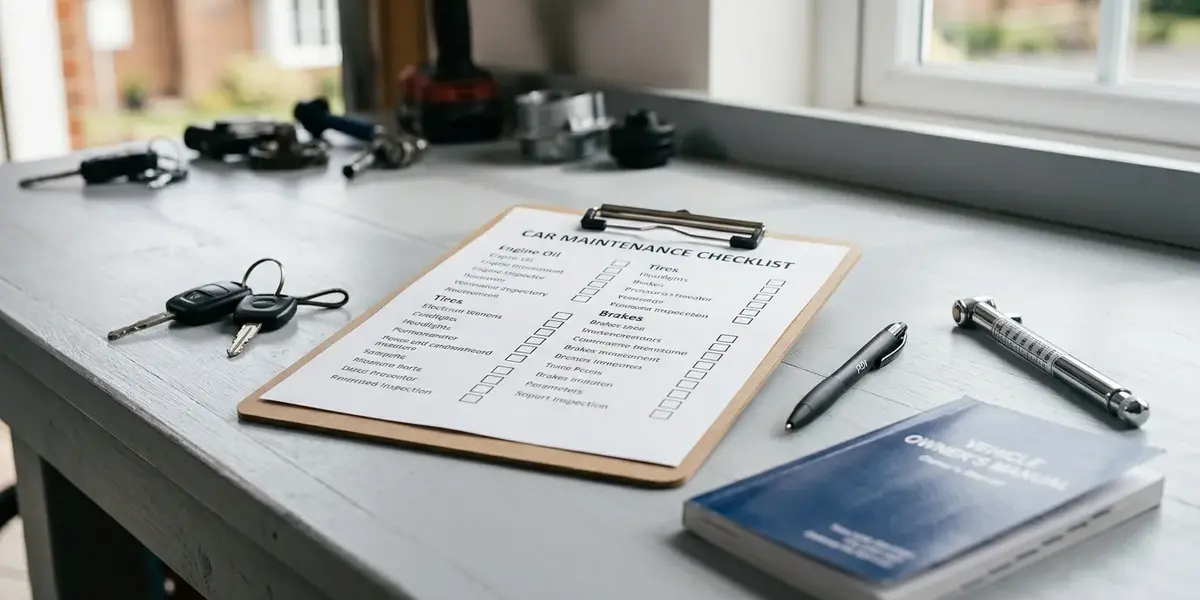
Print this section or copy it into a notebook. Add your own dates and mileage, and follow your owner’s manual for the correct intervals.
Weekly quick check
- Look for tire damage and new leaks.
- Notice new noises, smells, vibrations, or warnings.
- Check windshield visibility and required lights.
Date: __________ Mileage: __________
Monthly check
- Check cold tire pressure and tread.
- Check engine oil and accessible fluids safely.
- Inspect lights, wipers, and washer fluid.
- Review the emergency kit and next scheduled service.
Date: __________ Mileage: __________
Seasonal check
- Inspect tires for upcoming weather.
- Check battery, wipers, lights, and defroster as appropriate.
- Review climate-specific emergency supplies.
Season: __________ Date: __________ Mileage: __________
Annual or scheduled service review
- Check services due by time or mileage.
- Review brakes, battery, filters, belts, hoses, and fluids.
- Save receipts and record the next due item.
Service date: __________ Mileage: __________ Next due: __________
Before a road trip
- Check tires and spare or repair kit.
- Confirm tools are present where applicable.
- Check oil, accessible fluids, lights, wipers, and brakes.
- Pack emergency supplies and review upcoming maintenance.
Trip date: __________ Starting mileage: __________
Maintenance log
| Date | Mileage | Check or service completed | Next due |
| __________ | __________ | __________________ | __________ |
| __________ | __________ | __________________ | __________ |
| __________ | __________ | __________________ | __________ |
Keep the record in your glovebox, a folder, or a notes app. Mark a task complete only after you’ve done it. If a mechanic needs to handle it, record the appointment or next step instead.
Conclusion: A Few Minutes Before the Trip
The family on the hot highway shoulder couldn’t have prevented every possible tire problem. But checking the tire condition, locating the spare or repair kit, and confirming that the necessary tools were present could have made the situation easier to manage.
You don’t need to know how to repair every part of your car. You need a reliable way to spot changes, prepare for trips, and follow the services your vehicle requires. Print this checklist, record your mileage, and use your owner’s manual to fill in the correct intervals.
Frequently Asked Questions
1. What should be on a car maintenance checklist?
Include tires, oil, accessible fluids, lights, wipers, leaks, warning lights, emergency supplies, and services required by your owner’s manual.
2. How often should I check my car’s fluids?
Follow your owner’s manual and check sooner if a warning or leak appears. Never open a hot cooling system.
3. What should I check before a road trip?
Check tires, the spare or repair kit, oil, accessible fluids, brakes, lights, wipers, emergency supplies, and upcoming service.
4. How do I keep a car maintenance log?
Record the date, mileage, completed work, and next due item. Keep receipts when possible.
5. What maintenance is due at 60,000 miles?
It varies by vehicle. Check your manual for services due by mileage or time instead of assuming every car needs the same package.
6. How do I check my tire tread?
Inspect the grooves and uneven wear, and use a tread-depth gauge if available. Ask a tire professional if you’re unsure whether a tire is safe.
7. How do I check my oil?
Follow your manual’s procedure for the dipstick or electronic display. If the oil-pressure warning appears while driving, stop safely and follow the manual’s instructions.
8. What is on a used car inspection checklist?
Review service records, tires, visible leaks, warning lights, open recalls, and safety concerns. Consider an independent mechanic’s inspection.
9. How do I check my brake fluid?
If your manual permits it, check the reservoir markings. Low fluid or a brake warning needs investigation, not just a top-up.
10. What should be in a car emergency kit?
Pack a flashlight, first-aid kit, phone charger, tire gauge, water, and supplies for your climate. Include the spare, jack, and tools where appropriate.