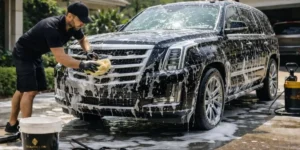
Key Takeaways
- Rinse loose dirt before touching the paint.
- Use car shampoo and a clean microfiber mitt.
- Use two buckets to help keep dirt off the paint.
- Wash from the roof downward.
- Dry with a clean microfiber towel to reduce water spots.
- Use suitable cleaners for stubborn marks instead of scrubbing.
AI Overview: How to Wash a Car at Home Without Scratching the Paint
To wash a car at home without scratching the paint, rinse away loose dirt first, use a car-safe shampoo and a clean microfiber wash mitt, and avoid pressing too hard. The two-bucket method helps keep dirt from returning to the paint while you wash. Start with the roof and work downward, rinse away all shampoo, and dry the car with a clean microfiber towel to help prevent water spots. If the car is heavily covered in mud or grit, remove as much loose dirt as possible before touching the paint.
A freshly washed car should look clean, not covered in tiny scratches that show up the moment sunlight hits the paint. Yet that can happen when you wash your car at home, especially if you rub dirt across the surface without realizing it.
Those fine marks are often called swirl marks. They can make dark paint look dull, even when the car is otherwise clean.
The trouble isn’t always the shampoo. Dust, sand, and road grit can get trapped in a wash mitt or towel. When you rub that material against the paint, it can leave scratches. Pressing harder to remove a stubborn mark can make things worse.
The good news is that you don’t need an expensive detailing setup to reduce the risk. A few suitable tools, a careful washing order, and clean towels will take you a long way.
This article shows you how to wash a car at home, including what to do if you don’t have a hose, how to use the two-bucket method, and how to dry the paint without leaving water spots.
If you want to clean the whole vehicle, from the dashboard and seats to the exterior, our guide to how to clean a car inside and out covers the complete process. Here, we’ll focus on washing the outside safely.
How do you wash a car at home without scratching it?
Park the car in the shade and let the paint cool. Rinse away loose dirt before touching the surface, then wash with automotive shampoo and a clean microfiber mitt. Using two buckets one for shampoo and one for rinsing—helps keep dirt from returning to the paint. Work from the roof downward, rinse thoroughly, and dry with a clean microfiber towel.
The basic rule is simple: remove as much loose dirt as possible before rubbing the paint.
What you need before you start
You don’t need a garage full of detailing products. Start with a few useful items and spend your money on things that actually help you wash safely.
| Item | What it’s for | Is it essential? |
|---|---|---|
| Car wash shampoo | Cleans the paint and provides lubrication during washing | Yes, unless you’re using a suitable rinseless product |
| Microfiber wash mitt | Lifts dirt from the surface during contact washing | You need a suitable paint-safe wash tool |
| Two buckets | Keeps the shampoo solution separate from rinse water | Recommended, though not mandatory |
| Hose or suitable rinseless setup | Helps remove dirt and leftover shampoo, depending on the method | Depends on the washing method |
| Microfiber drying towel | Removes water without the rough texture of unsuitable household towels | Yes, unless you use another appropriate drying method |
| Separate wheel brush | Cleans wheel grime without transferring it to the paint | Recommended |
Don’t worry about buying every extra accessory you see in a detailing video. Clean tools and the right technique matter more than having a shelf full of products.
Avoid paper towels, rough bath towels, and household scrub pads on painted surfaces. They can scratch the finish, particularly if dirt gets caught between the material and the paint.
Step 1: Park in the shade
Start by finding a shaded place with enough room to walk around the car. If the vehicle has been sitting in the sun, give the bodywork time to cool before you begin.
Hot paint can cause water and shampoo to dry before you’ve had a chance to rinse them away. That leaves you dealing with soap residue or water spots halfway through the job. It’s annoying, especially when you thought the wash was almost finished.
Early morning or late afternoon may be easier in hot weather, but the main thing is to avoid washing a hot surface.
Close the windows and doors, and park the vehicle safely. If you’re using an electric blower or other powered equipment, keep electrical connections away from standing water.
Step 2: Remove loose dirt before washing
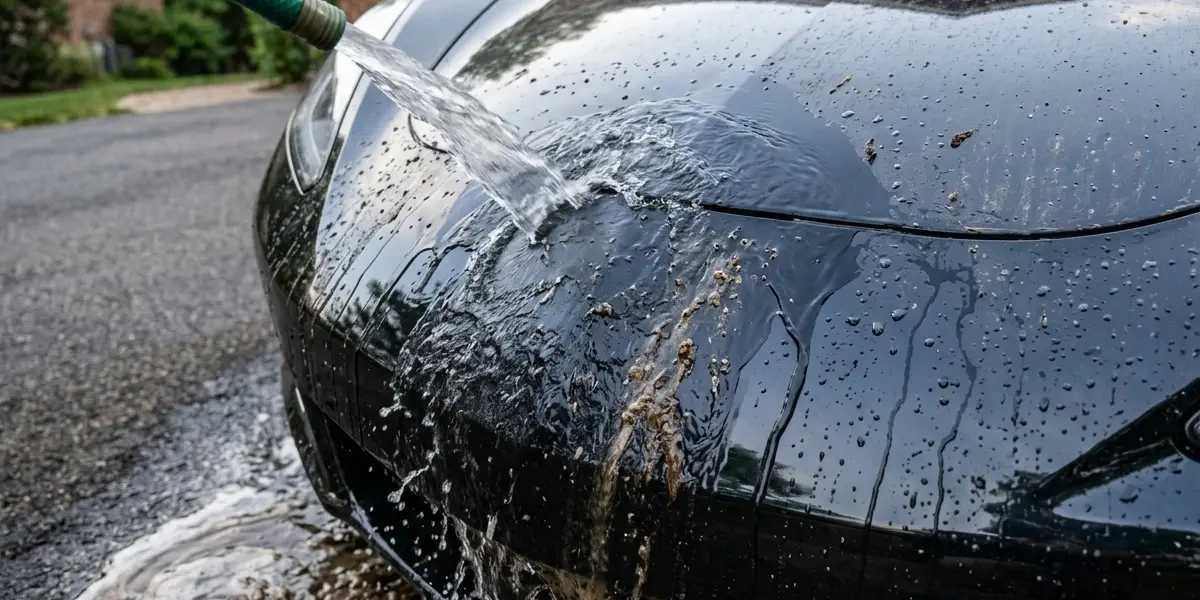
This is the step you shouldn’t rush.
A car can carry more than ordinary dust. Sand, road grit, dried mud, and other small particles may be sitting on the paint. If you immediately start wiping with a mitt, those particles can get dragged across the surface.
If you have a garden hose
Rinse the car from the roof downward. Pay extra attention to the lower doors, bumpers, wheel arches, and other areas where road dirt tends to collect.
You don’t need to blast the paint with high pressure. A normal hose can work well for removing loose dirt. When operating high-pressure equipment, adhere to Kärcher pressure washer safety distances to prevent high-pressure water from damaging delicate rubber seals, trim, or clear-coat edges.
A pressure washer is useful, but it isn’t essential for a good home wash.
If you don’t have a hose
You still have options.
- Rinseless washing: A product designed for rinseless use can help you clean a lightly dirty car with limited water. Follow its instructions for dilution, application, and towel use.
- Self-service washing: This can be a better choice when you need to rinse away more dirt but don’t have suitable equipment at home.
- Professional washing: Consider this if the car is covered in thick mud, sand, or other heavy contamination that you can’t safely remove yourself.
Don’t try to save water by wiping a gritty car with a dry cloth. That can turn a simple cleaning job into a paint-correction problem.
Step 3: Clean the wheels separately
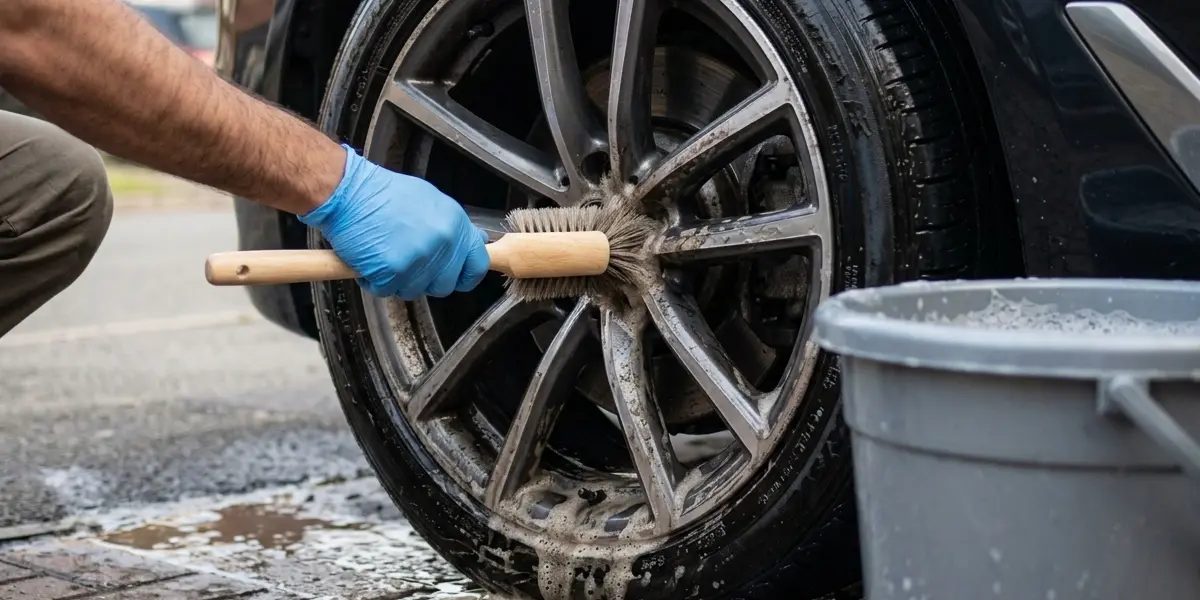
Wheels collect brake dust and road grime, so keep their cleaning tools away from the painted bodywork.
Use a separate wheel brush or mitt and a cleaner that’s suitable for your wheel finish. Follow the product directions, and don’t let the cleaner dry on the surface.
Rinse the wheels as directed before moving on. Keep wheel brushes, mitts, and buckets separate from the equipment you use on the paint.
If you’ve ever noticed dark grime coming off a wheel, you’ll understand why this separation matters. You don’t want that material ending up in the mitt you’re using on the hood.
Step 4: Mix the shampoo correctly
Fill one bucket with water and add automotive shampoo according to the label. Fill a second bucket with clean water for rinsing your mitt.
There’s no benefit in guessing the amount of shampoo. Adding more doesn’t automatically make the wash safer or more effective. Too much product can leave residue and make rinsing harder.
Choose a shampoo made for automotive paint. Household dishwashing liquid isn’t the best default for routine washing because some formulas can affect waxes, sealants, or other protective products.
If your car has matte paint, a wrap, or a specialist protective coating, check the manufacturer’s care instructions before choosing a cleaner.
Step 5: Use the two-bucket method
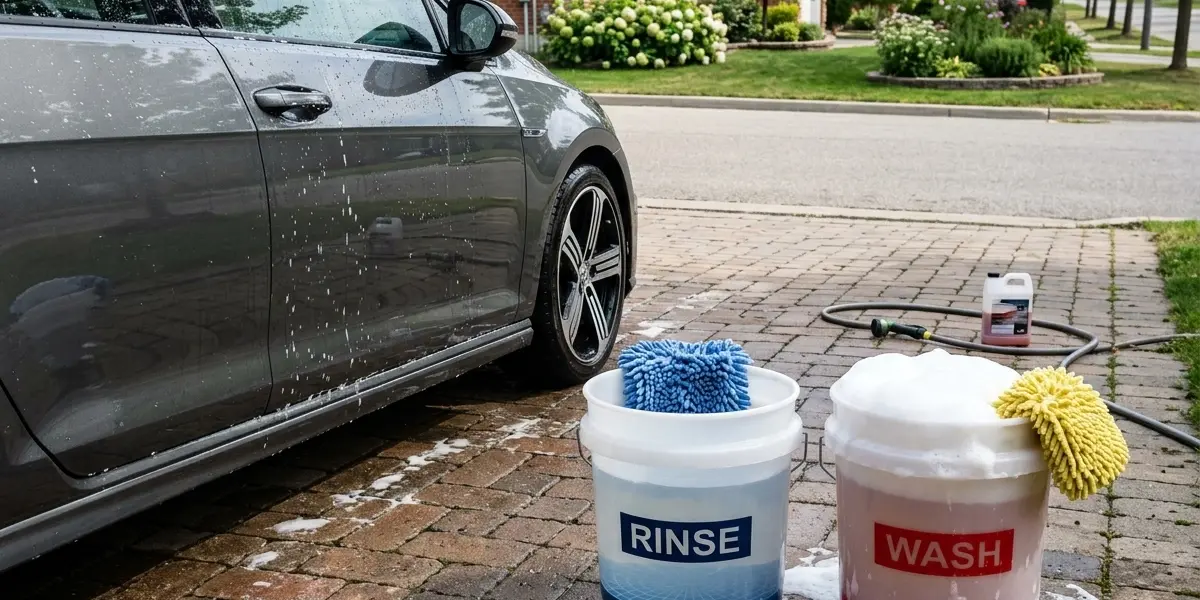
The two-bucket method is a straightforward way to reduce the amount of dirt you carry back onto the paint.
One bucket holds your shampoo solution. The other holds plain rinse water. After cleaning a section, rinse the mitt in the second bucket before putting it back into the shampoo.
Here’s the process:
- Dip the clean mitt into the shampoo solution.
- Wash a small section using light pressure.
- Rinse the mitt in the separate bucket.
- Check it for visible dirt and remove any trapped debris.
- Dip it back into the shampoo solution.
- Move to the next section and repeat.
A grit guard may help keep some debris at the bottom of a bucket, but it doesn’t guarantee clean water or a clean mitt. The real benefit comes from rinsing your wash tool regularly and avoiding unnecessary pressure.
Should you wash in circles?
Focus less on the exact direction of your hand and more on keeping the mitt clean. Light, controlled, overlapping passes make it easier to work through the car without repeatedly rubbing the same spot.
If your mitt falls on the ground, don’t simply rinse it quickly and carry on. Use a clean replacement or wash it thoroughly before putting it back on the paint.
The two-bucket method also isn’t a guarantee against scratches. It’s one way to reduce the risk, not a substitute for proper pre-rinsing and clean equipment.
Step 6: Wash from the roof downward
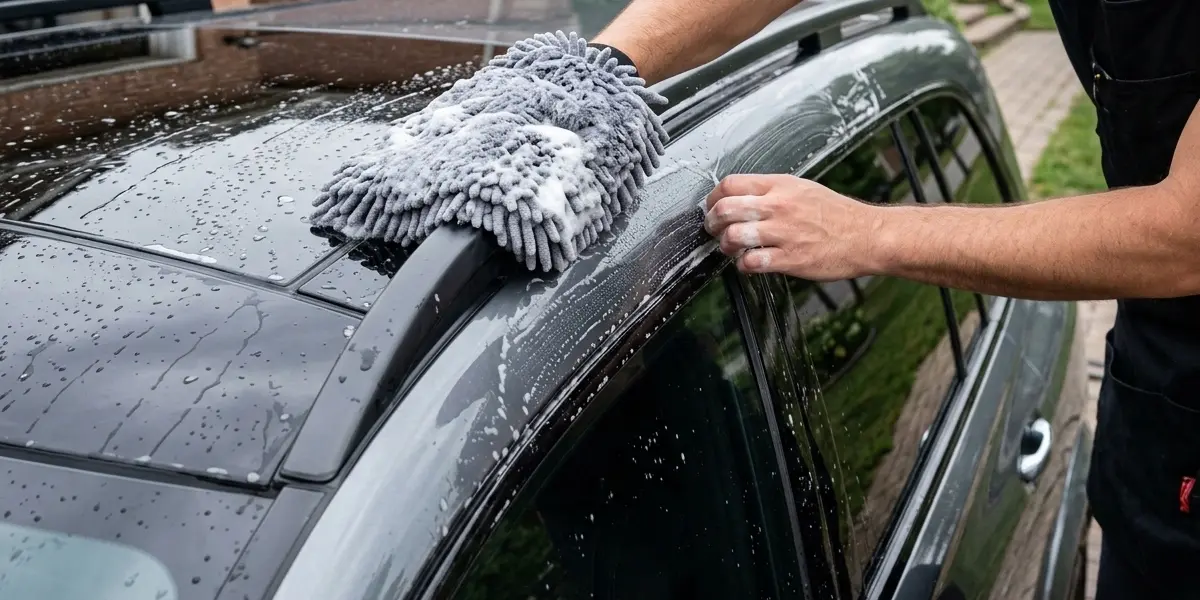
Start with the roof, then move to the upper windows, hood, trunk, and upper body panels. Leave the lower doors, bumpers, and heavily soiled areas until later.
Why this order? The lower parts of a car usually collect more road grime. If you clean them first and then use the same mitt on the roof, you risk spreading that dirt to cleaner areas.
Work in small sections rather than covering the whole vehicle in shampoo at once. In warm or windy weather, rinse a section before the product dries.
If a mark doesn’t come off with gentle washing, don’t press harder. It could be dried bug residue, tar, tree sap, or another contaminant that needs a suitable cleaner.
A good rule to follow: if dirt is still visible or the surface feels gritty, don’t keep rubbing the same spot with your mitt.
Step 7: Rinse thoroughly
Once you’ve washed the bodywork, rinse from the roof downward.
Pay attention to the areas people often miss: around mirrors, door handles, badges, trim edges, and gaps where soap can collect. Residue left behind may run down the paint after you’ve finished.
Follow the product instructions if you’re using a special shampoo or rinseless solution. Not every washing method requires the same final rinse.
Before drying, check the car in good light. If you find a dirty patch, clean it again with the right method rather than wiping the remaining dirt away with a dry towel.
Step 8: Dry the paint without leaving water spots
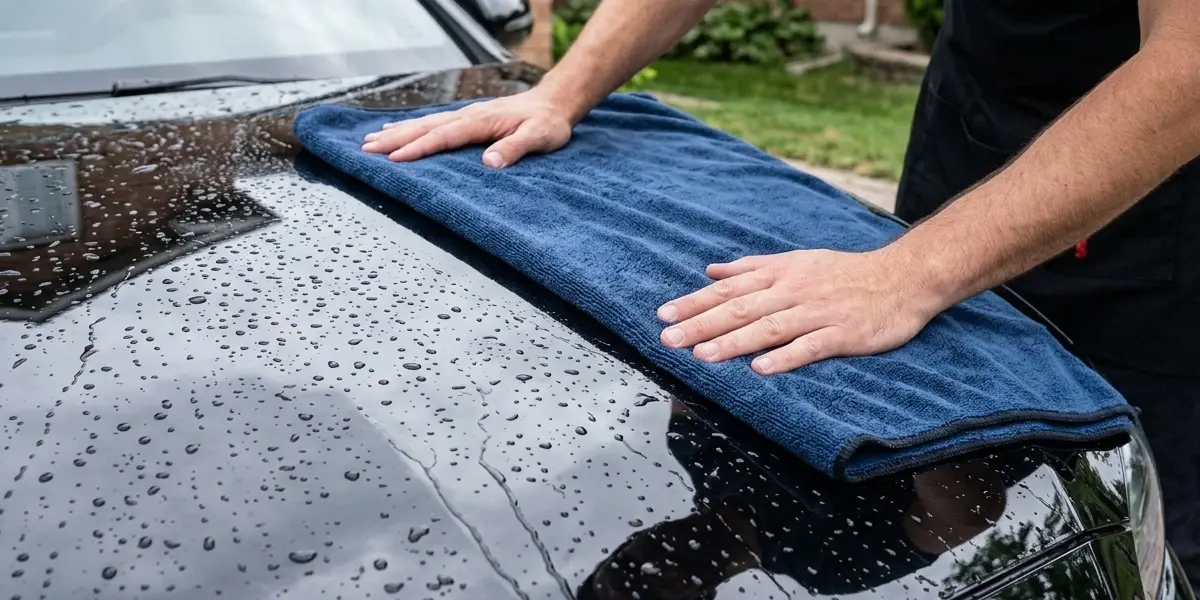
You’ve done the washing, and the car looks good. Now comes the part that’s easy to rush.
When water evaporates, it can leave minerals behind. These deposits create water spots, which are especially noticeable on dark paint. Hard water can make the problem worse.
Use a clean, soft microfiber drying towel made for automotive paint. Gently draw it across the surface or follow the towel manufacturer’s recommended technique. Avoid pressing hard or repeatedly rubbing the same area.
If the towel picks up dirt, stop and replace it. Use separate towels for the painted panels and dirtier areas such as door jambs.
A car-drying blower can help remove water from mirrors, badges, and trim gaps while reducing towel contact. It’s a useful extra, but you don’t need one to dry your car properly.
What if water spots remain?
Drying the car promptly can help prevent mineral deposits, particularly in hot weather. If possible, use filtered or demineralized water when hard water is a recurring problem.
If spots remain after drying, don’t attack them with an abrasive pad. First, work out whether you’re dealing with surface deposits or damage to the paint. Use a compatible water-spot remover according to its instructions. If the finish appears etched or the marks won’t come off, ask a professional before trying an abrasive treatment.
Step 9: Remove bird droppings, bugs, and sticky marks carefully
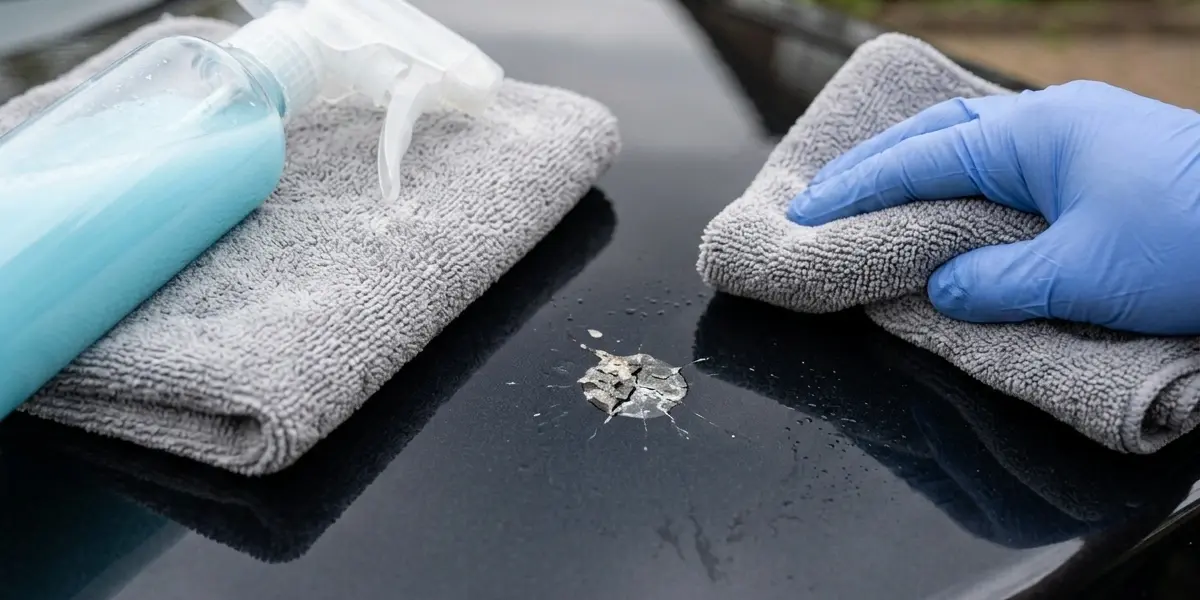
An ordinary wash may not remove every mark. Some contaminants need their own treatment, and scrubbing harder isn’t the answer.
| Type of dirt | What to do | What to avoid |
|---|---|---|
| Bird droppings | Soften with water or a suitable paint-safe cleaner, then remove gently | Scraping dried material off the paint |
| Bug residue | Use an appropriate bug remover according to the label | Scrubbing hard with a dry towel |
| Tree sap | Use a compatible sap remover and follow its directions | Sharp objects or unverified harsh solvents |
| Tar spots | Use a paint-safe tar remover as directed | Repeated rubbing with a rough cloth |
Try to remove bird droppings and bug residue promptly. Some contaminants can damage the finish if left on the paint, particularly in hot conditions.
If a mark remains after washing, take a moment to identify it. You may need a different product rather than more pressure.
Always check that a cleaner is suitable for your vehicle’s paint or coating. If you’re unsure, professional help may be cheaper than repairing damage caused by the wrong treatment.
Step 10: Check the car before you finish
Walk around the vehicle in good light. Look for missed patches, leftover shampoo, water spots, and droplets running out from mirrors or trim.
Use a clean towel to remove remaining water. If you find a dirty area, don’t use the same towel you’re using for the final drying pass. Wash the area safely first.
Then clean and store your equipment. Rinse the mitts and towels as appropriate, and wash microfiber items according to their care labels. Keep them separate from heavily soiled laundry, and avoid fabric softener if the manufacturer advises against it.
This part isn’t exciting, but it makes a difference the next time you wash the car. A clean towel is much more useful than an expensive towel that’s full of old dirt.
Can you wash a car at home without a hose?
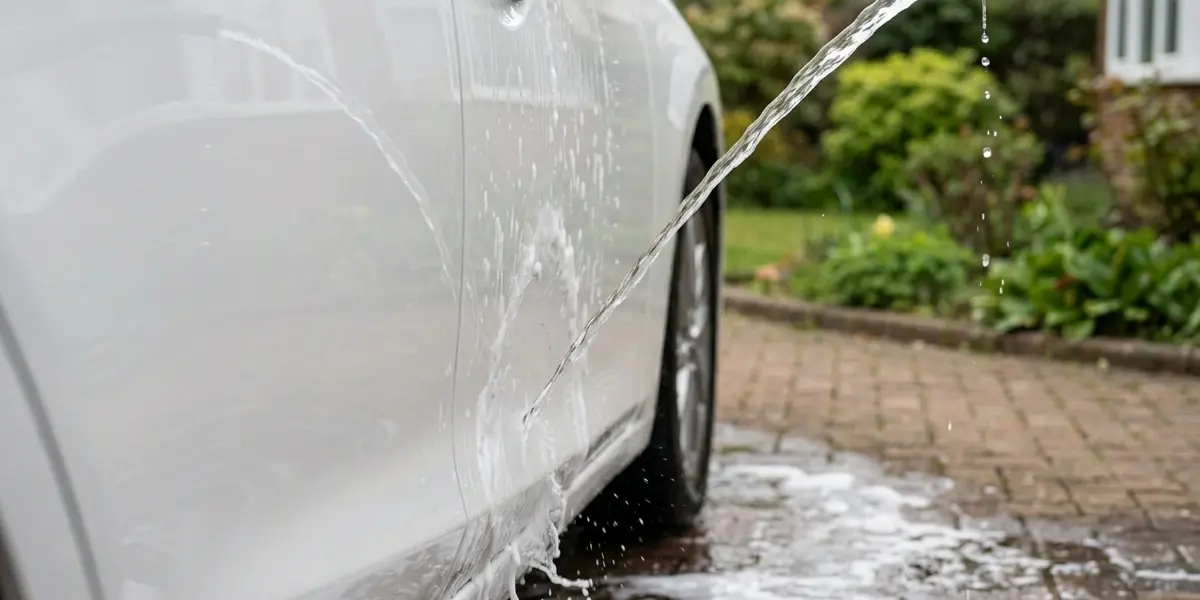
Yes, provided you choose a method that suits the amount of dirt on the car.
A rinseless wash is useful when water is limited or you don’t have an outdoor tap. These products are designed to help lift and lubricate dirt so it can be removed with suitable microfiber towels or wash media.
But rinseless washing isn’t ideal for every situation. If the car is covered in thick mud, loose sand, or heavy road grit, removing that contamination before wiping the paint is the safer approach.
Use this guide:
- Light dust and ordinary road film: A suitable rinseless method may work when used as directed.
- Moderate dirt: Choose a method that lets you remove loose contamination before wiping.
- Heavy mud or gritty dirt: Use a hose or self-service wash to remove as much loose dirt as possible before touching the paint.
- No suitable water or safe washing area: A professional wash may be the more practical choice.
Don’t use one dirty towel across the entire car to save water. As the towel collects dirt, it can spread that contamination and increase the risk of scratches.
Is washing a car at home better than using a car wash?
That depends on your priorities, equipment, budget, and the condition of your vehicle.
| Washing method | Main advantage | Main limitation |
|---|---|---|
| Home hand wash | You control the tools, technique, and time spent on each panel | Results depend on your method and equipment |
| Self-service wash | Provides washing equipment without requiring a home setup | You still need to use the equipment correctly and follow the facility’s rules |
| Automatic car wash | Convenient and usually quick | The result and paint-contact method vary by facility |
| Professional hand wash or detailing | Useful for delicate finishes or difficult contamination | Usually costs more than washing at home |
It’s not fair to say every automatic car wash scratches paint. Different facilities use different equipment and processes, and maintenance matters. At the same time, washing at home isn’t automatically safer if you use dirty tools or rub grit into the finish.
Choose the method that lets you remove dirt without unnecessary pressure or contact. If your vehicle has delicate paint, a special finish, or a coating with specific care requirements, follow the manufacturer’s guidance.
Common mistakes that can scratch car paint
Most of these mistakes are easy to avoid once you know what to look for.
Wiping dust off a dry car. Dust can contain gritty particles. Use a suitable cleaning method instead of a dry cloth.
Using one mitt without rinsing it. Dirt builds up as you wash. Rinse the mitt regularly and replace it if it becomes contaminated.
Using the same brush on wheels and paint. Wheel grime can transfer to the bodywork. Keep those tools separate.
Scrubbing stubborn marks. More pressure isn’t always the answer. Identify the contaminant and use a suitable cleaner.
Drying with an old bath towel. Rough or dirty fabric can mark the finish. Use a clean towel designed for automotive surfaces.
Letting shampoo dry on the car. Work in smaller sections and rinse before the product dries.
Assuming foam removes everything. Snow foam and pre-wash products can loosen dirt, but they may not remove all contamination. Follow up with the appropriate washing method when needed.
Using a pressure washer too close. Excessive pressure or an unsuitable nozzle can damage paint, seals, trim, and other components.
You don’t need a perfect setup to wash a car well. You just need to avoid habits that make dirt harder to remove safely.
Final thoughts
You don’t need a collection of expensive products to wash your car at home. What matters most is removing loose dirt first, using clean tools, working from the roof downward, and drying the paint gently.
When a mark won’t come off, don’t keep scrubbing. Work out what it is and choose a suitable cleaner instead.
And remember, washing the exterior is only one part of keeping a car clean. If you also want to clean the seats, dashboard, carpets, and interior glass, read our guide to cleaning a car inside and out, step by step.
Before you go, there’s one more thing worth checking: the references below explain the washing and environmental guidance behind some of these recommendations. They’re optional reading if you’d like to explore the details.
Frequently asked questions
How often should I wash my car?
It depends on the weather, where you park, and how much dirt the car picks up. Wash it when grime builds up, and remove potentially harmful contaminants such as bird droppings promptly. There’s no single schedule that works for every car.
Is it safe to wash a car in direct sunlight?
It’s better to work in the shade with cool bodywork. Sunlight can make water and shampoo dry too quickly, leaving spots or residue before you’ve finished rinsing.
Can I use dish soap to wash my car?
Automotive shampoo is the better choice for routine washing. Some household dish soaps can affect waxes or sealants, depending on the formula, and aren’t designed specifically for car paint.
Does the two-bucket method prevent all scratches?
No. It helps reduce the chance of carrying dirt back onto the paint, but it can’t guarantee a scratch-free wash. Pre-rinsing, clean tools, light pressure, and careful drying still matter.
Is a sponge or microfiber mitt better?
Choose a soft wash tool designed for automotive paint and keep it clean. A microfiber mitt is a common option, but no material is completely safe if it traps grit and is used incorrectly.
Can I wash my car with only a bucket of water?
A suitable rinseless product may work for a lightly dirty car. Follow its instructions and use clean microfiber media. If the car is covered in heavy grit or mud, remove as much loose dirt as possible before wiping the paint.
How do I remove water spots after washing?
First, work out whether the marks are mineral deposits or damage to the paint. Try a compatible water-spot remover according to its instructions. If the marks appear etched into the finish or won’t come off, seek professional advice before using abrasive products.
Do automatic car washes always scratch paint?
No. Different facilities use different equipment and methods. Poor washing practices can leave marks in several settings, including at home, so consider the condition of the equipment and how the car is washed.
Should I use a clay bar after every wash?
No. A clay bar removes certain bonded contaminants that remain after washing. It’s not needed every time, and using it incorrectly can affect the finish. Use it when necessary and follow the product directions.
Can I wash an electric car at home?
Usually, yes, if you follow the vehicle manufacturer’s instructions. Take care around charging connections, damaged seals, and components the manual says to protect. Avoid directing high-pressure water at sensitive areas.