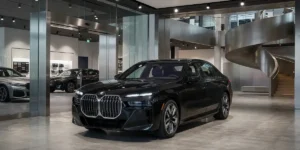
Key takeaways
- The 740 is the straightforward gasoline 7 Series with rear-wheel drive.
- The 740 xDrive adds all-wheel drive to the same basic powertrain.
- The 750e xDrive combines a gasoline engine with electric power and can handle short trips on electricity.
- The i7 gives you the quietest and most EV-focused version of the 7 Series.
- The 7 Series is especially interesting if rear-seat comfort matters to you.
- The 2027 model brings BMW’s latest Panoramic iDrive technology into the flagship sedan.
If you walk into a BMW showroom and say, “I want a 7 Series,” I would want to know one thing before talking about engines.
How are you actually going to use the car?
Are you driving it yourself every day? Do you spend hours on the highway? Do you carry someone in the back seat most of the time? Do you have a home charger? Or do you simply want a large BMW that feels special every time you get in?
Those answers matter because the 2027 BMW 7 Series is no longer one simple formula. You can have a gasoline 740, all-wheel-drive 740 xDrive, plug-in hybrid 750e xDrive or fully electric i7.
Here are 15 things that make the BMW 7 Series easier to understand before you start looking at options.
AI Overview: what is the BMW 7 Series?
The BMW 7 Series is BMW’s full-size flagship luxury sedan. For 2027, the lineup combines gasoline, plug-in hybrid and fully electric powertrains with a much more technology-focused cabin built around BMW Panoramic iDrive.
The 740 and 740 xDrive are the conventional gasoline choices, the 750e xDrive is the plug-in hybrid and the i7 50 xDrive and i7 60 xDrive are fully electric. The big decision is less about which one has the biggest number and more about how you plan to use the car.
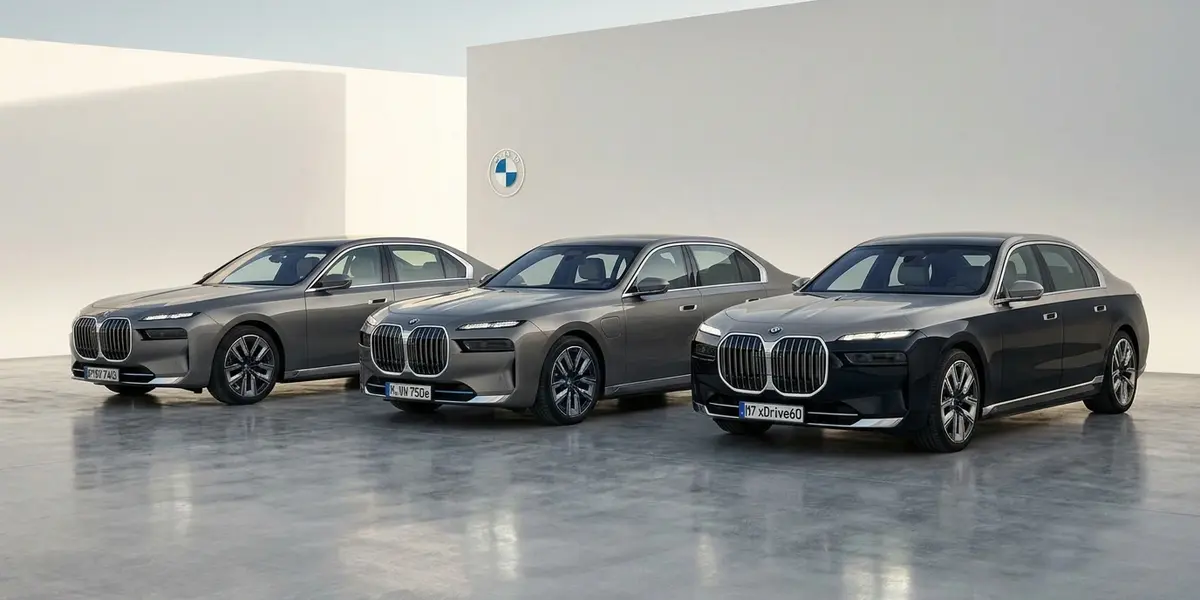
what are the BMW 7 Series models?
For the 2027 U.S. lineup, BMW offers the 740, 740 xDrive, i7 50 xDrive and i7 60 xDrive at launch. The 750e xDrive plug-in hybrid follows in early 2027. BMW has also announced a future V8-powered M Performance model.
Powertrain & Lineup Breakdown
| Model / Trim | Powertrain | Drivetrain | Horsepower | Key Target Buyer |
| 740 | 3.0L Turbo I6 + 48V Mild Hybrid | RWD | 394 hp | Traditionalists seeking a classic gasoline flagship |
| 740 xDrive | 3.0L Turbo I6 + 48V Mild Hybrid | AWD | 394 hp | Gasoline buyers needing all-weather traction |
| 750e xDrive | 3.0L I6 + Electric Motor (PHEV) | AWD | 483 hp | Commuters with home charging wanting ~35 mi EV range |
| i7 50 xDrive | Dual Electric Motors | AWD | Entry EV output | Drivers ready for a fully electric luxury sedan |
| i7 60 xDrive | Dual Electric Motors | AWD | 536 hp | EV buyers prioritizing stronger acceleration (0–60 in 4.6s) |
1. The 7 Series is BMW’s flagship sedan
The easiest way to understand the 7 Series is to look at BMW’s sedan range from the top down. The 3 Series is the smaller sport-oriented sedan. The 5 Series moves into a larger executive-car role. The 7 Series sits above both as BMW’s flagship sedan.
That difference shows up in the way the car is designed. You get more cabin space, more rear-seat attention, more comfort equipment and a much larger technology package. The car is also physically big. The 2027 740 is about 212.6 inches long with a 126.6-inch wheelbase.
So if you are coming from a 3 Series or 5 Series, the first thing you notice may simply be the size. The second thing is how much the car is built around passenger comfort.
2. The 2027 7 Series is a major technology update
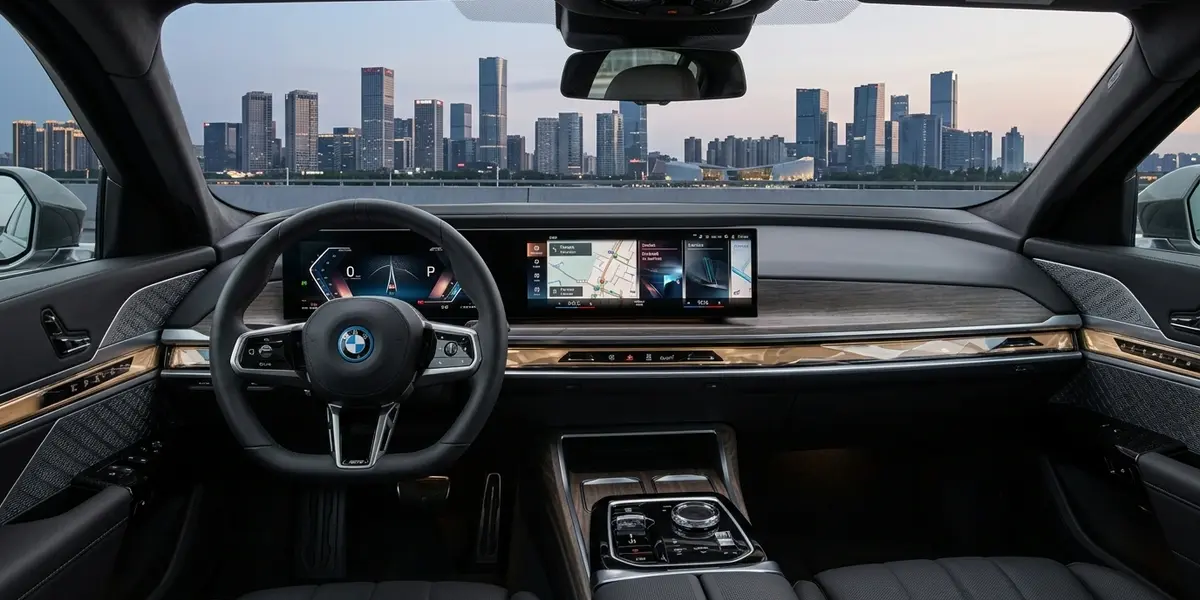
The 2027 model brings BMW’s newer Neue Klasse technology into the 7 Series. That matters because the changes are not limited to a new bumper or different headlights. Inside, BMW introduces Panoramic iDrive, BMW Panoramic Vision, a new central display and a passenger screen. The system puts more information across the driver’s field of view while keeping the central screen available for controls and other functions.
There is also a new BMW Operating System X behind the system. If you like having lots of digital controls and customization, you will probably notice the difference immediately. If you prefer a car with lots of physical buttons, I would spend some time in the car before ordering one. That is one of those things you understand much better by sitting in the driver’s seat than by reading a specification sheet.
3. The BMW 740 is the simple starting point
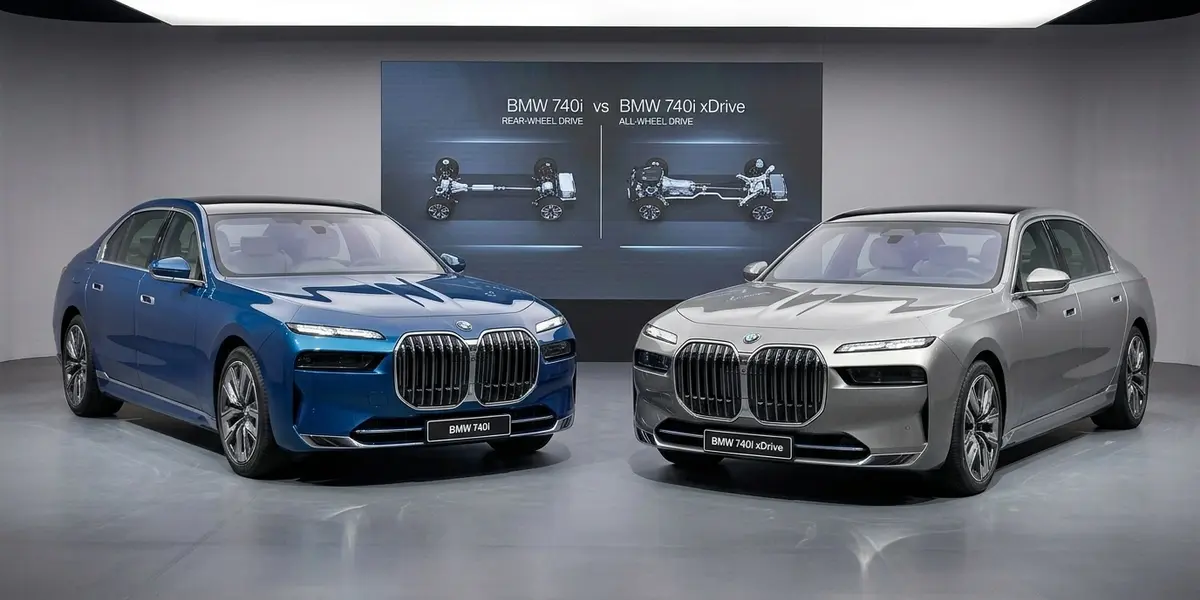
The 740 is where I would start the conversation with someone who wants a 7 Series but does not need an electric powertrain.
The 2027 BMW 740 uses a 3.0-liter turbocharged inline-six with 48-volt mild-hybrid technology.
BMW lists 394 horsepower for the 2027 model.
It also uses rear-wheel drive. That last point matters because many people see a large luxury sedan and automatically assume all-wheel drive. The 740 gives you a traditional rear-wheel-drive BMW setup.
It also avoids some of the extra complexity that comes with moving into a plug-in hybrid or full EV. If your priorities are a familiar gasoline powertrain, long-distance flexibility and the classic BMW setup, the 740 makes the conversation pretty straightforward.
4. The 740 xDrive is mainly about traction
The 740 xDrive uses the same basic 394-horsepower gasoline powertrain but adds BMW’s xDrive all-wheel-drive system.
So why would you pay more for it?
Think about where you drive. If you regularly deal with heavy rain, snow or roads where extra traction is useful, xDrive may make more sense. It can also give some drivers more confidence when putting the power down.
You should also remember that all-wheel drive does not magically turn a large 7 Series into a small sports sedan. You are still buying a big luxury car. The difference is that the 740 xDrive gives you all-wheel drive without forcing you into the more expensive plug-in hybrid or electric versions.
5. The 750e xDrive is the middle path
The 750e xDrive is the version I would explain carefully to a buyer.
Why?
Because a plug-in hybrid only makes its full sense if you can actually charge it. The 750e combines a 3.0-liter inline-six gasoline engine with an electric motor. BMW lists combined output at 483 horsepower and 516 lb-ft of torque.
It also has all-wheel drive. BMW currently estimates up to about 35 miles of electric driving under ideal conditions.
That means your daily school run, office commute or grocery trip could potentially happen mostly on battery power if your routine fits within that range and you charge regularly.
Then you still have a gasoline engine for longer trips.
That is the appeal. You are keeping the flexibility of gasoline while adding a useful electric driving mode. But if you rarely charge the car, you are paying for a feature you are not using as much as you could.
6. The i7 is the fully electric 7 Series
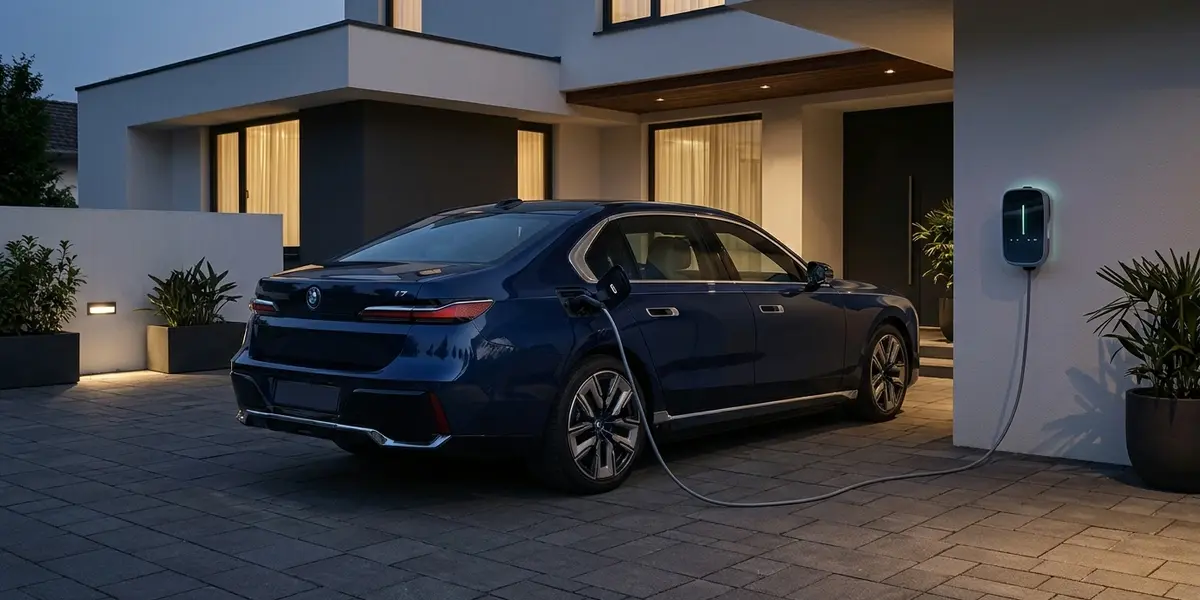
Now imagine the same basic flagship idea but remove the gasoline engine completely. That is the BMW i7. For 2027, BMW offers the i7 50 xDrive and i7 60 xDrive in the U.S. Both use dual electric motors and all-wheel drive. The i7 50 xDrive is the lower-output version while the i7 60 xDrive moves up to 536 horsepower.
The important part is the driving character. An electric motor gives you immediate response without the usual engine noise or gear changes. And because the 7 Series already focuses heavily on isolation and comfort, the quiet nature of an EV fits the car very naturally. If you already have convenient home charging and want a large luxury EV, the i7 deserves serious attention.
7. i7 50 xDrive or i7 60 xDrive?
This is where buyers sometimes get caught up in numbers. The i7 60 xDrive has more power. BMW lists 536 horsepower and a 0-to-60 mph time of about 4.6 seconds. The i7 50 xDrive is less powerful.
But ask yourself how often you will actually use that extra performance. If your daily driving consists of city traffic, highways and normal family trips, the 50 xDrive already gives you the basic i7 experience. The 60 xDrive makes more sense if you specifically want stronger acceleration and a higher-performance version of the electric 7 Series. You do not need the more powerful version just because it exists.
8. Gasoline, plug-in hybrid or electric?
Here is the easiest way to think about the lineup.
| Version | Powertrain | Drive | Who it may suit |
| 740 | 3.0L turbo inline-six + mild hybrid | RWD | Buyer wanting a traditional gasoline 7 Series |
| 740 xDrive | 3.0L turbo inline-six + mild hybrid | AWD | Buyer wanting gasoline power with xDrive |
| 750e xDrive | Inline-six + electric motor | AWD | Buyer who can charge and wants short electric trips |
| i7 50 xDrive | Dual electric motors | AWD | Buyer moving fully to electric driving |
| i7 60 xDrive | Dual electric motors | AWD | Buyer wanting the stronger i7 powertrain |
This is the part I would keep in mind when shopping.
You are really choosing how you want your 7 Series to make its power.
9. The rear seat is a big part of the 7 Series story
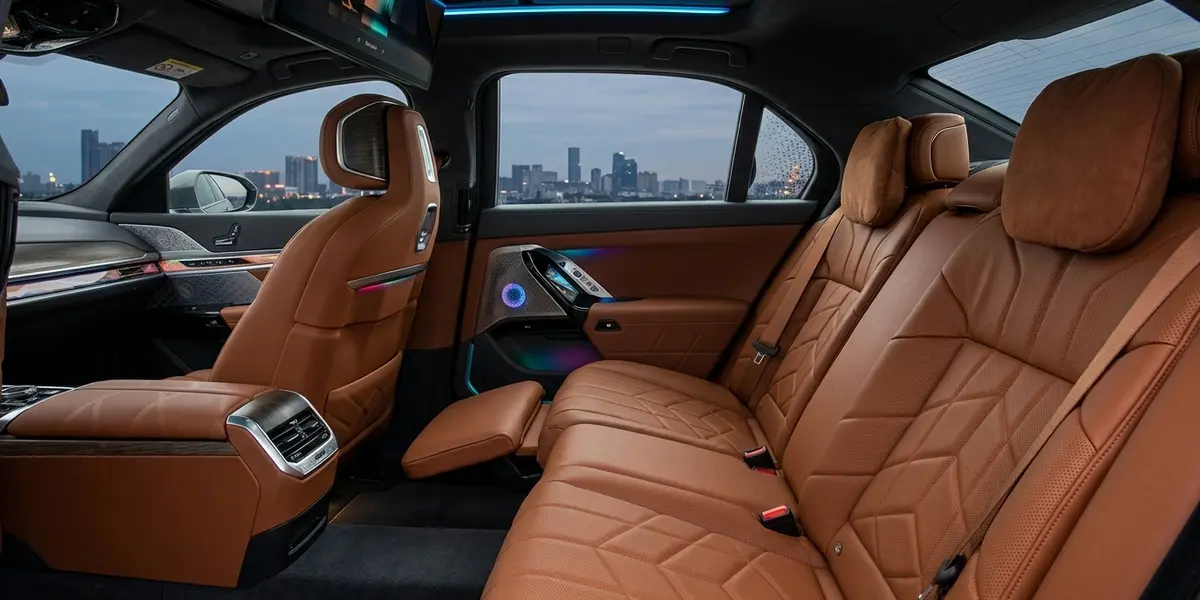
A 7 Series makes more sense when you think about the person sitting behind you. BMW gives the rear passengers their own controls and a long list of available comfort features. Depending on how the car is equipped, rear passengers can get power adjustments, ventilation, massage and other comfort functions.
There is also the optional Executive Lounge setup. This can add a leg rest and a reclining rear-seat arrangement designed around the passenger behind the front passenger seat. So if you spend most of your time in the back, the 7 Series becomes a very different proposition. You are not simply buying a large sedan. You are buying a mobile space where someone can work, relax or watch entertainment while another person drives.
10. The Theatre Screen is more than a big TV
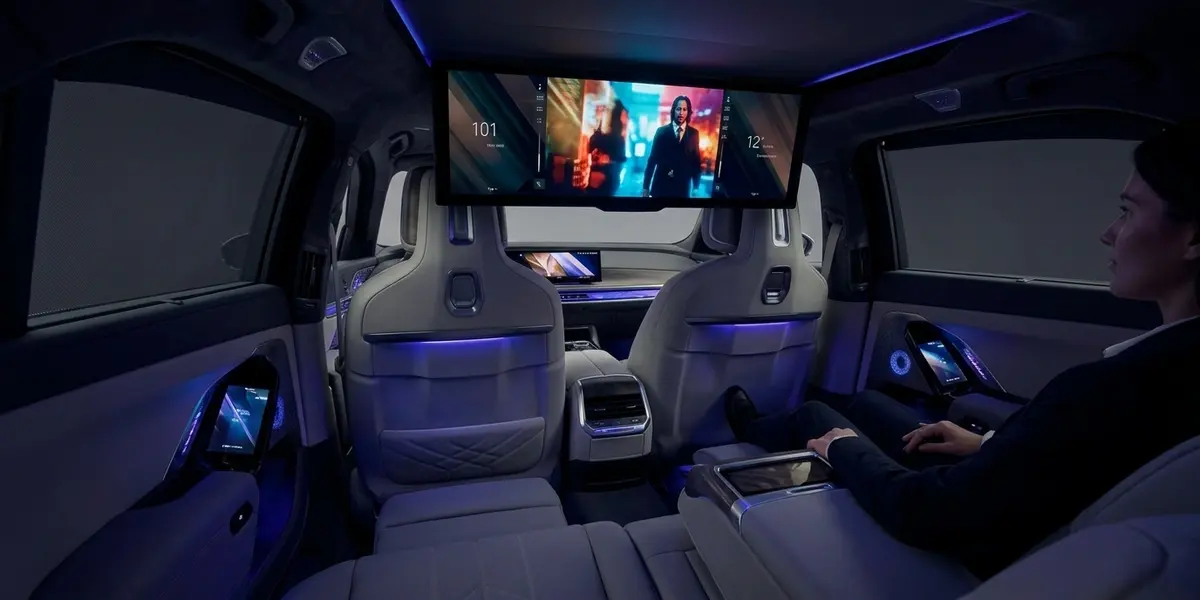
The available BMW Theatre Screen is evaluated extensively in Car and Driver’s 7 Series Review, highlighting how it alters the rear passenger experience.
It is a 31.3-inch screen that drops down for rear passengers. The 2027 version also adds an integrated camera that can support Zoom video calls. BMW says an HDMI connection can also be used to turn the screen into a larger display for compatible devices. With the optional Bowers & Wilkins Diamond Surround Sound System and Dolby Atmos support, the rear cabin can feel more like a private entertainment area.
But here is the practical question I would ask.
Will someone actually sit in the back often enough to use it?
If you mostly drive alone, I would put more attention on the features you interact with every day. If you regularly carry executives, family members or clients in the rear, this feature becomes much easier to justify.
11. Panoramic iDrive changes the way you interact with the car
The 2027 7 Series gets BMW Panoramic iDrive with BMW Operating System X.
The system includes:
- BMW Panoramic Vision
- a 17.9-inch central display
- a 3D Head-Up Display
- a 14.6-inch passenger screen
- a redesigned multifunction steering wheel
BMW Panoramic Vision projects information across the lower part of the windshield.
The idea is simple: put useful information closer to the driver’s normal view instead of making the driver look down at a screen for everything. The passenger gets a separate display too. That is a nice touch if you regularly have someone sitting beside you who wants to handle navigation, entertainment or other functions.
12. The 7 Series is still a very large car
Luxury buyers sometimes focus so heavily on interior technology that they forget the physical size of the vehicle.
The 2027 740 is roughly 212.6 inches long.
That is a lot of car.
The good news is that BMW uses technology to make the size easier to manage. Features such as rear-wheel steering can help the car feel more manageable than its dimensions suggest (detailed further in Edmunds 2027 BMW 7 Series First Look & Refresh). But I would still tell a first-time 7 Series buyer to pay attention to where they park. A large sedan can be easy to drive on a highway and surprisingly awkward in a tight parking garage.
If your normal life involves narrow streets and small parking spaces, take a real test drive through the places you normally use.
13. Comfort is a major reason to buy one
The 7 Series has standard air suspension and is built around a calm ride. That makes sense for the car. You can still accelerate hard when you want to. The BMW 7 Series has plenty of power in every version.
But the personality is more relaxed than a smaller BMW M car. This is especially noticeable on long trips. A 7 Series is the kind of car where you can cover a lot of highway miles without constantly thinking about the road underneath you. That is where its size starts working in its favor.
14. Who should buy which BMW 7 Series?
Here is how I would simplify the showroom conversation.
Choose the 740 if…
You want a traditional gasoline-powered 7 Series and you do not need all-wheel drive. It is the straightforward option. You get the flagship body, the inline-six and rear-wheel drive without moving into the more complicated electrified choices.
Look at the 740 xDrive if…
You want the gasoline version but prefer all-wheel drive. This is particularly relevant if your driving conditions regularly include rain, snow or slippery roads.
Look at the 750e xDrive if…
You have somewhere convenient to charge. This is the version to investigate if most of your daily trips are short but you still want gasoline flexibility for long journeys. The key is your charging routine.
Look at the i7 50 xDrive if…
You are ready to go fully electric and want the quieter character of an EV without needing the highest-output i7. It gives you the flagship experience with an all-electric powertrain.
Look at the i7 60 xDrive if…
You want the electric 7 Series with stronger performance. The extra power is there for people who genuinely care about acceleration.
Wait for the future M Performance model if…
Performance is a major reason you are shopping for a 7 Series.
BMW has announced a V8-powered M Performance version for the new generation but exact U.S. specifications and timing should be checked when BMW releases them.
15. The biggest question is whether you need a 7 Series at all
This may be the most useful question in the entire buying process.
The 7 Series is expensive and large. If you mainly drive yourself to work and rarely use the rear seats, a 5 Series may already give you more than enough car. If you want a bigger cabin, extra rear-seat comfort and flagship-level technology, the 7 Series starts to make more sense. And if someone regularly sits in the back, the decision becomes even easier to understand.
The 7 Series is at its most convincing when you use the space and comfort that make it different from smaller BMW sedans.
BMW 7 Series vs 5 Series: the simple difference
| BMW 5 Series | BMW 7 Series | |
| Position | Executive sedan | Flagship luxury sedan |
| Size | Large | Full-size |
| Rear-seat focus | Strong | Much stronger |
| Luxury equipment | High | Higher |
| Technology | Advanced | Flagship-level |
| Typical buyer question | “How much car do I need?” | “How much luxury and space do I want?” |
The two cars overlap more than they used to.
That is why I would not tell someone to automatically buy the 7 Series just because it sits higher in BMW’s lineup. If you do not need the extra size and rear-seat experience, the 5 Series may fit your life better. A separate BMW 5 Series vs 7 Series comparison deserves a deeper look because price, size, powertrain choices and passenger use all matter.
What about the 2027 BMW 7 Series interior?
The interior is where the new 7 Series makes its biggest impression. The dashboard now centers around BMW Panoramic iDrive. There is the wide Panoramic Vision display, a central touchscreen and a passenger screen. The cabin can also be fitted with higher-end materials such as Merino leather and cashmere wool.
For rear passengers, available Executive Lounge seating, touch controls and the Theatre Screen push the car into a very different type of luxury experience. The important thing is that you do not need every option to understand the basic 7 Series. Sit in the standard car first. Then decide which upgrades actually improve the way you will use it.
BMW 7 Series technology worth knowing
Some of the names sound complicated until you translate them into normal language.
BMW Panoramic Vision: information projected across the lower windshield.
BMW Panoramic iDrive: BMW’s new display and control system.
BMW Passenger Screen: a dedicated display for the front passenger.
BMW Theatre Screen: a large rear entertainment display.
Executive Lounge: upgraded rear-seat comfort equipment.
xDrive: BMW’s all-wheel-drive system.
750e: plug-in hybrid.
i7: fully electric 7 Series.
Once you understand those names, the lineup becomes much easier to follow.
BMW 7 Series pricing: why the sticker is only the beginning
The 2027 U.S. 740 starts around the $100,000 mark before options and destination charges. The 740 xDrive starts higher while the i7 versions move further up the range. The 750e xDrive is scheduled to join the U.S. lineup in early 2027 with pricing to be confirmed.
That matters because the 7 Series has a long options list. A buyer can quickly move from “I want a 7 Series” to a much more expensive configuration.
So I would set your budget before building the car. Then choose the features that affect your daily life first. A rear-seat passenger who travels every week may get far more value from upgraded rear seating than from a cosmetic package. A driver who spends most of the day alone may think differently.
Conclusion
The BMW 7 Series makes much more sense once you stop looking at it as one car.
It is really a family of different ways to own a flagship BMW.
The 740 gives you the traditional gasoline experience. The 740 xDrive adds all-wheel drive. The 750e brings plug-in hybrid flexibility. The i7 takes the same luxury idea into full electric driving.
Then there is the question of how you spend your time inside the car.
If you drive yourself every day, focus on the powertrain and technology you will actually use.
If you spend a lot of time in the rear seat, look closely at Executive Lounge equipment and rear entertainment.
And if you are coming from a 5 Series, do not assume you need the bigger car just because it is higher in the BMW range.
The right 7 Series is the one that fits your daily routine, your charging situation and the way you actually use the cabin.
Frequently asked questions
Is the BMW 7 Series a luxury car?
Yes. The 7 Series is BMW’s flagship full-size luxury sedan and sits above the 5 Series in the company’s sedan range.
What is the difference between the BMW 740 and 740 xDrive?
Both use the 3.0-liter turbocharged inline-six with 394 horsepower for 2027. The 740 uses rear-wheel drive while the 740 xDrive adds all-wheel drive.
What is the BMW 750e?
The 750e xDrive is a plug-in hybrid. It combines a gasoline inline-six with an electric motor and produces 483 horsepower in the current 2027 specification.
Is the BMW i7 fully electric?
Yes. The i7 is the fully electric member of the 7 Series family. The 2027 U.S. lineup includes the i7 50 xDrive and i7 60 xDrive.
Is the BMW 7 Series good for rear passengers?
That is one of its strongest reasons to exist. Available rear-seat features include power adjustment, massage, ventilation, Executive Lounge seating and the 31.3-inch Theatre Screen.
How big is the BMW 7 Series?
The 2027 740 is about 212.6 inches long with a 126.6-inch wheelbase. It is a full-size sedan and feels substantially larger than a 3 Series or 5 Series.
Does the BMW 7 Series have all-wheel drive?
Yes. The 740 xDrive, 750e xDrive and current i7 50 xDrive and i7 60 xDrive use all-wheel drive. The standard 740 uses rear-wheel drive.
Should I buy the gasoline 7 Series or i7?
Start with charging rather than horsepower. If you can charge easily and want a fully electric luxury sedan, the i7 makes sense to investigate. If you want long-distance flexibility without planning around charging, the gasoline 740 may fit your routine better.