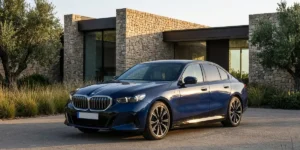
If you walked into a BMW showroom and said, “I want a 5 Series, but I don’t know which one”, I wouldn’t start by throwing numbers at you.
I’d ask how you drive. Do you want a comfortable daily sedan? Do you drive long distances? Do you have somewhere to charge an EV? Do you want strong acceleration or do you actually want an M5?
Because the BMW 5 Series is now a much bigger family than the old “530i or 540i” choice. For the 2027 U.S. model year, BMW offers gasoline versions, a plug-in hybrid, fully electric i5 models and the high-performance M5. The right choice depends heavily on what you will do with the car.
AI Overview: What is the BMW 5 Series?
The BMW 5 Series is BMW’s midsize luxury sedan. The 2027 U.S. lineup includes the 530i and 530i xDrive, 540i xDrive, 550e xDrive plug-in hybrid, fully electric i5 models and the high-performance M5. The 5 Series sits between the smaller 3 Series and larger 7 Series in BMW’s sedan lineup.
Key takeaways
- The 530i is the sensible starting point for buyers who want a traditional gasoline 5 Series.
- The 530i xDrive adds all-wheel drive if you want extra traction or simply prefer AWD.
- The 540i xDrive brings a 3.0-liter inline-six and is aimed at buyers who want noticeably stronger performance.
- The 550e xDrive is a plug-in hybrid. It can drive on electric power for short trips while keeping a gasoline engine for longer journeys.
- The i5 is the fully electric choice and makes the most sense when home or regular charging fits your life.
- The M5 is a performance car first. You don’t need one just because you can afford one.
- The 5 Series is larger and more comfort-focused than the 3 Series while sitting below the flagship 7 Series.
Which BMW 5 Series should you buy?
For most buyers, the choice comes down to how they use the car. The 530i is the straightforward gasoline option, the 540i xDrive is for buyers who want stronger six-cylinder performance, the 550e xDrive suits drivers who can charge a plug-in hybrid regularly and the i5 is for those ready to go fully electric. The M5 is for buyers specifically looking for high-performance driving rather than simply a luxury sedan.
1. First, understand where the 5 Series sits
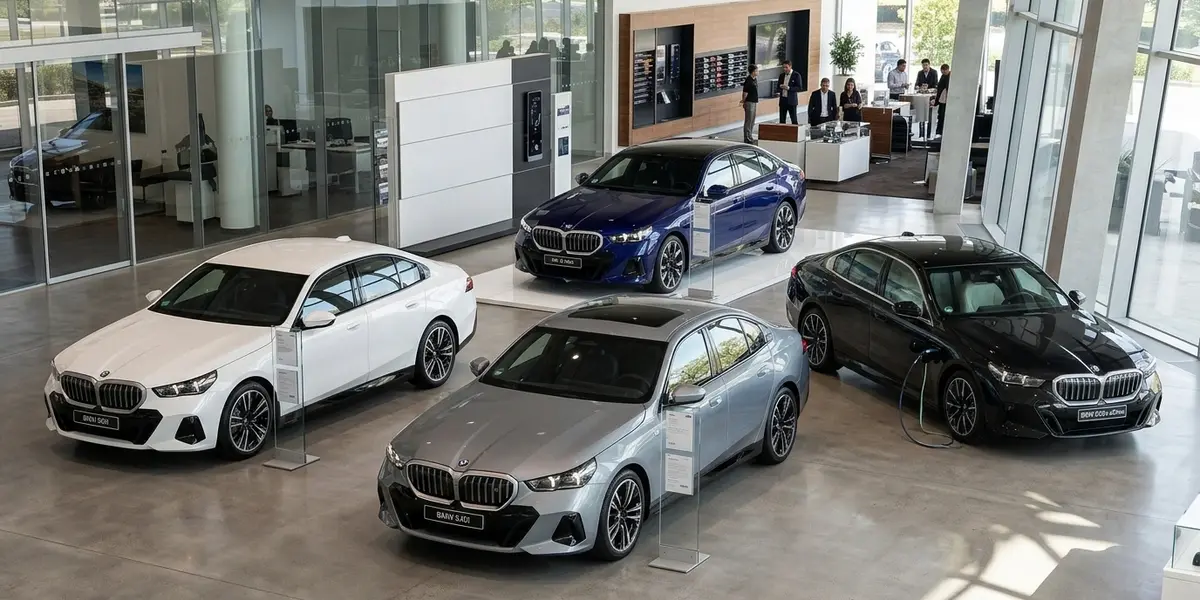
Think of BMW’s sedan lineup like this:
3 Series → 5 Series → 7 Series
The 3 Series is smaller and more focused on the compact sport-sedan idea. The 5 Series gives you more cabin space and a more relaxed luxury feel without moving into the size and price territory of the 7 Series.
That middle position is important. If you’re coming from a 3 Series and want more room and comfort, the 5 Series is the natural step up. If you’re looking at a 7 Series but don’t need the flagship’s extra size and equipment, the 5 Series gives you a different balance.
2. The 530i is where I’d start with most gasoline buyers
If you told me, “I want a new 5 Series and I don’t want anything complicated,” I’d start by showing you the 530i. It uses a 2.0-liter turbocharged four-cylinder producing 255 hp. BMW offers the 530i with rear-wheel drive while the 530i xDrive adds all-wheel drive. BMW lists a starting MSRP of $60,500 for the 2027 530i, $62,800 for the 530i xDrive, $67,700 for the 540i xDrive, and $75,500 for the 550e xDrive in the U.S.
For normal driving, that’s already plenty of car.
You get the 5 Series cabin, technology and size without paying for the six-cylinder engine or the extra complexity of a plug-in hybrid. And there’s something else I would tell a buyer: don’t buy a bigger engine simply because the showroom makes it tempting. If most of your driving is commuting, family trips and highway cruising, the 530i can cover that job very well.
Best for: buyers who want a traditional 5 Series without chasing performance.
3. Should you get the 530i or 530i xDrive?
This is one of those decisions where your location and driving conditions matter more than the badge. The 530i is rear-wheel drive. The 530i xDrive adds BMW’s all-wheel-drive system. BMW lists the 530i at 255 hp with a preliminary 0–60 mph time of 5.9 seconds while the 530i xDrive is listed at 5.8 seconds. That small acceleration difference shouldn’t be the reason you choose xDrive.
I’d look at your roads instead. If you regularly deal with snow, heavy rain or low-grip conditions, xDrive can make sense. If you live somewhere where those conditions are rare and you prefer the traditional rear-wheel-drive setup, the regular 530i deserves a serious look.Don’t pay for all-wheel drive because the salesperson says you “might need it someday.”
Buy it because your driving actually gives you a reason.
4. The 540i is for the buyer who will notice the engine difference
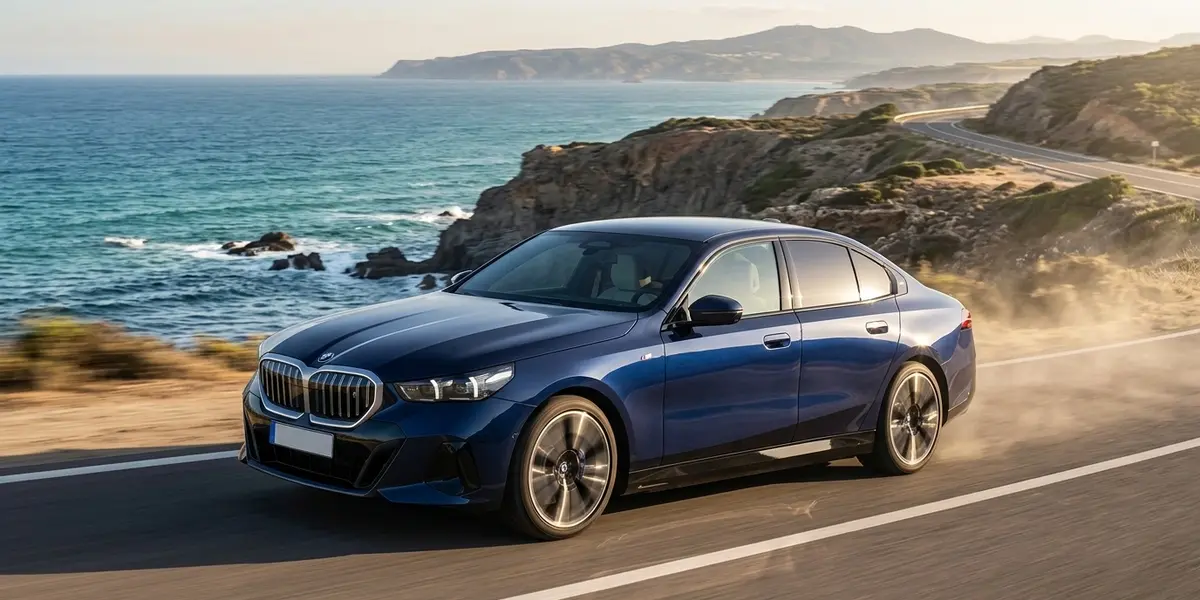
Now we get to the model where the conversation changes. The 540i xDrive uses a 3.0-liter turbocharged inline-six producing 375 hp. BMW lists a preliminary 0–60 mph time of 4.4 seconds and a starting MSRP of $67,700 for the 2027 U.S. model.
That’s a significant step up from the 530i. And you don’t need to drive like a racer to appreciate it. An inline-six can feel smoother and more effortless when you’re joining a highway, passing another vehicle or carrying passengers on a long trip. If you told me, “I want the 5 Series to feel special every time I drive it,” I’d tell you to at least test the 540i. Then drive the 530i immediately afterward. That back-to-back drive will tell you more than a specification sheet.
Best for: buyers who want a strong everyday luxury sedan and care about engine smoothness and performance.
5. Why the 540i makes sense for some buyers but not everyone
Here’s the part that gets missed in a lot of car buying advice. More power does not automatically mean a better purchase. The 540i costs more than the 530i and uses more performance than many drivers will ever need. BMW also makes the 540i xDrive standard with all-wheel drive.
So ask yourself what you will actually feel. If you spend hours on highways every week, carry passengers regularly and enjoy strong acceleration, the 540i may make the extra money easier to justify. If your daily trip is 15 minutes through traffic, you may barely use what you paid for.
I’d rather see a buyer put money into the features they will use every day than spend thousands chasing a number on a specification sheet.
6. The 550e is the interesting choice if you can charge at home
The 550e xDrive is where the 5 Series becomes a different kind of car. It combines a 3.0-liter inline-six gasoline engine with an electric motor. BMW lists 483 hp of combined system output and an estimated electric-only range of about 33 miles under ideal conditions.
Now imagine your daily routine. You drive 20 miles to work, have charging at home and return home at night. A plug-in hybrid can let you do much of that daily driving using electric power while keeping the gasoline engine available for longer trips.
That is the reason to buy the 550e. If you cannot charge it regularly, the argument becomes weaker. You’re carrying a larger and more complicated powertrain without making full use of its electric side.
So if you are considering a 550e, my first question would be:
“Where are you going to charge it?”
If you have a clear answer, keep looking at it.
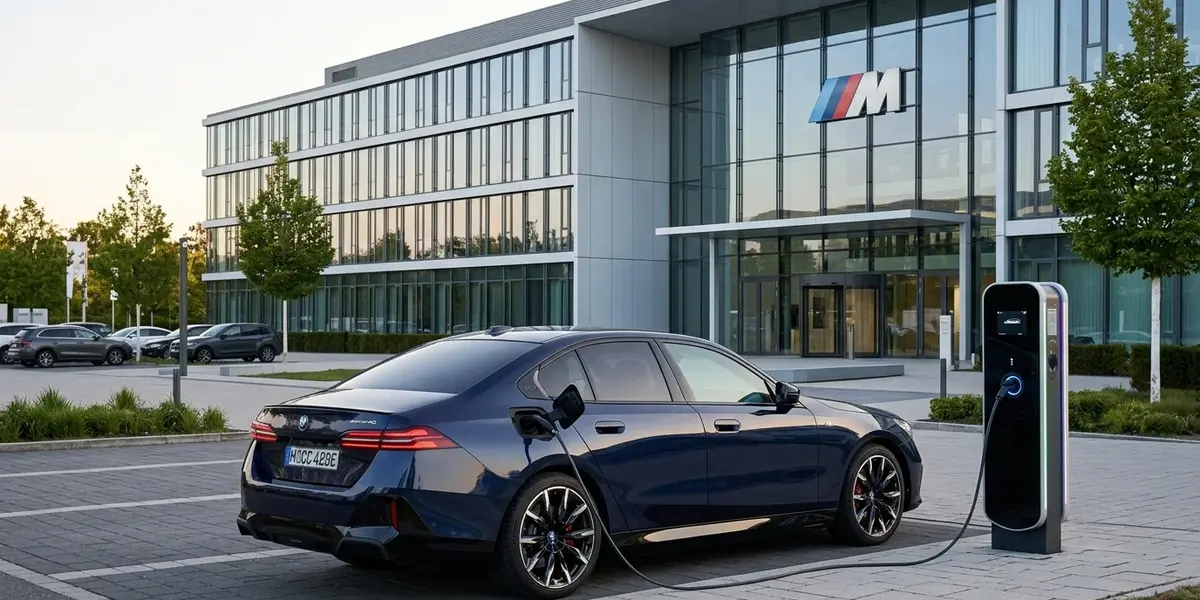
7. The i5 is for a buyer who is ready to live with an EV
The BMW i5 is the fully electric member of the 5 Series family.
For 2027 BMW lists the i5 eDrive40, i5 xDrive40 and i5 M60. The eDrive40 has 335 hp while the xDrive40 has 389 hp. BMW estimates up to 328 miles of range for the eDrive40 and up to 278 miles for the xDrive40 depending on wheel size and configuration.
Here’s how I’d approach an i5 buyer.
Don’t start with horsepower.
Start with charging.
If you can charge at home, your daily routine is predictable and most of your trips fit comfortably within the car’s real-world range, an i5 can be very easy to live with. If you regularly take long trips through areas with limited charging or don’t have convenient access to a charger, I’d spend more time looking at the gasoline or plug-in-hybrid versions.
The i5 is a lifestyle decision as much as a car decision.
8. i5 eDrive40 vs i5 xDrive40: don’t assume AWD is free
The i5 eDrive40 and i5 xDrive40 give you two different approaches to the electric 5 Series. The eDrive40 is rear-wheel drive. The xDrive40 adds all-wheel drive and more power. BMW lists 335 hp for the eDrive40 and 389 hp for the xDrive40.
But the xDrive40 also has a lower estimated range. BMW’s current figures put the eDrive40 at up to 328 miles and the xDrive40 at up to 278 miles depending on configuration.
So ask yourself what matters more. If you want maximum range and don’t need AWD, the eDrive40 deserves attention. If you want extra traction and stronger acceleration, the xDrive40 may be worth the trade-off.
That’s a much better way to choose than simply saying “xDrive is better.”
9. What about the i5 M60?
The i5 M60 is the performance-oriented electric version. BMW lists 593 hp and a preliminary 0–60 mph time of 3.7 seconds. This is where I’d stop calling the i5 a quiet luxury EV and start talking about performance. It is for someone who wants electric driving but still wants serious acceleration.
However, the same question applies: will you use what you’re paying for? If your idea of a good drive is quiet cruising with plenty of range, you don’t need the M60 to enjoy an i5. If you enjoy fast acceleration and want the more aggressive electric version, that’s where the M60 earns its place.
10. The M5 is a completely different conversation
The BMW M5 is the model that can make a showroom conversation go off track very quickly.
Someone sees 717 hp and thinks, “That’s the one.”
I’d ask a different question:
What are you actually going to do with it?
The 2027 M5 uses a high-performance plug-in-hybrid powertrain and BMW lists 717 hp with a preliminary 0–60 mph time of 3.4 seconds. Its U.S. starting MSRP is $119,500 (plus destination charges).
That is serious performance. But if your daily driving is mostly traffic, school runs and commuting, you don’t need an M5 to get a good 5 Series experience. The M5 makes sense when performance itself is one of the main reasons you’re buying the car. You should want the M5 because you want an M5, not because the salesperson showed you the most expensive 5 Series first.
Best for: buyers who specifically want high-performance driving and understand the cost that comes with it.
11. 530i vs 540i: which one should you actually buy?
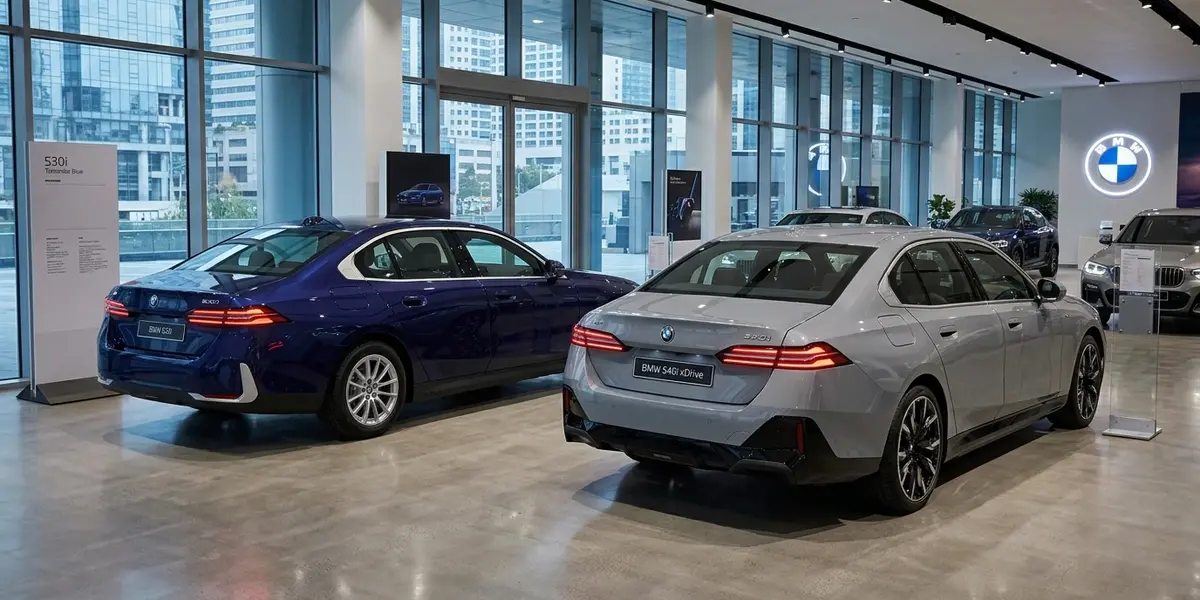
This is probably the most useful comparison for a normal gasoline buyer.
| If you care most about… | I’d look at… |
| Keeping the price lower | 530i |
| Simple daily driving | 530i |
| Rear-wheel drive | 530i |
| All-wheel drive | 530i xDrive |
| Stronger acceleration | 540i xDrive |
| Inline-six smoothness | 540i xDrive |
| Long-distance highway driving | 540i xDrive |
| Maximum value from the 5 Series concept | 530i |
| More of the classic BMW performance feel | 540i xDrive |
The important word here is you.
The 540i is more powerful and quicker. That doesn’t make the 530i a bad choice. It simply means the two cars are aimed at different buyers. If your budget is comfortable with both, drive them back to back.
12. Should you buy the 550e or i5?
This is a much more interesting question than “hybrid or electric?” The 550e is for someone who wants electric driving without giving up a gasoline engine. The i5 is for someone who is comfortable making the car fully electric.
Here’s the practical test:
Choose the 550e if:
- You want electric driving for short trips.
- You make long trips where gasoline convenience matters.
- You can charge regularly.
- You don’t want to plan your life around charging.
Look at the i5 if:
- You can charge at home or work.
- Most of your daily driving is predictable.
- You want a fully electric car.
- You are comfortable planning longer trips around charging.
The 550e has an estimated electric-only range of about 33 miles while BMW’s i5 models offer much longer all-electric range estimates.
So these aren’t really substitutes for the same buyer.
13. Is the 5 Series good for families?
Yes, and this is one reason people move from a 3 Series to a 5 Series. BMW describes the 2027 5 Series as a midsize luxury sedan that seats up to five passengers. The rear seat is important if you regularly carry adults or older children. You also get a larger overall car than the 3 Series.
But remember what comes with that size. The current 5 Series is larger than older generations. Car and Driver notes that the newest 5 Series has grown substantially and leans more toward luxury than the sharper driving feel associated with some earlier versions.
If you want a comfortable family sedan, that’s not necessarily a problem. If you are buying a 5 Series specifically because you expect it to feel like a giant 3 Series, take a proper test drive first.
14. 5 Series vs 3 Series: when should you move up?
Imagine two buyers.
Buyer A says:
“I mostly drive alone. I want something compact and sporty.”
I’d show that person the 3 Series first.
Buyer B says:
“I regularly carry passengers. I travel on the highway and want a quieter, more spacious cabin.”
Now I’d move the conversation toward the 5 Series.
The 5 Series gives you more room and a stronger luxury focus. The 3 Series is smaller and generally easier to position as a compact sport sedan.
There isn’t a rule saying you should buy the 5 Series because it costs more.
Buy the larger car when you actually need what the larger car gives you.
15. Which BMW 5 Series should you buy?
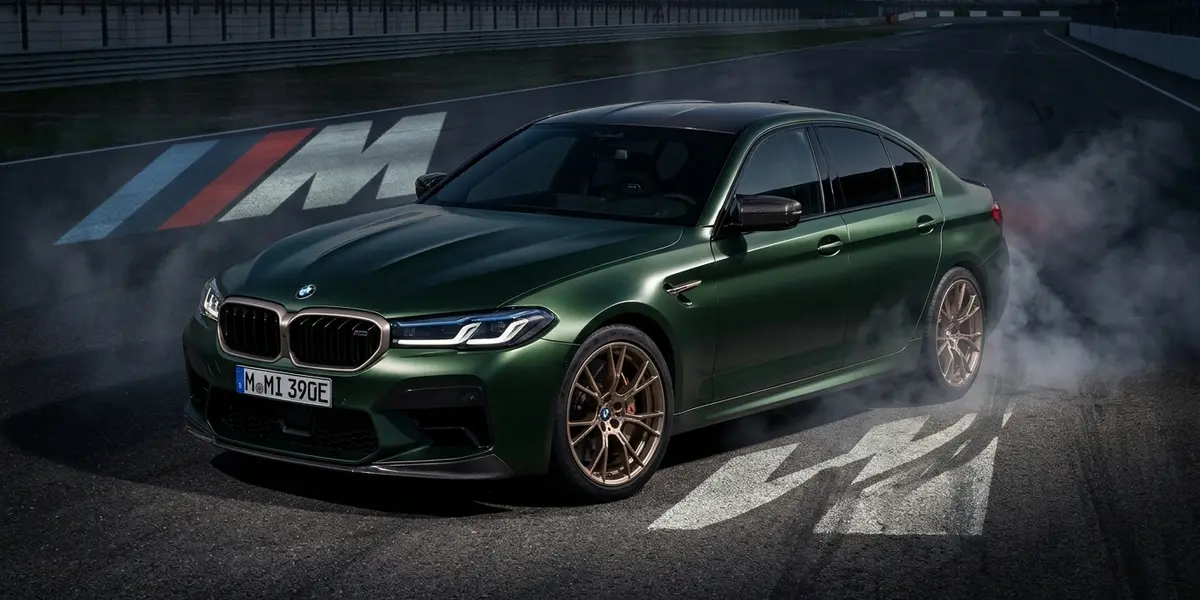
If you were standing in front of me in a showroom, this is the simplest conversation I’d have with you:
| Your situation | Model I’d have you look at | Why |
| You want a straightforward gasoline 5 Series | 530i | Enough power for normal driving and lower starting price |
| You want AWD | 530i xDrive | Adds all-wheel drive without jumping to the six-cylinder |
| You love smooth six-cylinder performance | 540i xDrive | 375-hp inline-six and standard xDrive |
| You commute short distances and can charge | 550e xDrive | Electric driving for short trips plus gasoline for longer journeys |
| You want a full EV | i5 eDrive40 | Longest estimated range among the listed i5 versions |
| You want EV + AWD | i5 xDrive40 | More power and all-wheel drive |
| You want a fast electric 5 Series | i5 M60 | 593 hp and very quick acceleration |
| You want a high-performance BMW | M5 | 717 hp and full M performance |
These are buyer-fit recommendations, not a ranking. The best choice depends on your driving pattern, charging access, budget and how much performance you will actually use.
BMW 5 Series lineup at a glance
| Model | Powertrain | Drive | Output | Starting MSRP (2027 U.S.) |
| 530i | 2.0L Turbo 4-Cylinder | RWD | 255 hp | $60,500 |
| 530i xDrive | 2.0L Turbo 4-Cylinder | AWD | 255 hp | $62,800 |
| 540i xDrive | 3.0L Turbo Inline-6 | AWD | 375 hp | $67,700 |
| 550e xDrive | 3.0L Inline-6 + Electric Motor | AWD | 483 hp | $75,500 |
| i5 eDrive40 | Electric | RWD | 335 hp | $67,100 |
| i5 xDrive40 | Electric | AWD | 389 hp | $70,100 |
| i5 M60 | Electric | AWD | 593 hp | $84,100 |
| M5 | 4.4L V8 Plug-In Hybrid | M xDrive | 717 hp | $119,500 |
BMW’s current U.S. model information provides the listed outputs and drivetrain configurations. Exact equipment, pricing and availability can change with configuration and market.
Conclusion
If you come into a showroom saying “I want a BMW 5 Series”, you haven’t really made the final decision yet. You’ve only chosen the family. The real choice starts with how you live with the car.
For a straightforward gasoline sedan, I’d start with the 530i. If you want more engine and don’t mind spending more, the 540i xDrive is the step up. If you drive short daily routes and can charge at home, the 550e becomes interesting. If you’re ready for a fully electric car, look closely at the i5.
And the M5? That’s for a different reason. You buy an M5 because high performance is part of what you want from the car. The smartest way to buy a 5 Series is to match the car to your routine before matching it to your budget. That’s how you avoid paying for a version you don’t really need.
BMW 5 Series FAQ
Is the BMW 5 Series a luxury car?
Yes. The 5 Series is BMW’s midsize luxury sedan and sits between the 3 Series and 7 Series in the company’s traditional sedan lineup.
Which BMW 5 Series is best for everyday driving?
The 530i is the straightforward choice if you want a gasoline-powered 5 Series for everyday use. The 540i xDrive makes more sense if you place a high value on six-cylinder performance.
Is the BMW 540i better than the 530i?
It is more powerful and quicker but that does not automatically make it the better purchase for every driver. The 530i costs less and already provides 255 hp. The 540i makes sense when you value its 375-hp inline-six and stronger performance.
Is the BMW 550e worth considering?
Yes, especially if you can charge regularly and your daily trips are short enough to make good use of its electric range. BMW estimates about 33 miles of electric-only driving under ideal conditions.
Is the BMW i5 fully electric?
Yes. The i5 is the fully electric version of the 5 Series sedan family.
Should I buy the i5 or 550e?
Choose based on your charging and travel habits. The i5 is fully electric while the 550e combines electric driving with a gasoline engine for longer trips.
Is the M5 a good daily driver?
It can be used as a daily sedan but it is designed around much higher performance than the regular 5 Series models. If you mainly need a comfortable commuter, the 530i or 540i may fit your needs better.
Is the 5 Series bigger than the 3 Series?
Yes. The 5 Series is the larger sedan and gives you more room and a stronger luxury focus.
Is the 5 Series smaller than the 7 Series?
Yes. The 7 Series is BMW’s larger flagship sedan while the 5 Series sits below it.