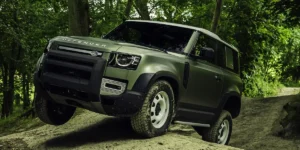
The Land Rover Defender is no longer just a rugged 4×4. The current range combines serious off-road hardware with luxury-SUV comfort, multiple body styles, strong towing ability and performance versions that can produce supercar-like acceleration. For 2026, the range also gains updated styling, a larger 13.1-inch infotainment screen and new technology, including Adaptive Off-Road Cruise Control on applicable models.
The important part is choosing the right Defender. A 90, 110, 130, V8 and OCTA can all wear the same Defender name, but they serve noticeably different purposes.
Land Rover Defender at a Glance
The current Defender family is built around three main body styles:
- Defender 90: the shortest and most compact version
- Defender 110: the all-rounder, with substantially more passenger and cargo flexibility
- Defender 130: the longest version, designed around maximum passenger space
- Defender V8: a high-performance version
- Defender OCTA: the extreme-performance flagship
Land Rover describes the 90 as the purest expression of the Defender, the 110 as offering more space with optional third-row seating, and the 130 as providing seating for up to eight people.
The range is unusually broad. That’s a strength, but it can also make shopping confusing. The Defender you need for a family road trip isn’t necessarily the Defender you would choose for high-speed performance or difficult off-road driving.
Defender 90 vs. 110 vs. 130: What’s the Difference?
The biggest decision isn’t actually the engine. It’s the body style.
| Factor | Defender 90 | Defender 110 | Defender 130 |
| Overall role | Compact Defender | All-rounder | Maximum passenger space |
| Doors | 2 | 4 | 4 |
| Seating | Up to 5 depending on configuration | Up to 7 | Up to 8 |
| Cargo/practicality | More limited | Strong balance | Best for passengers |
| Urban use | Easiest of the three | Manageable | Most demanding |
| Family use | Better for smaller households | Strong choice | Best for larger families |
| Character | Most compact and distinctive | Most versatile | Most spacious |
Defender 90
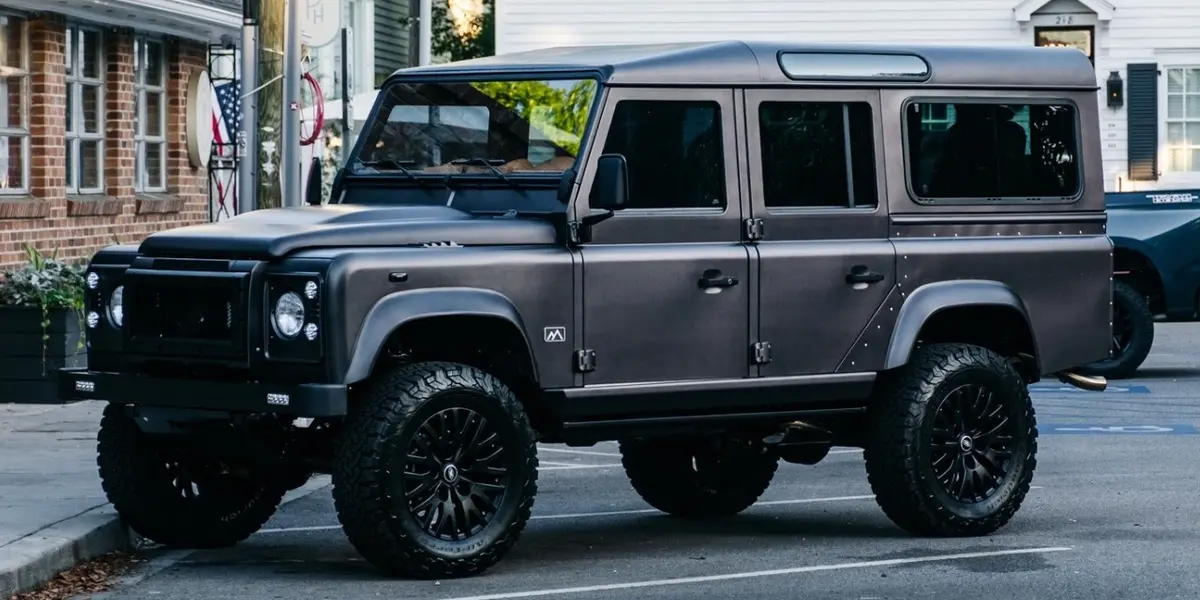
The 90 is the version to look at if you like the Defender concept but don’t need a large family vehicle. Its shorter body makes it easier to position on narrow trails and generally less cumbersome in tight urban environments. The compromise is obvious: you give up the passenger and cargo flexibility of the longer models. It’s also worth remembering that a short wheelbase doesn’t automatically make the 90 a small vehicle. It remains a wide, tall luxury SUV.
Defender 110
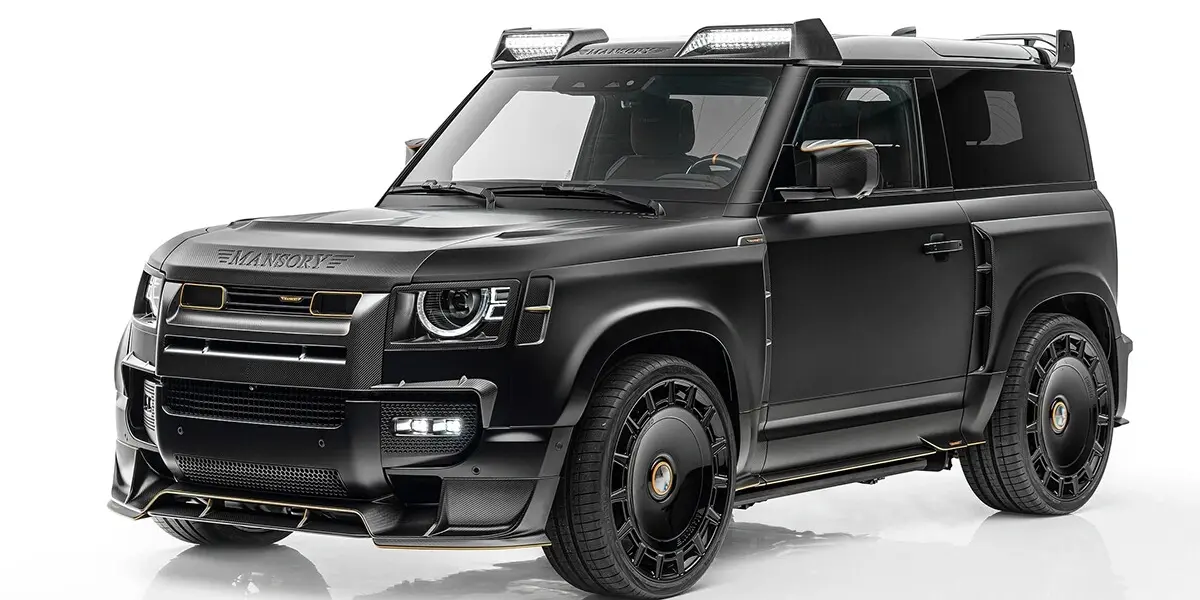
For many buyers, the 110 makes the most sense as the middle ground. It provides four-door practicality, substantially more usable cargo space and available third-row seating without moving to the longest Defender. Current U.S. specifications, for example, list 34.0 cubic feet of cargo capacity behind the seats for several five-seat 110 configurations. That makes the 110 particularly relevant if the Defender will be used as both a daily vehicle and a weekend adventure vehicle.
Defender 130
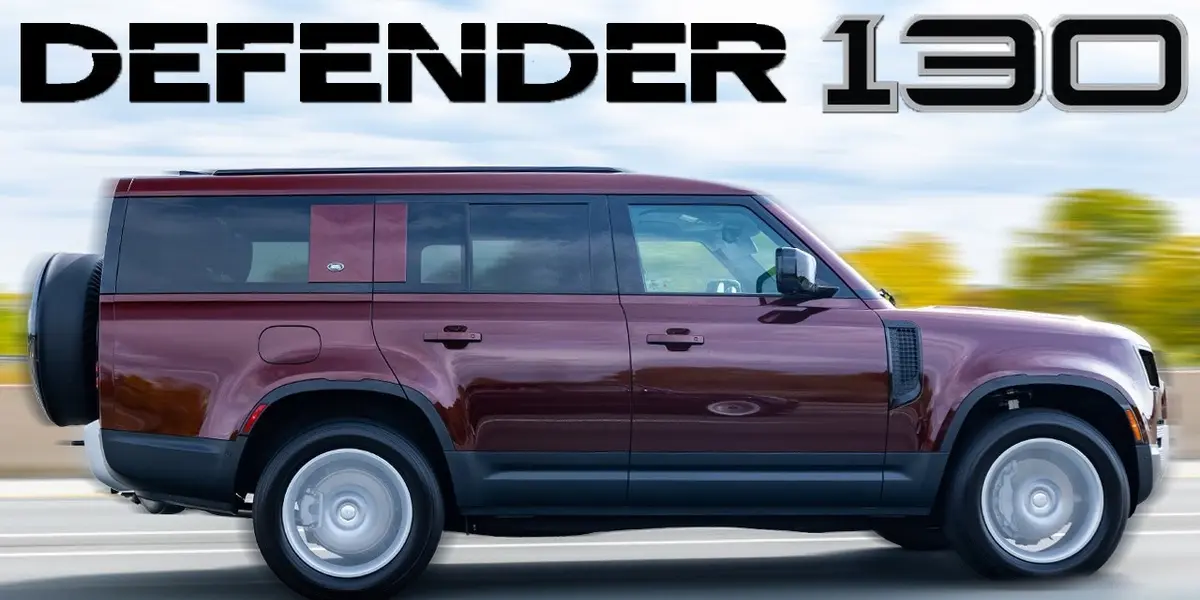
The 130 is about passenger capacity more than compact off-road maneuverability. Current U.S. specifications list seating for eight in applicable 130 configurations, with 15.3 cubic feet of cargo capacity behind all seats.
That last number is worth paying attention to. A three-row SUV can have impressive passenger capacity without having a huge luggage area with every seat occupied. So if you regularly carry seven or eight people, the 130 solves a problem. If you normally carry four or five people, the 110 may provide a more balanced layout.
Land Rover Defender Price
The Defender 90 X-Dynamic SE is not available with a V8 engine option in the current Land Rover lineup. Instead, the X-Dynamic SE trim on the shorter two-door Defender 90 body style exclusively pairs with the P400 powertrain (a 3.0L inline-6 mild-hybrid engine) starting at $68,500 MSRP.
The V8 engine tier occupies an entirely standalone trim level. To get the 518-horsepower supercharged V8 in the two-door model, you must step completely out of the X-Dynamic line into the dedicated Defender 90 V8 trim, which currently starts at $114,400 MSRP.
Land Rover Defender 90 Matrix Breakdown
The confusion regarding the $79,900 price point often surfaces because of how Land Rover structures the larger Defender 110 (four-door) matrix. In that model, the X-Dynamic SE trim is configurable with an upgraded P500 V8 engine tier, but that configuration does not transfer over to the shorter Defender 90.
For the Defender 90, the breakdown strictly limits each trim level to a single specific engine option:
| Trim Level | Engine / Powertrain | Starting MSRP |
| Defender 90 S | 2.0L Turbocharged I4 (P300) | $56,900 |
| Defender 90 X-Dynamic SE | 3.0L Turbo I6 Mild-Hybrid (P400) | $68,500 |
| Defender 90 V8 | 5.0L Supercharged V8 (P525) | $114,400 |
The lesson is more important than the starting number:
Don’t compare Defenders by badge alone.
A basic 110 and a high-performance OCTA are fundamentally different propositions. Edmunds’ 2026 Defender 110 pricing data confirms the model starts at approximately $63,500 including destination, with the Edmunds test team rating the vehicle 6.4 out of 10 based on combined road and track evaluation.
Options can also change the final transaction price substantially. When comparing prices, use the same market, model year, body style, engine and equipment level.
Engines and Performance
The Defender’s powertrain range is one of its defining features. Current 2026 U.S. listings include turbocharged four-cylinder, mild-hybrid inline-six and V8 powertrains, while the OCTA uses a 4.4-liter twin-turbo V8 mild hybrid.
Some useful examples show how different the range can be.
A 2026 Defender 110 P400 X uses a 3.0-liter mild-hybrid inline-six producing 395 hp and 406 lb-ft of torque, with an EPA-rated 20 mpg combined in the U.S. specification listed by Edmunds.
At the other end, the Defender OCTA Black uses a 4.4-liter twin-turbo V8 mild hybrid producing 626 hp and 553 lb-ft of torque in the current U.S. specification.
That means “Defender performance” isn’t one thing. The ordinary Defender is primarily about combining usable performance with comfort and capability. The V8 adds considerable straight-line performance. The OCTA takes the idea much further.
Do You Need the V8 or OCTA?
For most owners, the answer depends on what they actually intend to do with the vehicle.
If your priorities are commuting, family travel, towing and occasional off-road use, the appeal of a 600-plus-horsepower Defender is mostly about performance rather than necessity.
The OCTA is different because its performance hardware isn’t simply about making the Defender accelerate faster. Land Rover positions it as an extreme-performance model, and its chassis technology includes the company’s 6D Dynamics system and other performance-oriented hardware.
In other words, don’t pay for OCTA capability if your driving never makes use of it.
How Capable Is the Land Rover Defender Off-Road?
This is where the Defender earns its name.
The current Defender uses full-time all-wheel drive, a two-speed transfer case on applicable configurations, Terrain Response technology and electronic traction systems. The OCTA adds more specialized performance hardware.
But one point is often missed in SUV specifications:
Off-road capability isn’t determined by ground clearance alone.
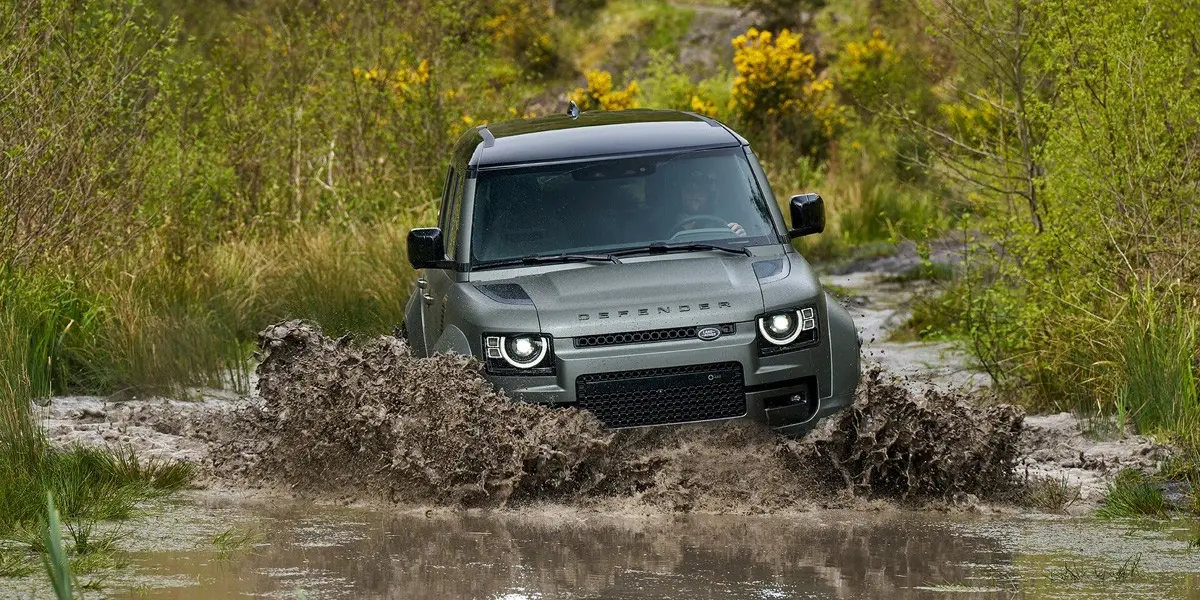
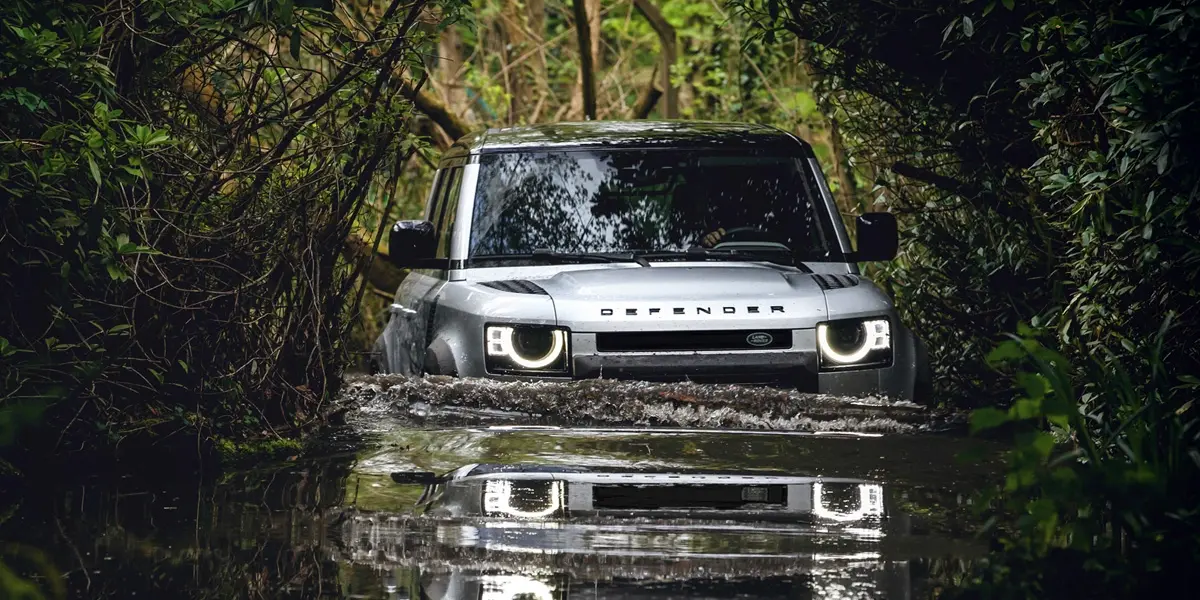
Tire choice, wheel size, suspension setup, approach and departure angles, traction control, wheel articulation and the driver’s ability all matter. Land Rover’s current Defender 110 material, for example, lists up to 900 mm of wading depth, while the vehicle’s 3D Surround Camera can display water depth and help identify entry and exit points.
That is an impressive specification, but it should not be interpreted as permission to drive through any water that happens to be less than 900 mm deep. Water depth, current, surface conditions and vehicle configuration all matter.
The same principle applies to towing and roof loads: the maximum number is a capability limit, not a target that every configuration should automatically use.
Towing: One of the Defender’s Less-Discussed Strengths
The Defender is not only an off-road vehicle. It is also a serious towing platform. Land Rover’s current Defender 110 information lists towing capability up to 3,500 kg in applicable configurations and highlights Advanced Tow Assist and Trailer Stability Assist.
In U.S. specifications, Edmunds lists up to 8,200 pounds of towing capacity for several 2026 Defender configurations.
Those figures shouldn’t be treated as interchangeable because towing ratings depend on market, configuration and regulations.
If towing is important to you, check the exact vehicle’s rated capacity, tongue weight, trailer weight and required equipment rather than relying on a generic “Defender towing capacity” figure. That’s a small detail, but it’s the sort of detail that matters when the trailer is actually attached.
Interior, Seating and Cargo Space
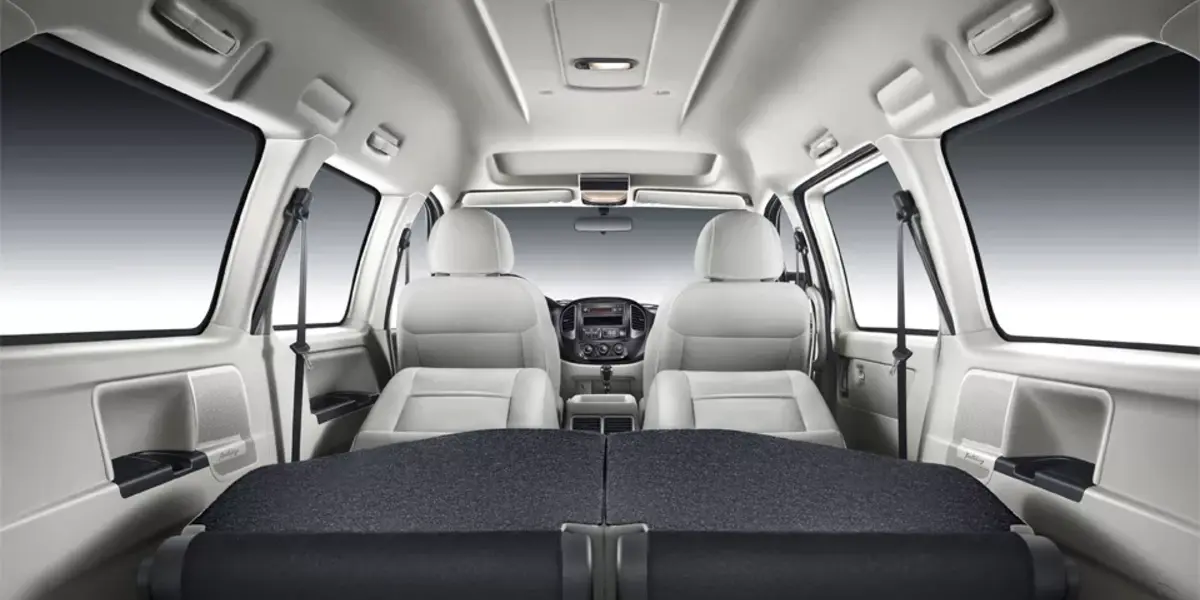
The Defender’s cabin is one of the reasons it occupies an unusual position in the SUV market. It retains the upright, durable character associated with a Defender while adding the technology and comfort expected from a premium vehicle.
The practical difference between the body styles is more important than many equipment lists suggest. A five-seat Defender 110 can provide considerably more usable luggage space than a three-row 130 with every seat occupied. Edmunds lists 34.0 cubic feet behind the seats for the referenced 110 configuration, compared with 15.3 cubic feet behind all seats in the 130.
So don’t simply ask:
“Which Defender has more cargo space?”
Ask:
“How many people will I normally carry when I need the cargo space?”
That’s the practical distinction that a specification sheet doesn’t make obvious.
What’s New for the 2026 Land Rover Defender?
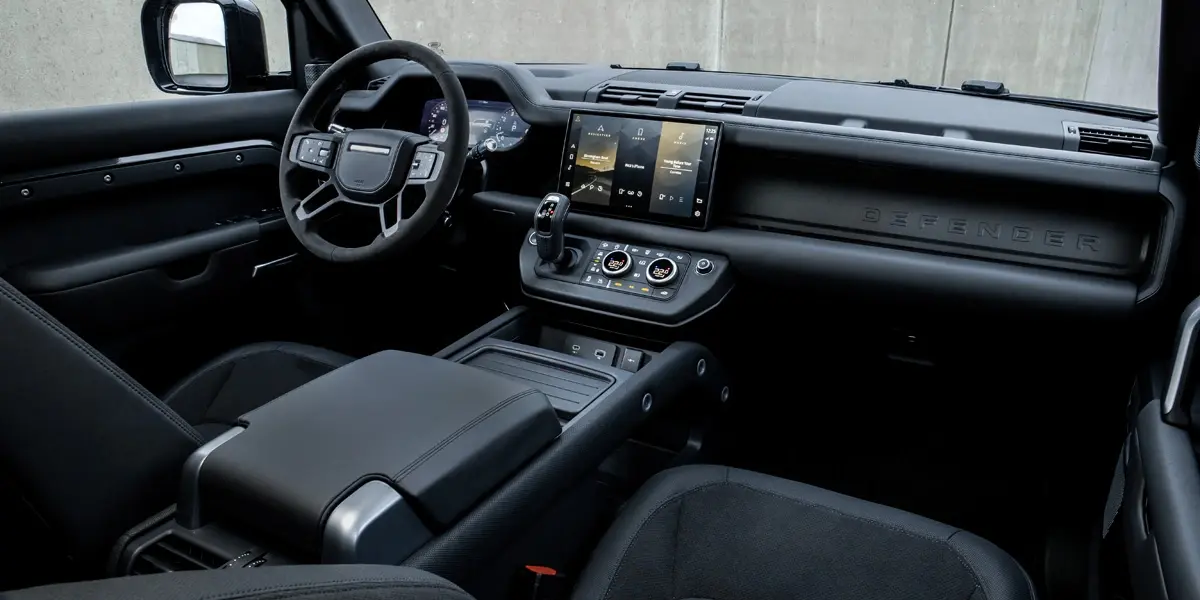
The 2026 model is particularly important because this isn’t just a carryover year.
Current reporting identifies exterior revisions, a redesigned center console and a new 13.1-inch infotainment display. Car and Driver also reports a new Adaptive Off-Road Cruise Control system designed to modulate throttle input over difficult terrain, along with a driver-attention monitoring system.
The performance side of the range is also evolving. Land Rover’s current model information includes the Defender OCTA and OCTA Black, while the OCTA’s 4.4-liter twin-turbo V8 mild-hybrid powertrain produces 635 PS and 750 Nm in Land Rover’s global specification material.
There is an important research trap here: global specifications aren’t necessarily the same as U.S., U.K., European or Pakistani specifications.
Power outputs, engines, seating configurations, taxes and available equipment can vary by market. A good Defender buying guide should therefore identify the market and model year whenever quoting an exact number.
Is the Land Rover Defender Fuel-Efficient?
Fuel economy isn’t the Defender’s strongest argument. MotorTrend’s 2026 data puts the most efficient U.S. configuration at 18/21 mpg city/highway for the four-cylinder Defender 90, while the non-mild-hybrid V8 Defender 110 is rated at only 14/18 mpg.
A six-cylinder 110 can do better than the V8 in some configurations. Edmunds lists 20 mpg combined for the 395-hp P400 110. The useful takeaway is that engine choice can materially change running costs. If you drive long distances every week, fuel consumption deserves more attention than it might on a vehicle purchased primarily as a recreational luxury SUV.
Is the Land Rover Defender Reliable?
Reliability deserves a more careful answer than a simple rating.
U.S. News’ 2026 Defender review breaks down the full trim ladder precisely, from the $63,500 110 S four-cylinder up through the $158,300 626-horsepower OCTA, with the site’s own test vehicle a 110 X-Dynamic SE priced at $89,300 as-tested.
The Defender is a technically complex vehicle. It combines sophisticated electronics, advanced suspension and drivetrain systems with luxury equipment and extensive off-road hardware. That complexity can make long-term ownership different from owning a simpler SUV.
At the same time, online owner reviews are not the same thing as a controlled reliability study. Edmunds currently has a relatively small sample of 33 consumer reviews for the 2026 Defender, and explicitly notes that it has incorporated reviews from other model years because the 2026 sample is limited.
That’s a useful warning for anyone researching reliability: don’t treat a small number of owner comments as statistical proof. For a used Defender, service history, inspection quality, warranty coverage and the exact model year can matter more than a generic internet reputation. A dedicated reliability article should go deeper into common faults, recalls and long-term ownership data.
What Does the Defender Cost to Own?
The purchase price is only the beginning.
Before buying, consider:
- fuel consumption
- premium fuel requirements where applicable
- scheduled servicing
- tires
- brakes
- insurance
- repairs outside warranty
- depreciation
- optional accessories
There’s also a less obvious cost: configuration creep.
A Defender can be heavily customized with wheels, tires, roof equipment, accessories and technology options. Land Rover itself offers a wide range of accessories and warns that certain equipment choices can affect capability. For example, its accessory information notes that fitting side steps can affect off-road capability.
That’s worth remembering when building a vehicle for serious off-road use. An accessory that looks useful on the road isn’t automatically an improvement off it.
Which Land Rover Defender Should You Choose?
There isn’t one Defender configuration that makes sense for everyone.
Choose the Defender 90 if:
- You prefer the shorter body
- You don’t need maximum passenger space
- You want the most compact Defender format
- Your priority is character rather than family practicality
Look closely at the Defender 110 if:
- You want one vehicle for everyday and recreational use
- You carry family or friends regularly
- You need useful cargo space
- You want a strong balance between size and practicality
Consider the Defender 130 if:
- You regularly carry a large group
- Third-row seating is genuinely important
- Passenger capacity matters more than compact dimensions
- You can accept the compromises of a longer vehicle
Consider the V8 if:
- Performance is a major priority
- You specifically want the V8 experience
- Higher fuel and purchase costs are acceptable
Consider the OCTA if:
- Extreme performance is genuinely part of the brief
- You want the most specialized Defender
- The additional performance hardware has a real use in your driving
The mistake is choosing by horsepower alone.
For most buyers, the more useful question is:
How will I use the vehicle 90% of the time?
That answer usually makes the appropriate body style and powertrain much clearer.
Land Rover Defender: The Bottom Line
The modern Land Rover Defender succeeds because it doesn’t force buyers to choose between being a luxury SUV and being a serious off-roader. The range stretches from the relatively compact Defender 90 to the family-oriented 130 and all the way to the high-performance OCTA.
But that flexibility comes with an important trade-off: there is no single Defender specification that is ideal for every owner. The 110 is the logical middle ground for buyers who want everyday usability, family space and genuine off-road ability. The 90 makes more sense when compact dimensions and character matter more. The 130 earns its extra length when passenger capacity is the priority.
And before buying, look beyond the headline figures. Check the exact market specification, real cargo requirements, towing rating, fuel economy and the equipment that comes with the vehicle you are actually considering. That’s how you avoid buying the most expensive Defender you can afford when what you really needed was simply the right Defender for your life.
Frequently Asked Questions
How much does a Land Rover Defender cost?
For the 2026 U.S. market, current listings start in the mid-$60,000 range and rise well above $150,000 for high-performance versions. Exact pricing varies by body style, powertrain, trim and options.
What is the difference between Defender 90, 110 and 130?
The 90 is the shortest and most compact version, the 110 is the balanced four-door option, and the 130 is the longest version with seating for up to eight in applicable configurations.
Is the Land Rover Defender good off-road?
Yes. Its four-wheel-drive system, Terrain Response technology, suspension capability and available off-road equipment give it genuine off-road credentials. Actual capability still depends on configuration, tires, terrain and driver skill.
How much can a Land Rover Defender tow?
Depending on the market and configuration, current Defender models can tow up to 3,500 kg; several U.S. configurations are rated for up to 8,200 pounds. Always check the exact vehicle’s local specification before towing.
Is the Defender 130 better for families?
The 130 is particularly useful for families that regularly need three rows and high passenger capacity. It can seat up to eight in applicable configurations, but cargo space behind all three rows is more limited than the vehicle’s exterior size might suggest.
Is the Land Rover Defender fuel-efficient?
Fuel economy varies considerably by engine. Four-cylinder and mild-hybrid six-cylinder versions can be more efficient than the V8 models, while the performance-focused variants prioritize power rather than economy.
What changed for the 2026 Defender?
The 2026 Defender receives styling revisions, a larger 13.1-inch infotainment screen and updated technology, including Adaptive Off-Road Cruise Control on applicable versions. The range also includes newer performance and special-edition variants.
Is the Land Rover Defender reliable?
There isn’t enough 2026 owner data alone to make a definitive long-term reliability judgment. Edmunds currently has a limited 2026 review sample and supplements it with reviews from previous model years. For a used Defender, service history and a professional inspection are particularly important.