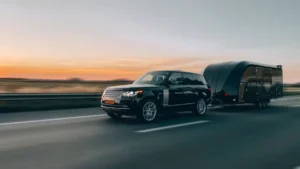
If you’re looking at a Range Rover because you need to tow a caravan, boat, horse trailer, or car trailer, there’s one number you probably want first:
How much can it actually tow?
The current Range Rover is rated to tow up to 3,500 kg (7,716 lb) in configurations rated for that maximum. Land Rover also makes an important point: towing capacity can vary by model and engine, so that 3,500 kg figure should not be treated as a universal rating for every Range Rover.
That’s the part many quick specification pages miss. The maximum figure tells you what the Range Rover can do at its best. Your actual vehicle may have a different limit depending on its engine, powertrain, model year, equipment, and towing setup.
Quick Answer
Range Rover towing capacity is up to 3,500 kg (7,716 lb).
A current Land Rover Range Rover specification can also list 750 kg for an unbraked trailer and 150 kg maximum coupling-point nose weight. The exact figures depend on the vehicle configuration, so check your specific Range Rover’s technical specification and owner’s manual before towing.
Key Takeaways
- Maximum towing: up to 3,500 kg.
- Equivalent: about 7,716 lb.
- Unbraked trailer: 750 kg on current qualifying specifications.
- Maximum nose weight: up to 150 kg on the vehicle specification.
- Not every Range Rover has the same rating.
- Engine, powertrain, model year and equipment can change the limit.
- Always check the exact vehicle before towing close to its maximum.
Range Rover Towing Capacity at a Glance
| Towing specification | Range Rover |
| Maximum towing capacity | 3,500 kg |
| Maximum towing capacity | 7,716 lb approx. |
| Unbraked trailer | 750 kg |
| Maximum coupling-point nose weight | 150 kg |
| Maximum vehicle + trailer weight | Varies by configuration |
Land Rover’s current Range Rover specifications show 3,500 kg maximum towing, 750 kg unbraked trailer capacity and 150 kg maximum coupling-point nose weight on qualifying configurations.
For the 2026 U.S.-market Range Rover, Edmunds lists maximum towing at 7,715 lb. So if you’re seeing both 3,500 kg and 7,715–7,716 lb, you’re basically looking at the same maximum rating expressed in different units.
Does Every Range Rover Tow 3,500 kg?
No.
This is the first thing I’d check before assuming you can hook up a 3,500 kg trailer.
Land Rover itself says:
Towing capability varies by model and engine.
It also says the permitted nose weight can vary with the model, engine and wheels fitted. That’s why I would treat 3,500 kg as the maximum headline figure, not as the guaranteed rating of every Range Rover.
For example, Land Rover’s own current configuration documents show different vehicles with different specifications, while still listing 3,500 kg on many qualifying versions.
There are also current accessory specifications that specifically identify a 2,500 kg towing limit for PHEV versions in certain configurations. So if you’re buying a Range Rover mainly for towing, don’t stop at the model name. Check the exact engine and powertrain.
What Does 3,500 kg Actually Mean?
This is where towing specifications can become confusing.
When Land Rover says a Range Rover can tow up to 3,500 kg, it means the vehicle can be rated for a trailer with a maximum permitted mass of 3,500 kg in the appropriate configuration.
It doesn’t mean:
- every Range Rover can tow 3,500 kg
- every trailer under 3,500 kg is automatically suitable
- a 3,500 kg trailer can be loaded however you want
- the tow bar automatically has the same rating
- you can ignore the vehicle’s own payload
You need to look at the complete towing setup.
That’s especially important when you’re close to the limit.
Braked vs. Unbraked Range Rover Towing
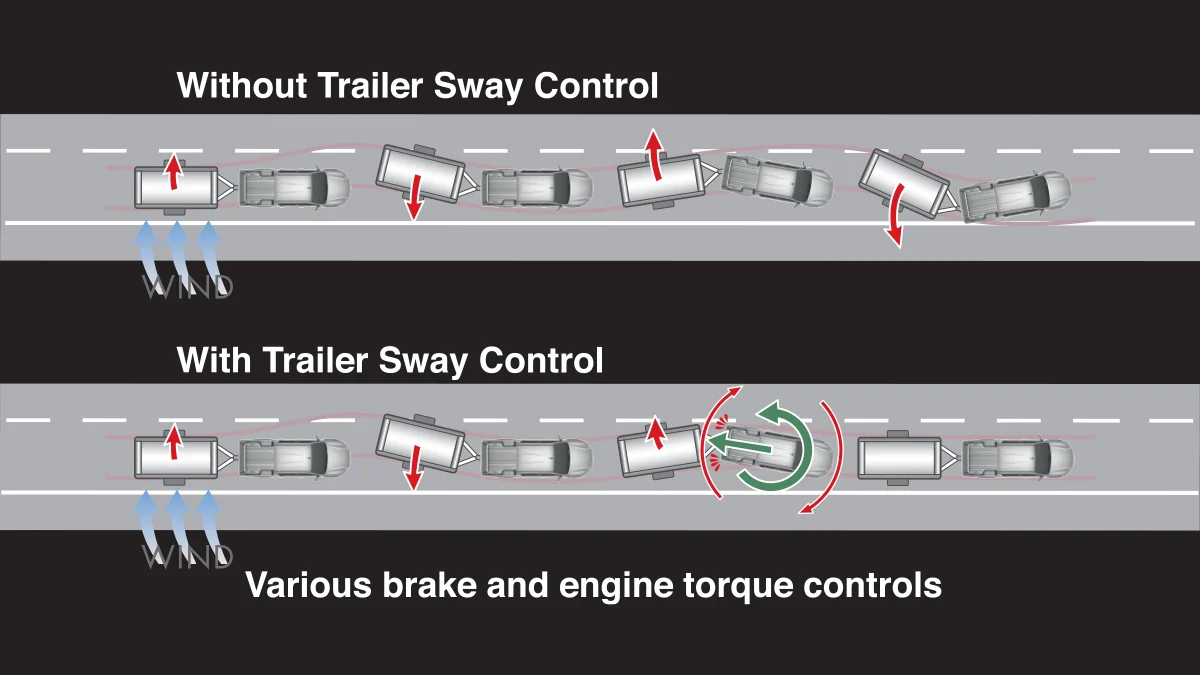
This is another number people often overlook.
A braked trailer has its own braking system. An unbraked trailer does not.
The difference in permitted weight is significant.
| Trailer type | Current Range Rover example |
| Braked trailer | Up to 3,500 kg |
| Unbraked trailer | 750 kg |
Land Rover’s current technical specifications list 750 kg for an unbraked trailer alongside a 3,500 kg maximum towing rating on qualifying configurations.
So don’t see “3,500 kg towing capacity” and assume that applies to an unbraked trailer.
It doesn’t.
If you’re towing something substantial such as a caravan, boat or horse trailer, you’re generally dealing with a braked trailer, but you should still verify the trailer’s actual specification.
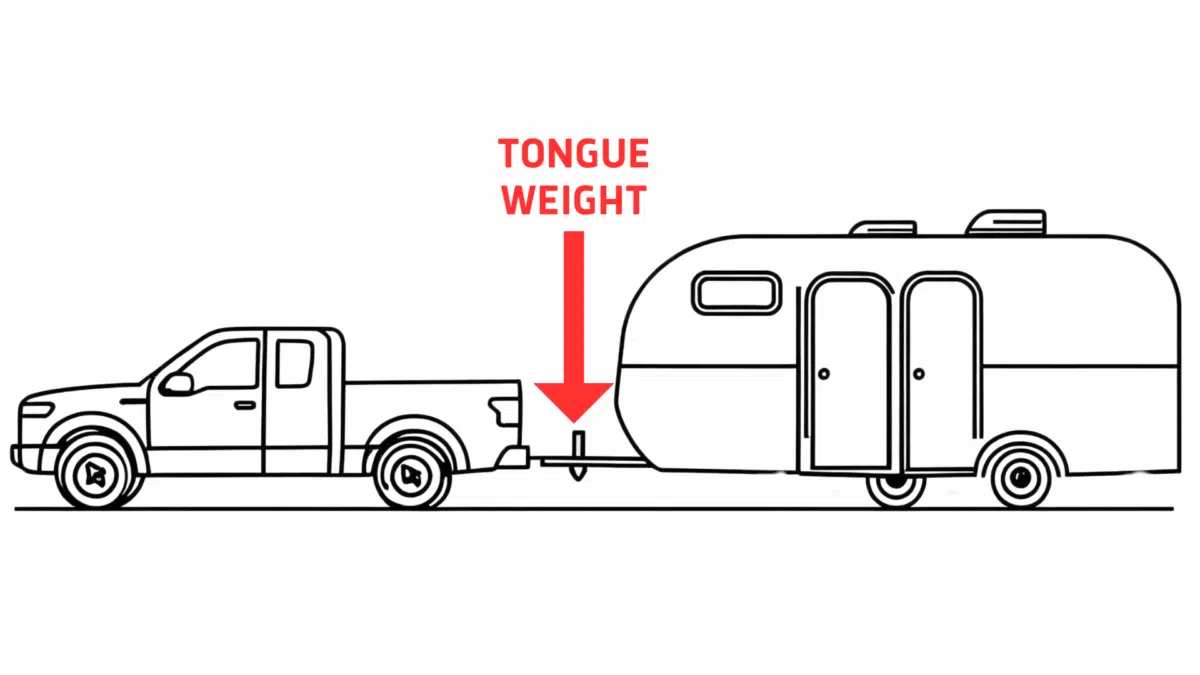
What Is Range Rover Nose Weight?
Nose weight is the downward force the trailer puts on the tow connection. Think of it as the load pressing down on the tow ball.
It’s not the same thing as the total trailer weight.
For example, your trailer could weigh 2,500 kg in total while putting only part of that weight onto the tow ball.
Land Rover lists up to 150 kg as the maximum coupling-point nose weight for the Range Rover on its general towing information. This is important because you can have a trailer that is comfortably below the 3,500 kg towing limit and still have too much load at the coupling point.
So when checking a trailer, look at both numbers:
- total loaded trailer weight
- nose/tongue weight
Don’t check one and ignore the other.
What Can a Range Rover Tow?
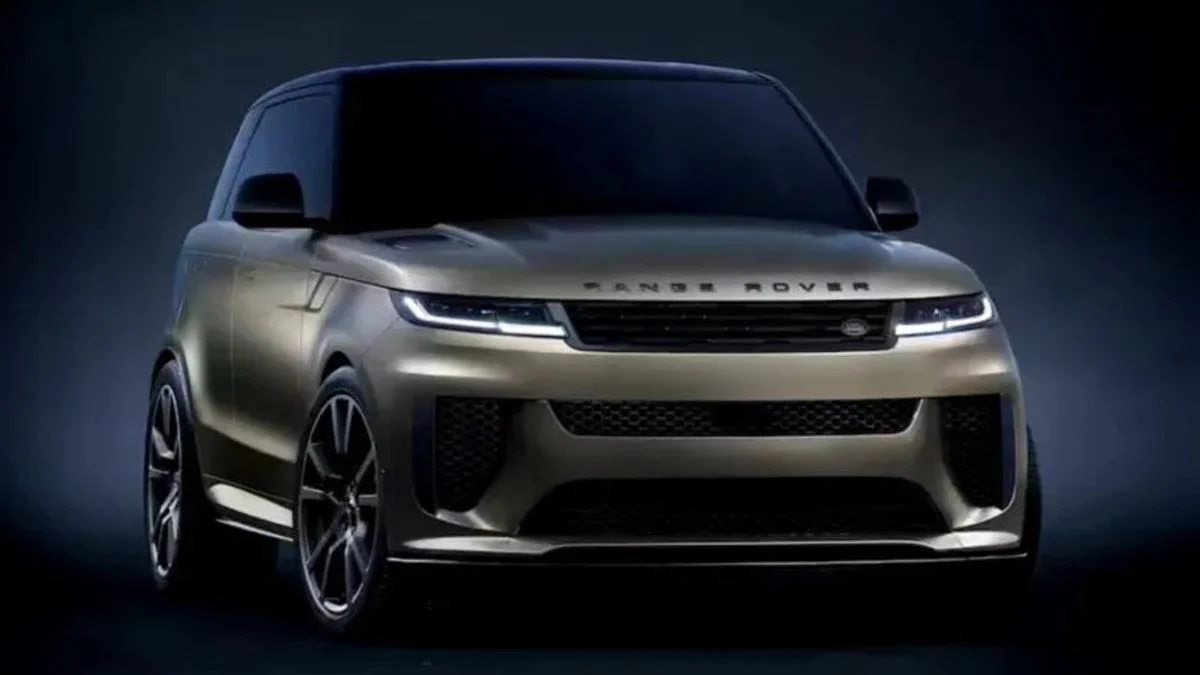
With up to 3,500 kg of towing capacity, a properly configured Range Rover can handle fairly substantial trailers. But here’s the sensible way to approach it.
Caravans
A Range Rover can make sense if you’re towing a large caravan. The mistake is using the caravan’s empty weight as your final figure.
Once you add:
- water
- luggage
- food
- batteries
- gas
- camping equipment
- personal belongings
the trailer becomes heavier. Use the loaded weight, not just the brochure’s empty figure.
Boats
The same applies to boat trailers. Don’t look only at the boat’s advertised weight.
Include the trailer and the equipment you’re actually carrying. A boat that looks comfortably under the Range Rover’s towing limit on paper can get much closer once everything is loaded.
Horse Trailers
Land Rover specifically mentions horseboxes among the towing applications for its vehicles. Again, check the actual loaded weight. The horses, equipment and trailer all count.
Car Trailers
Car transporters can be especially easy to underestimate. You aren’t just towing the car.
You’re towing:
car + trailer + equipment.
If that combined loaded weight gets close to the Range Rover’s maximum, get the actual weight checked rather than relying on estimates.
Don’t Check Trailer Weight Alone
This is probably the most useful thing to take away from the whole towing question.
Let’s say you have a trailer weighing 3,000 kg.
At first glance, that sounds fine because it’s below 3,500 kg.
But you still need to check:
- Is your particular Range Rover rated for 3,500 kg?
- Is the trailer braked?
- Is the nose weight within the limit?
- Is the Range Rover loaded within its own GVW?
- Are passengers and luggage included?
- Is the tow bar approved for the load?
- Is the combined vehicle-and-trailer weight within its limit?
Land Rover’s technical specifications also give a maximum vehicle-and-trailer combination weight (GTW), and that figure varies by configuration. For example, one current Range Rover specification lists a GTW of 6,720 kg.
So the simple calculation of “trailer is under 3,500 kg” isn’t always enough.
What Should You Check Before Towing?
If you’re actually preparing to tow with a Range Rover, I’d work through these numbers in order.
1. Check the exact Range Rover
Find the exact:
- model year
- engine
- powertrain
- wheel configuration
- body configuration
Don’t use a generic Range Rover specification if you can access the vehicle-specific one.
2. Check the maximum towing weight
This is your main trailer-weight limit. For qualifying current configurations, that can be 3,500 kg.
3. Check the unbraked limit
If the trailer has no brakes, use the unbraked rating instead. Current Land Rover specifications show 750 kg on qualifying configurations.
4. Check nose weight
The Range Rover’s general specification lists up to 150 kg at the coupling point. Your exact vehicle and towing equipment still need to be checked.
5. Check vehicle payload
Don’t forget the people and luggage inside the Range Rover. They add weight too.
6. Check the tow bar
The tow bar isn’t something I’d treat as an afterthought. Land Rover offers different towing systems and notes that towing systems aren’t compatible with every Land Rover vehicle. Use a towing system approved for your exact vehicle.
How to Find the Towing Capacity of Your Range Rover
If you already own one, don’t rely on a random specification website.
Use this simple process.
Step 1: Identify the model year.
Step 2: Identify the engine and powertrain.
Step 3: Find the official Land Rover technical specification for that configuration.
Step 4: Check maximum towing weight.
Step 5: Check unbraked trailer weight.
Step 6: Check maximum nose weight.
Step 7: Check your vehicle’s GVW and maximum vehicle-and-trailer combination.
Step 8: Check the tow-bar specification.
Step 9: Work with the trailer’s actual loaded weight.
That last step is important.
If you’re towing near the limit, guessing the trailer weight isn’t a great idea. Get it weighed.
Common Range Rover Towing Mistakes
Assuming 3,500 kg applies to every Range Rover
It doesn’t. Land Rover says towing capability varies by model and engine.
Confusing towing capacity with unbraked capacity
The 3,500 kg figure is not the unbraked limit. Current specifications show 750 kg for unbraked trailers on qualifying configurations.
Looking only at the trailer’s empty weight
Your trailer gets heavier when you load it. Always consider the weight as it will actually be towed.
Forgetting nose weight
The trailer can be under the maximum towing weight while still putting too much load on the coupling point.
Using an old specification
Range Rover specifications have changed across model years and configurations. If you have an older Range Rover, check the documentation for that vehicle, not today’s headline figure.
Assuming the tow bar changes the vehicle’s rating
It doesn’t. The vehicle, tow bar and trailer all need to be within their respective limits.
Final Verdict
The Range Rover’s maximum towing capacity is up to 3,500 kg (7,716 lb). That’s a strong towing figure, and it puts the Range Rover comfortably into serious caravan, boat, horse-trailer and car-trailer territory.
But the number I would pay the most attention to isn’t just 3,500 kg. It’s the number attached to your exact Range Rover.
Check the engine, model year, powertrain, trailer brakes, nose weight, vehicle payload and tow-bar rating before you load up. If you’re close to the maximum, weigh the trailer rather than guessing. That’s the difference between knowing a Range Rover’s headline towing capacity and actually knowing what your Range Rover can tow.
Frequently Asked Questions
How much can a Range Rover tow?
A Range Rover can tow up to 3,500 kg (7,716 lb) in configurations rated for that maximum. Land Rover says towing capacity varies by model and engine.
Can a Range Rover tow 3,500 kg?
Yes, qualifying Range Rover configurations can tow up to 3,500 kg. But check your exact engine, powertrain, model year and towing equipment before using the maximum rating.
What is 3,500 kg in pounds?
3,500 kg is approximately 7,716 lb. Edmunds lists the 2026 Range Rover at up to 7,715 lb.
What is the Range Rover unbraked towing capacity?
Current qualifying Range Rover specifications list 750 kg for an unbraked trailer.
What is the Range Rover nose weight?
Land Rover lists up to 150 kg maximum coupling-point nose weight for the Range Rover. The exact permitted figure should be checked for your vehicle and towing setup.
Can a Range Rover tow a caravan?
Yes. A suitably configured Range Rover can tow a caravan, and Land Rover specifically lists family caravans among its towing applications. The caravan’s actual loaded weight and nose weight must remain within the vehicle’s limits.
Does Range Rover towing capacity vary by engine?
Yes. Land Rover explicitly says towing capability varies by model and engine. That’s why you shouldn’t use the 3,500 kg headline figure without checking your exact vehicle.
How do I check my Range Rover’s exact towing capacity?
Check the vehicle’s model year, engine, powertrain and official technical specification. Then confirm the towing, unbraked, nose-weight and combined-weight limits in the owner’s documentation.