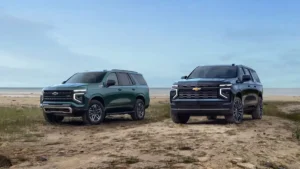
The Chevrolet Traverse and Chevrolet Tahoe both offer spacious three-row family transportation, but they serve different needs. The Traverse is a midsize crossover focused on affordability, better fuel economy, easier daily driving, and family-friendly practicality, while the Tahoe is a full-size truck-based SUV built for heavy towing, off-road capability, and premium space. Families prioritizing comfort and efficiency will likely prefer the Traverse, while buyers needing V8 power and serious hauling strength will benefit more from the Tahoe.
Introduction
Buyers in search of the one ideal three-row family machine often see themselves torn between two impossibly competent siblings. In this comprehensive comparison of the traverse vs tahoe, we take a no-holds-barred look at how a modern-day crossover stacks up against a traditional full-size, truck-based icon. Both of these roomy rigs wear the same bowtie badge, but they cater to opposite driving lifestyles.
This is the crux of deciding between the traverse vs tahoe; how you attribute your everyday driving dynamics to needing a heavy hauler. According to all the auto data out there, the best vehicle for a traverse or tahoe family today is not a minivan but instead something like the Chevrolet Traverse offering comforting car-ride quality and parking lot poise without an obliterated new-purchase sticker shock. For buyers needing real truck-derived traverse vs tahoe towing capability, stout V8 power or diesel grunt, and top-rung ground clearance, though, the win goes to the Chevrolet Tahoe.
We all know there is no perfect family, and everyone has a different routine when it comes to their family SUVs. Scouting the options to see which model fits your routine? Let’s get right to the details that you can use so one of these three-row people haulers can find a home in your driveway.
Price and Trim Value Structure
To manage a family budget these days, you really need to know how much money is going to be needed in your first payment. Looking head-to-head at the traverse vs tahoe price differences, you can see these two are in completely different market segments.
The 2026 Chevrolet Traverse is one of the easiest ways to get into a three-row crossover, starting with an estimated base MSRP of around $40,800 for the midrange LT trim. When evaluating the traverse vs tahoe price ladder, more style or capability for active households comes with a starting price of about $48,900 for the Z71 trim focused on off-road driving, while the street-styled RS and upmarket High Country variants are priced between approximately $55,100 and $57,100. The Traverse is full of high-tech toys and roominess at a surprisingly affordable price, thanks to being based on a lighter unibody platform.
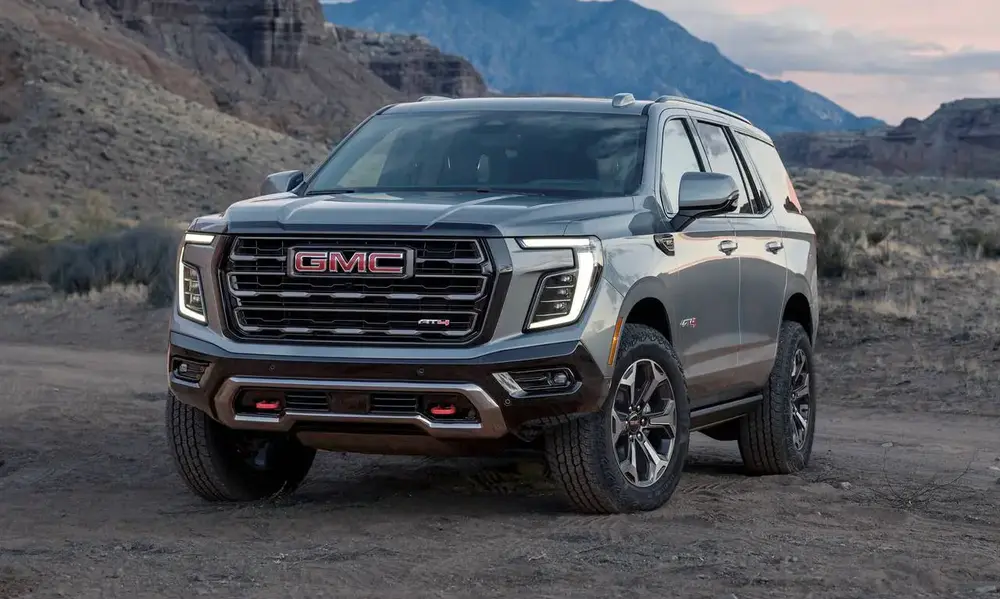
Step right up into the 2026 Chevrolet Tahoe, a full-size SUV that can trace its heavy-duty truck roots to an elevated price structure. Pricing for the base Tahoe LS trim is expected to start at about $60,000, but if you move up to popular LT and sporty RST configurations, you’re looking at an investment in the mid-$65-thousands to $70-thousands range. The rugged Z71, upmarket Premier, and ultra-luxury High Country trims exceed $75,000 to $85,000 depending on what sort of capability or luxury the consumer is after.
Dimensional Size and Everyday Maneuverability
Both vehicles feature standard three-row seating arrangements, but some surprising engineering trade-offs are outlined in the traverse vs tahoe size details.
The Traverse is actually built on an incredibly space-efficient footprint, and analyzing the traverse vs tahoe size reveals that while it measures a substantial 204.5 inches long, the oversized truck cabin gives the Tahoe a total length of 211.3 inches. Because the Traverse shares a lower roofline and narrower width from its car-based crossover platform, it becomes much easier to scooch into narrow suburban garage doors, cut through busy drive-thru lines, and park at the local grocery store. For drivers who find high-riding trucks intimidating to drive, it offers a car-like feel where the road is your oyster.
The Tahoe may be a full-size SUV, but it’s the size of real full-sizes on the road, bigger than most taller and wider. That allows for a powerful view over highway traffic from behind the wheel of this truck-based body-on-frame architecture, with more than adequate ground clearance to handle deep snow, rutted dirt roads, or flooded lanes. The additional width also translates to a wider cabin environment, providing occupants a little more wiggle room in all three rows. But check your garage dimensions, because its tall stance requires a bit of headspace overhead.
Interior Cargo Capacity and Seating Practicality
Comparing the traverse vs tahoe cargo arrangements regarding holding everyday influences like getting strollers, luggage, bulk grocery hauls, and sports gear all at once demonstrates a kind of platform layout that directly impacts interior space.
The Chevy Tahoe capitalizes on its truck-based boxy form to offer an impressive amount of traverse vs tahoe cargo flexibility, topping out at a maximum of 122.7 cubic feet of cargo room with both rear rows folded. The independent rear suspension layout also enables the third row’s seat bottom to sit comfortably low, bringing legroom in that row to 34.9 inches, which is sufficient spacing for adults’ knees not to push against the backs of front-row seats. With the whole passenger count reached, trunk space behind that third row still weighs in at 25.5 cubic feet.
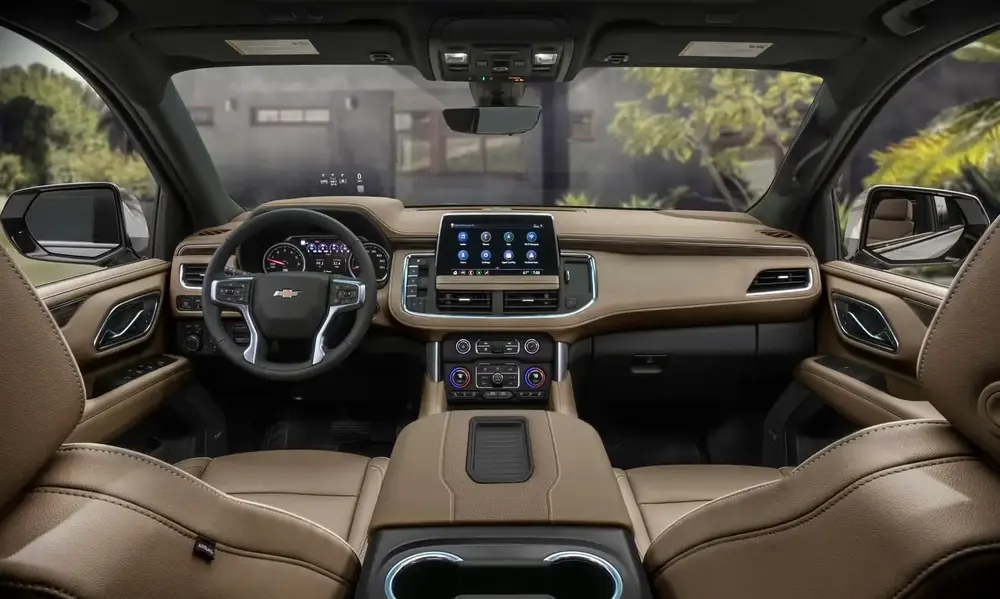
The Chevy Traverse far exceeds its weight class with respect to a best-in-class maximum cargo capacity (98 cubic feet) for a midsize crossover. Utilizing the third row yields 22.9 cubic feet of useable trunk depth, making it highly competitive in any traverse vs tahoe cargo space analysis. Depending on trim choice, a traverse or tahoe family can configure the crossover to seat eight with a second-row bench, or seven when equipped with standard second-row captain’s chairs. Both vehicles pack the same massive standard 17.7-inch infotainment center touchscreen, so you’ll always have access to the best in entertainment and navigation technology for your family no matter which vehicle it rides in.
Mechanical Powertrains and Towing Grunt
If your family loves outdoor adventures, analyzing the traverse vs tahoe towing limitations is critical to matching an SUV to your lifestyle. The structural differences between a crossover frame and a truck frame dictate how much weight each vehicle can safely pull.
Chevy Traverse Performance
-
Standard Engine: A high-output 2.5-liter turbocharged four-cylinder engine generating a stout 328 horsepower and 326 pound-feet of torque.
-
Transmission Layout: A smooth-shifting 8-speed automatic transmission designed for fluid power delivery around town.
-
Maximum Towing Capacity: In the traverse vs tahoe towing comparison, the Traverse is rated to pull up to 5,000 pounds when equipped with factory trailering hardware.
-
Ideal Use Case: Perfectly suited for hauling light utility trailers, small pop-up campers, personal watercraft, or a pair of dirt bikes for a weekend getaway.
Chevy Tahoe Performance
-
Engine Variety: Offers a standard 355-horsepower 5.3-liter V8, an available 420-horsepower 6.2-liter V8, or a high-torque 3.0-liter Duramax turbo-diesel engine making 495 pound-feet of torque.
-
Transmission Layout: A heavy-duty 10-speed automatic transmission optimized for managing heavy loads and maintaining low highway RPMs.
-
Maximum Towing Capacity: Pulls up to an impressive 8,400 pounds when properly configured with the Max Trailering Package, dominating the heavy-duty traverse vs tahoe towing category.
-
Ideal Use Case: Engineered to effortlessly handle heavy multi-horse trailers, large wakeboarding boats, or full-size double-axle travel trailers across steep mountain passes.
Fuel Economy and Real-World Mileage
You will want to carefully examine the traverse vs tahoe mpg estimates because fuel expenses will stay a steady month-to-month line item provided you own it just how much you’ll save relies heavily on your driving style.
The Traverse’s lighter curb weight and more slippery profile yield very impressive efficiency figures for a large crossover. The front-drive models achieve standard traverse vs tahoe mpg bragging rights by rating at 20 mpg city/26 highway, but the optional advanced all-wheel-drive system drops the highway rating to 24 mpg. It is very affordable for city cruising, nursery drop-off circuits, and basic freeway journeys.
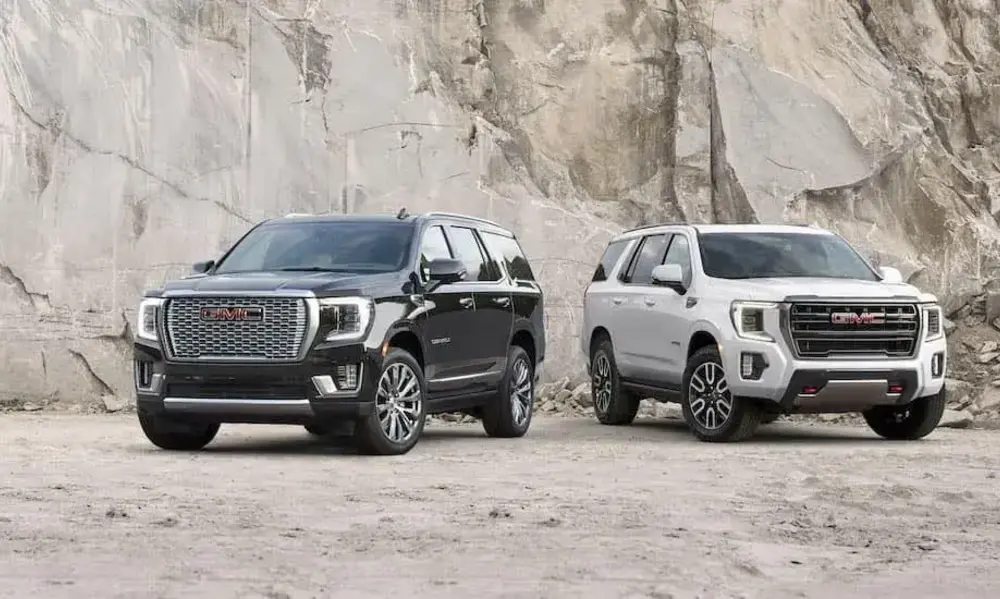
It’s a heavier chassis, so the Tahoe’s old-school V8 engines are thirstier. The 5.3-liter V8 with DFM provides EPA-estimated fuel economy of 15 mpg in city driving and 20 mpg while traveling on the highway, making the traverse vs tahoe mpg comparison favor the smaller crossover for urban areas. On the flip side, if highway range is your primary concern, the Tahoe’s optional 3.0-liter Duramax turbo-diesel engine makes a strong case for itself with up to an estimated 27 mpg on the highway, providing a ginormous range between fill-ups for long-distance road trippers.
Conclusion
The Chevy Tahoe is a tool for people who need a heavy-duty instrument to pull large toys, crawl groaning off-road trails, or haul a large traverse or tahoe family of grownups across half the interstate with maximum torque.
But for most households, the Chevy Traverse will be the no-brainer pick for each day. It, in turn, delivers nearly identical interior tech along with best-in-class midsize cargo utility and improved daily fuel economy at a starting price thousands less that saves families upfront. The Traverse has all the space needed for a growing family yet is so trivially easy to drive, park, and live with day in and day out.
Frequently Asked Questions
What is the exact difference in the traverse vs tahoe price?
The entry-level traverse vs tahoe price difference is roughly $20,000. The Chevy Traverse LT starts at an estimated MSRP of $40,800, making it an affordable entry into three-row vehicle ownership. The larger, truck-based Chevy Tahoe LS starts at an estimated MSRP of around $60,000 due to its heavy-duty mechanical frame and standard V8 powertrain components.
Is the third row in the Traverse large enough for an adult passenger or tahoe family needs?
Yes, the third row in the Traverse is highly accommodating for children and teenagers, offering 32.1 inches of legroom. However, for a frequent road-tripping traverse or tahoe family that regularly transports adults in the very back, the Chevy Tahoe provides 34.9 inches of third-row legroom alongside a wider cabin design, making it more comfortable for longer trips.
Which SUV gets better fuel economy for daily city commuting?
The Chevy Traverse wins the standard traverse vs tahoe mpg city matchup by returning an EPA-estimated 20 mpg in city driving conditions. The standard V8-powered Chevy Tahoe gets around 15 mpg in the city, though buyers can choose the available Duramax turbo-diesel engine to boost highway efficiency up to 27 mpg.
Can a Chevy Traverse tow a camper or a boat?
The Chevy Traverse features a maximum towing capacity of 5,000 pounds when properly equipped. This provides plenty of strength to safely pull small watercraft, pop-up campers, or a light utility trailer. If your trailer setup demands more traverse vs tahoe towing muscle because it weighs over 5,000 pounds, you will need to step up to the Chevy Tahoe, which features a max towing capacity of 8,400 pounds.
How does the traverse vs tahoe size impact fitting into a standard home garage?
The traverse vs tahoe size difference is highly noticeable when parking. The Traverse is slightly shorter in total length (204.5 inches) and has a lower roof height, making it much easier to fit inside a standard residential garage. The Tahoe stands taller and wider (211.3 inches long), which can make tight spaces a challenge depending on your home layout.